Is bad data killing women?
We look at the impact of a gender data gap and a ‘one-size-fits-men’ approach to design.
The impact of leaving women's bodies out of research ranges from phones that are too big for female hands, to women being more likely to die if they're in a car accident. Kim Chakanetsa talks to two women investigating the data gender gap and how to resolve it.
Caroline Criado Perez says a ‘one-size-fits-men’ approach to design, technology and research has resulted in a myriad of instances where women have been overlooked: from cars that are safer for men driving them to stab vests that don't work as well for women's bodies. In her book, Invisible Women: Exposing Data Bias in a World Designed for Men she examines the impact on women of a world that has largely been built for and by men and looks at why data and statistics are far from 'gender-blind'.
Lauren Klein says part of the solution lies in the lessons learned by intersectional feminism. The Associate Professor at Emory University has co-authored a book called Data Feminism with Catherine D’Ignazio. It looks at data science and data ethics and their impact on parts of society that are often overlooked and discriminated against.
IMAGE
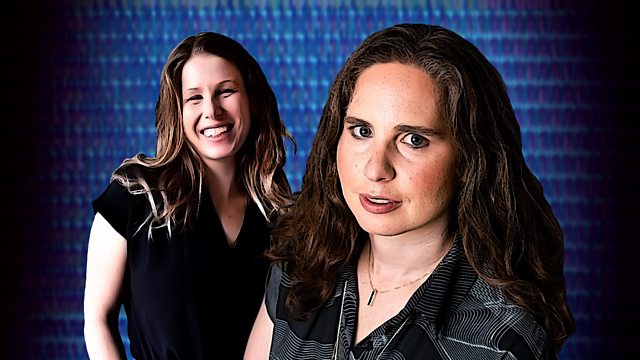
L: Caroline Criado-Perez (credit: Rachel Louise Brown)
R: Lauren Klein (credit: Tamara Gonzalez)
Last on
Broadcasts
- Mon 24 Feb 202002:32GMTBBC World Service West and Central Africa
- Mon 24 Feb 202003:32GMTBBC World Service Europe and the Middle East
- Mon 24 Feb 202004:32GMTBBC World Service Online & UK DAB/Freeview only
- Mon 24 Feb 202005:32GMTBBC World Service Australasia, Americas and the Caribbean, South Asia & East Asia only
- Mon 24 Feb 202011:32GMTBBC World Service except West and Central Africa
- Mon 24 Feb 202018:32GMTBBC World Service Australasia
- Mon 24 Feb 202021:32GMTBBC World Service East and Southern Africa & West and Central Africa only
- Mon 24 Feb 202023:32GMTBBC World Service except East and Southern Africa & West and Central Africa
- Sun 1 Mar 202005:32GMTBBC World Service East and Southern Africa & West and Central Africa only
The best of The Conversation

Enlightening, inspiring, revealing: Some of our favourite Conversations so far
100 Women

Global experience on image, work, relationships, equality, migration and working lives
Podcast
![]()
The Conversation
Two women from different parts of the world share the stories of their lives