Impeachment: What's changed since Nixon?
Why was the Nixon impeachment so consequential and the Trump impeachment a flop?
In August 1974, the 37th President of the United States - Richard Nixon - resigned after being told by members of his own Republican party that they could no longer support him. Evidence brought during the process to impeach and remove him had implicated the White House in an attempt to sabotage President Nixon's Democratic rivals. The allegations against President Nixon were similar in nature to those levelled at the 45th President Donald Trump. But this week, Mr Trump was acquitted of the two charges against him following his impeachment trial, after Republicans in the Senate voted not to hear new evidence in the case. So, have public attitudes towards allegations of corruption in public office changed over the past four decades? US politics itself, is different, but how did it arrive here? Ritula Shah and a panel of expert guests discuss - what’s changed since Nixon?
Last on

More episodes
Previous
Contributors
David Paul Kuhn - Journalist and author of The Hardhat Riot: Nixon, New York City, and The Dawn of the White Working-Class Revolution
Ross K. Baker - Distinguished professor of political science at Rutgers University
Eleanor Powell - Associate Professor of Political Science at the University of Wisconsin-Madison
John Daniel Davidson - Political editor at the Conservative online magazine 'The Federalist'
Also featuring:
Jeff Flake - Former Republican Senator
Carroll Doherty - Director of Political Research, Pew Research Centre
Image
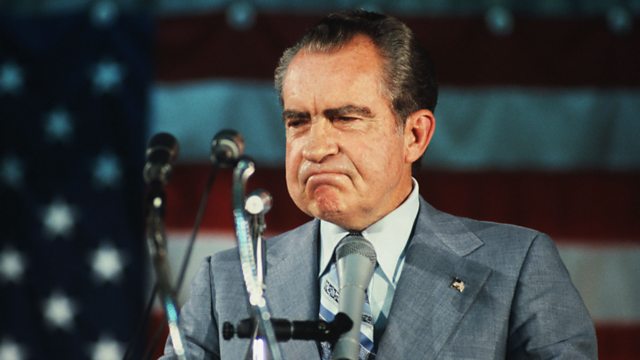
Richard Nixon, in his first public appearance after resigning from the Presidency.
Credit: Wally McNamee/CORBIS/Corbis via Getty Images
Broadcasts
- Fri 7 Feb 202009:06GMTBBC World Service
- Sat 8 Feb 202000:06GMTBBC World Service
- Sat 8 Feb 202003:06GMTBBC World Service Americas and the Caribbean
- Sat 8 Feb 202004:06GMTBBC World Service except Americas and the Caribbean
The Real Story Podcast

Subscribe via your favourite podcast app...
Podcast
![]()
The Real Story
Global experts and decision makers discuss, debate and analyse a key news story.

