The Sun, Our Star: Health and beauty
What does being deprived of sunlight do to you?
The Sun’s light defines what we mean by day and night, how we tell time and how we apportion our time, both consciously and unconsciously. The turning of the Earth that wheels us in and out of the Sun every 24 hours seeps into every aspect of our biology. In the final programme, Dava Sobel recalls the 25 days she spent as a human subject in a study of circadian rhythm. The lab was housed at Montefiore Hospital in the Bronx, NY, but it could have been anywhere, sealed and self-contained as it was. We’ll hear what happens when you are light deprived.
To know the Sun is an age-old dream of humankind. For centuries, astronomers contented themselves with analysing small sips of sunlight collected through specialised instruments. They chased after eclipses that exposed otherwise hidden layers of the Sun’s substance, and they launched Earth and Sun-orbiting observatories to monitor our star from space. Today, several satellites ‘watch’ our star from outer space. In August 2018, NASA’s Parker Solar Probe, set off on a mission to go so far as to ‘touch the sun’ for the first time.
Our view of the sun from here is relatively murky, but it’s a trade-off we Earthlings have to accept: the protective bubble of the Earth’s magnetic sphere and atmosphere provides air to breathe and a shield against harmful radiation, but it distorts our view of the heavens. Nevertheless, astronomers have managed to piece together an understanding of the stars, and especially the Sun itself: how it’s constructed, how it behaves, how it came to be, forming from a vast cloud of cold hydrogen gas and the dust of older stars in a sparsely populated region of the Milky Way.
In five programmes, author Dava Sobel orbits the sun, getting as close as she dares, to understand the immense relationship we have with our nearest star.
Music composed by Chris O'Shaughnessy.
Producer: Kate Bland
A Cast Iron Radio production for the BBC World Service.
Audio for this programme was updated on 29 September 2020.
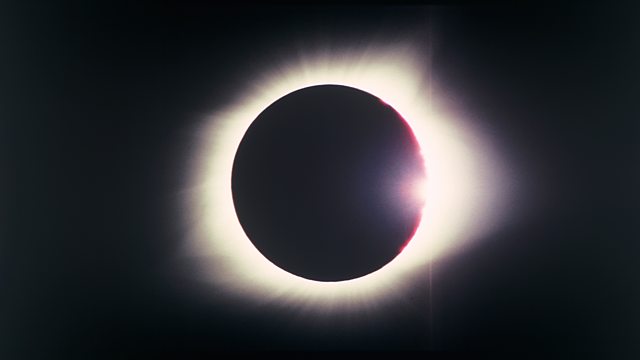
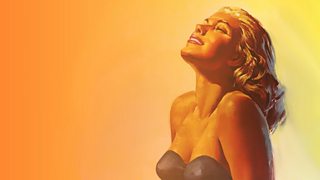
Image: Tacita Dean, Eclipse (still from Antigone, 2017)
Last on
More episodes
Next
You are at the last episode
Clip
![]()
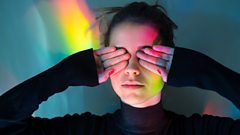
What happens when you live without the sun?
Duration: 02:45
Broadcasts
- Wed 2 Jan 201903:32GMTBBC World Service Online, UK DAB/Freeview, Europe and the Middle East & West and Central Africa only
- Wed 2 Jan 201905:32GMTBBC World Service Australasia, Americas and the Caribbean, South Asia & East Asia only
- Wed 2 Jan 201913:32GMTBBC World Service except News Internet
- Wed 2 Jan 201918:06GMTBBC World Service Australasia
- Wed 2 Jan 201921:06GMTBBC World Service East and Southern Africa & West and Central Africa only
- Wed 2 Jan 201923:06GMTBBC World Service except East and Southern Africa & West and Central Africa
- Sat 5 Jan 201917:32GMTBBC World Service News Internet
- Sun 6 Jan 201910:32GMTBBC World Service
- Wed 30 Sep 202001:32GMTBBC World Service
- Wed 30 Sep 202008:06GMTBBC World Service
- Wed 30 Sep 202014:06GMTBBC World Service except East and Southern Africa & West and Central Africa
- Wed 30 Sep 202015:32GMTBBC World Service East and Southern Africa & West and Central Africa only
- Wed 30 Sep 202019:06GMTBBC World Service except East and Southern Africa & West and Central Africa
- Sun 4 Oct 202010:32GMTBBC World Service except East and Southern Africa & West and Central Africa
Realtime imagery of the sun
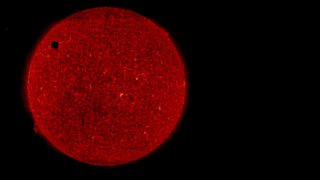
Track the Sun with realtime image data (NASA-SOHO)
The Sun, Our Star
Explore blogs and features from the Science Museum, London
The Documentary Podcast
Hear more documentaries from the BBC World Service
Podcast
![]()
The Compass
With ideas too big for a single episode, The Compass presents mini-series about society