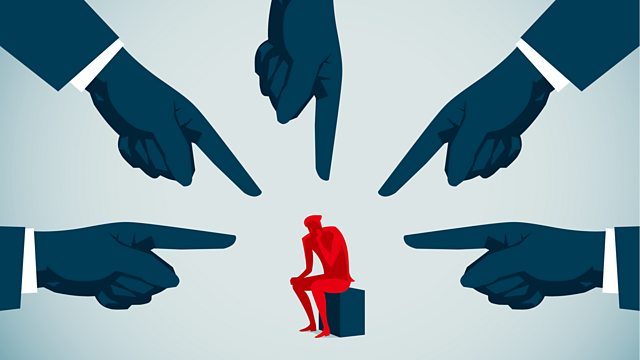
Blame
When things go wrong, we crave something or someone to blame. It's an emotional response found in nearly every culture. The Why Factor asks: why do we play the blame game?
When things go wrong, we crave something or someone to blame. It’s a strategy which puts people on the defensive, and can create a toxic culture. People remember when they have been blamed for something, and will be quicker to deflect blame themselves. It’s a primitive emotion which can be found in almost every society. In this edition of the Why Factor, Sandra Kanthal asks: why do we play the blame game?
Contributors to this programme include:
Mark Alicke, Psychology Professor, Ohio University
Terri Apter, Psychologist and Author of Passing Judgement: The Power of Praise and Blame in Everyday Life.
Charlie Campbell, Author of Scapegoat: A History of Blaming Other People
Dr Cicely Cunningham, Oncologist and founder of the campaign: Learn Not Blame
Richard Gowthorpe, Criminal Defence Lawyer
Armele Philpotts- relationship and family therapist and member of the British Association for Counselling and Psychotherapy.
Image: Pointing Fingers
Credit: Getty Images
Last on

Clip
![]()
Why do we love to blame someone when things go wrong?
Duration: 01:43

Broadcasts
- Mon 4 Feb 201913:32GMTBBC World Service except News Internet
- Mon 4 Feb 201918:06GMTBBC World Service Australasia
- Mon 4 Feb 201921:06GMTBBC World Service East and Southern Africa & West and Central Africa only
- Mon 4 Feb 201923:06GMTBBC World Service except East and Southern Africa & West and Central Africa
- Tue 5 Feb 201902:32GMTBBC World Service
Get the podcast

Subscribe or download individual episodes for free
Why do we look the way we do?

Tattoos, trainers, jeans, hair, ties ... why?
Podcast
![]()
The Why Factor
The extraordinary and hidden histories behind everyday objects and actions