Detecting earthquakes with Fibre Optics
How a system designed to carry TV and internet traffic can help detect earthquakes
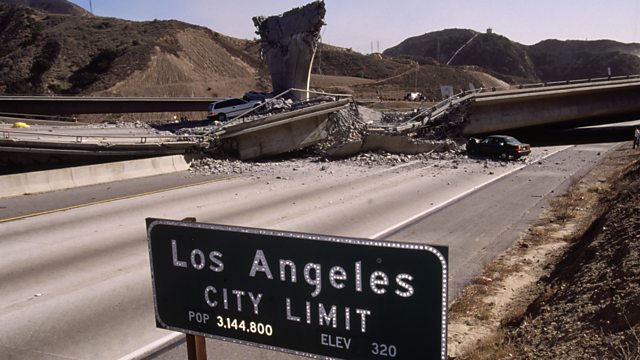
Los Angeles is famously earthquake prone, but it is also known for its technological advancement, being close to the heart of the computer industry. Seismologists have developed a new system which uses redundant capacity on fibre optic networks across the city to detect earthquakes.
Also in the programme the end of Opportunity – the legacy of the Mars Rover designed to have a working life of just 3 months, which continued to explore the Martian surface for 14 years.
And we look at fish and coral. How best can coral reefs be encouraged to regrow after destructive extreme weather events, and why fish farming may be a useful conservation tool as well as a lucrative business.
(Photo:Los Angeles, California: Earthquake Aftermath. Credit David Butow/Corbis via Getty Images)
Presenter: Roland Pease
Producer: Julian Siddle / Deborah Cohen
Last on

Broadcasts
- Thu 14 Feb 201920:32GMTBBC World Service Online, Americas and the Caribbean, UK DAB/Freeview, Europe and the Middle East & News Internet only
- Thu 14 Feb 201921:32GMTBBC World Service Australasia & East Asia only
- Fri 15 Feb 201905:32GMTBBC World Service Online, UK DAB/Freeview, News Internet & Europe and the Middle East only
- Fri 15 Feb 201906:32GMTBBC World Service Australasia, Americas and the Caribbean & South Asia only
- Fri 15 Feb 201907:32GMTBBC World Service East and Southern Africa & East Asia only
- Fri 15 Feb 201911:32GMTBBC World Service West and Central Africa
- Fri 15 Feb 201914:32GMTBBC World Service Australasia
- Fri 15 Feb 201918:32GMTBBC World Service East and Southern Africa, South Asia & West and Central Africa only
- Sun 17 Feb 201912:32GMTBBC World Service except Australasia & West and Central Africa
- Mon 18 Feb 201901:32GMTBBC World Service
Podcast
![]()
Science In Action
The BBC brings you all the week's science news.