
Why are There Morning People and Night People?
What makes some of us early birds and others night owls? Is it down to our genes, or more to do with habits and surroundings?
Some of us want to be up with the larks, while others are more like night owls. But is our preference down to our genes, or more to do with habits and surroundings? We set out to find the answers, inspired by a question from Kira, a night owl CrowdScience listener in Philadelphia, USA.
Our daily, or circadian, body clocks are a hot topic of discussion at the moment - this year’s Nobel Prize for Medicine went to three scientists who discovered the gene that makes these clocks tick. To answer our listener’s question, we need to know why different clocks tick at different rates, so we visit a specialist sleep centre to see how having a slow-ticking clock makes it hard for you to leap out of bed in the morning.
And the morning sun helps all of us regulate our daily rhythm, so what happens when it doesn’t rise at all? We travel to Tromsø, in the far north of Norway, to see how morning and evening types fare during the long polar nights - and meet the reindeer who seem to be able to switch off their daily clocks altogether. Meanwhile down near the equator, we hear about the hunter-gatherer community in Tanzania where there’s nearly always someone awake.
Sami song, the joik of Ráikku-Ánte, is performed by Ken Even Berg
Do you have a question we can turn into a programme? Email us at [email protected]
Presenter: Anand Jagatia
Producer: Cathy Edwards
(Image: L - Women smiling on a run R - Women DJ. Credit: Getty Images)
Last on

More episodes
Clip
![]()
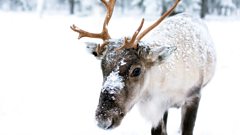
How do reindeer cope with extreme polar seasons?
Duration: 01:45
Broadcasts
- Fri 17 Nov 201720:32GMTBBC World Service Online, Americas and the Caribbean, UK DAB/Freeview & Europe and the Middle East only
- Fri 17 Nov 201721:32GMTBBC World Service Australasia, South Asia & East Asia only
- Sat 18 Nov 201700:32GMTBBC World Service except Americas and the Caribbean & News Internet
- Mon 20 Nov 201705:32GMTBBC World Service except Australasia, East and Southern Africa, News Internet & West and Central Africa
- Mon 20 Nov 201707:32GMTBBC World Service Australasia & East and Southern Africa only
- Mon 20 Nov 201715:32GMTBBC World Service Australasia
- Mon 20 Nov 201718:32GMTBBC World Service East and Southern Africa & West and Central Africa only
- Tue 21 Nov 201703:32GMTBBC World Service West and Central Africa
Podcast
![]()
CrowdScience
Answering your questions about life, Earth and the universe