Barbed Wire
In 1876 John Warne Gates described the new product he hoped to sell as “lighter than air, stronger than whiskey, cheaper than dust”. Barbed wire wreaked huge changes in America.
In 1876 John Warne Gates described the new product he hoped to sell as “lighter than air, stronger than whiskey, cheaper than dust”. We simply call it barbed wire. The advertisements of the time touted it this fence as “The Greatest Discovery Of The Age”. That might seem hyperbolic, even making allowances for the fact that the advertisers didn’t know that Alexander Graham Bell was just about to be awarded a patent for the telephone. But – as Tim Harford explains – while modern minds naturally think of the telephone as transformative, barbed wire wreaked huge changes in America, and much more quickly.
Producer: Ben Crighton
Editors: Richard Knight and Richard Vadon
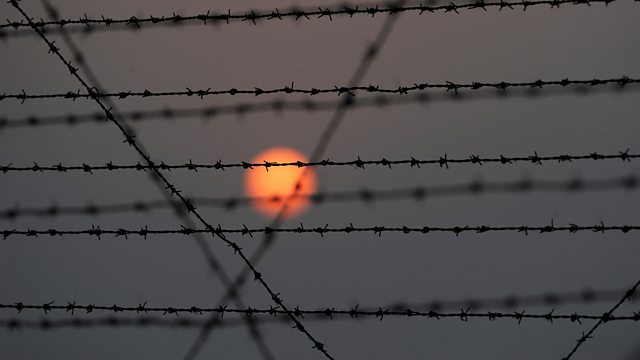
(Image: Barbed wire and sun, Credit: Getty Images)
Last on

Sources and related links
Olivier Razac - Barbed Wire: A political history, English translation by Jonathan Kneight, Profile books 2002
Alan Krell - The Devil's Rope: A cultural history of Barbed Wire, Reaktion Books 2002, p27
Ian Marchant - The Devil's Rope, BBC Radio 4
Encyclopedia of the Great Plains - Barbed Wire
'All the world was America' - John Locke and the American Indian, Morag Barbara Arneil
Broadcasts
- Sat 24 Jun 201702:50GMTBBC World Service except Online, Australasia, News Internet & UK DAB/Freeview
- Sat 24 Jun 201719:50GMTBBC World Service except East and Southern Africa, News Internet & West and Central Africa
- Mon 26 Jun 201703:50GMTBBC World Service Online & UK DAB/Freeview only
Podcast
![]()
50 Things That Made the Modern Economy
The stories of inventions, ideas and innovations which helped create the economic world