Greener In Death
How alkaline hydrolysis – or “water cremation” – offers a greener way of dealing with the body after death.
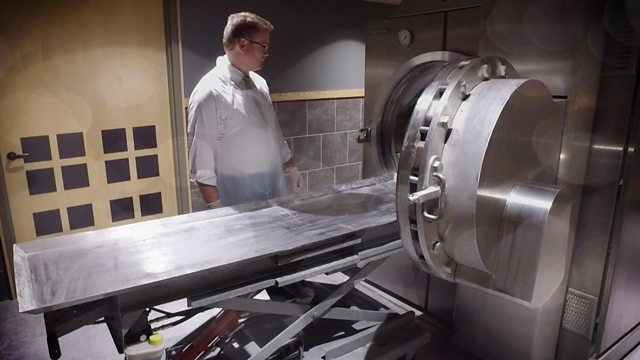
This is a story about what happens to your body after you die. In many countries, the current options are burial and cremation, but, both methods come with significant environmental impacts. We’re running out of space for burial in many places, and cremation carries the risk of toxins and greenhouse gases being released. For World Hacks, Sahar Zand travels to the US, where they’re using a new process to deal with the dead. It’s been called “green cremation,” “water cremation” or “resomation” and uses alkaline hydrolysis to mimic and accelerate the breakdown of tissue that would occur in burial. Those who invented the process say it’s an environmentally friendly way to address this fundamental moment in the human life-cycle, but does the evidence stack up?
Reporter: Sahar Zand
Presenter Mukul Devichand
Image: A resomation machine / Credit: BBC
Last on
Broadcasts
- Tue 2 May 201701:06GMTBBC World Service except News Internet
- Tue 2 May 201706:06GMTBBC World Service Australasia, East and Southern Africa & East Asia only
- Tue 2 May 201707:06GMTBBC World Service Europe and the Middle East
- Tue 2 May 201713:06GMTBBC World Service Australasia
- Tue 2 May 201714:06GMTBBC World Service except Australasia & News Internet
- Tue 2 May 201719:06GMTBBC World Service except East and Southern Africa, News Internet & West and Central Africa
People fixing the world on YouTube
Watch stories of people changing their world on the World Service English YouTube channel
