Earth's Earliest Life
Earth's earliest life; Pollution; Sleeping elephants; Psychotherapy course; Building embryos; Bread; Plastic Tide; Rooting for better routers; How dinosaurs moved
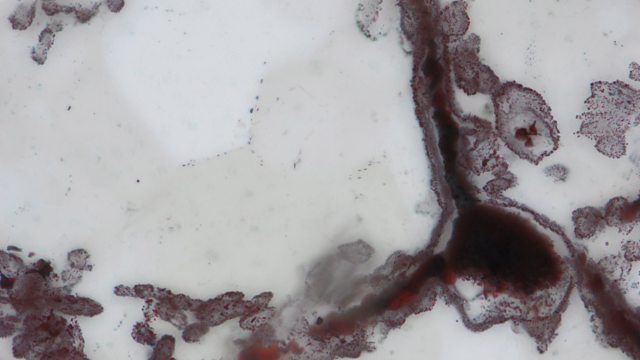
The world's oldest rocks reveal traces of our earliest ancestors, dating back to more than 3.7 billion years. Skip forward a few epochs and we come to the dinosaurs. Most of us have an idea of how they moved around but how realistic is this? John Hutchinson is using physics and video games to work it out.
Findings from China show how air pollutants are fertilising oceans. However, plastic pollution remains a problem and Gareth Mitchell hears how drones are being used to monitor it.
Wild elephants have been shown to survive on as little as two hours sleep a night by South African scientists.
Following years of conflict, the Middle East has one of the highest rates of serious mental health problems. Now, a Master’s degree programme in psychotherapy has begun.
Two thirds of pregnancies fail in the first few days after fertilization. Until now, searchers wanting to understand why this happens have so far struggled to get embryonic stem cells to develop into embryos in the laboratory.
(Image caption: These clumps of iron and filaments show similarities to modern microbes © Matthew Dodd)
The Science Hour was presented by Roland Pease with comments from BBC Science and Health Correspondent Helen Briggs
Producer: Graihagh Jackson
Last on

More episodes
Previous
Broadcasts
- Sat 4 Mar 201723:06GMTBBC World Service except News Internet
- Sun 5 Mar 201712:06GMTBBC World Service Online, Americas and the Caribbean, Europe and the Middle East & UK DAB/Freeview only
- Mon 6 Mar 201706:06GMTBBC World Service South Asia
Podcast
![]()
Unexpected Elements
The news you know, the science you don't