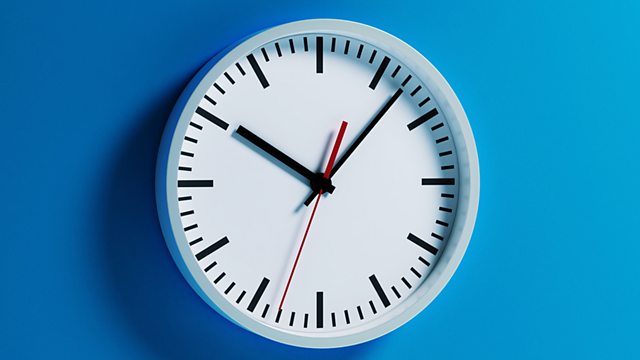
There’s no such thing as “the correct time”. But there is accurate timekeeping. And since its invention in 1656, the clock has become a vital part of the modern economy.
There’s no such thing as “the correct time”. Like the value of money, it’s a convention that derives its usefulness from the widespread acceptance of others. But there is such a thing as accurate timekeeping. That dates from 1656, and a Dutchman named Christiaan Huygens. In the centuries since, as Tim Harford explains, the clock has become utterly essential to almost every area of the modern economy.
Producer: Ben Crighton
Editors: Richard Knight and Richard Vadon
(Image: A wall clock. Credit: Shutterstock)
Last on

Sources and related links
Trains, technology and time-travellers: how the Victorians re-invented time, Ralph Harrington
What the railways did for us, Stuart Hylton, Amberley Publishing Limited, 2015
Exeter Memories: St John's Church, Fore Street
Wikipedia: History of timekeeping devices
Jeremy Norman’s HistoryofInformation.com: Huygens Invents the Pendulum Clock, Increasing Accuracy Sixty Fold
The Atlantic: China Only Has One Time Zone - and That's a Problem
timeanddate.com: How Does an Atomic Clock Work?
Project MUSE: Ruth Belville - The Greenwich Time Lady (review)
The Atlantic: Everything You Need to Know About High-Frequency Trading
PCWorld from IDG: Why computers still struggle to tell the time
The Conversation: Sharper GPS needs even more accurate atomic clocks
WIRED: Most accurate clock ever built could redefine the second
Broadcasts
- Sat 18 Feb 201719:50GMTBBC World Service except Americas and the Caribbean, East and Southern Africa, News Internet & West and Central Africa
- Sun 19 Feb 201711:50GMTBBC World Service except News Internet
- Mon 20 Feb 201704:50GMTBBC World Service Australasia
- Tue 21 Feb 201723:50GMTBBC World Service Americas and the Caribbean
Podcast
![]()
50 Things That Made the Modern Economy
The stories of inventions, ideas and innovations which helped create the economic world