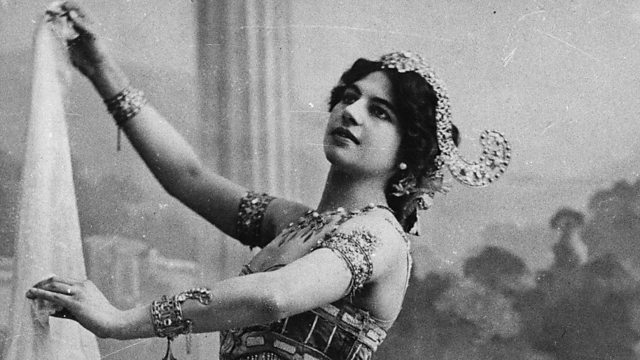
Mata Hari: Dancer, lover, spy
It is 100 years since the infamous dancer and ‘femme fatale’ Mata Hari was executed in France for passing secrets to the Germans during WW1. But was she really guilty?
It is 100 years since the exotic dancer and legendary ‘femme fatale’ Mata Hari was executed by a French firing squad for passing secrets to the Germans during World War One. She was described at the time as the ‘greatest woman spy of the century’. But many now see Mata Hari as a convenient scapegoat, condemned merely for her unconventional lifestyle.
Bridget Kendall discusses the myths and realities surrounding women in espionage with Julie Wheelwright, programme director of non-fiction writing at City, University of London, and author of The Fatal Lover: Mata Hari and the Myth of Women in Espionage; Tammy Proctor, Professor of History at Utah State University and author of Female Intelligence: Women and Espionage in the First World War; and Hanneke Boonstra, a Dutch journalist who is writing an official blog about Mata Hari as part of this year’s centenary commemorations in the Netherlands.
(Photo: Mata Hari. Credit: Getty Images)
Last on

More episodes
Clip
![]()
Secret ink in the lingerie?
Duration: 01:31

Broadcasts
- Mon 23 Jan 201702:06GMTBBC World Service except Americas and the Caribbean, Australasia & News Internet
- Mon 23 Jan 201704:06GMTBBC World Service Australasia
- Mon 23 Jan 201705:06GMTBBC World Service Americas and the Caribbean
- Tue 24 Jan 201709:06GMTBBC World Service except Americas and the Caribbean & News Internet
- Tue 24 Jan 201712:06GMTBBC World Service Americas and the Caribbean
- Tue 24 Jan 201723:06GMTBBC World Service except News Internet
- Wed 25 Jan 201702:06GMTBBC World Service Australasia
Featured in...
![]()
Revolutionary women—The Forum
Warriors, scientists, visionaries: women who changed the world

Podcast
![]()
The Forum
The programme that explains the present by exploring the past