Africa’s Ivory Dilemma
Elephant populations are being decimated but the conservation world remains divided over how best to deal with it.
The level of elephant poaching across Africa has reached crisis proportions. Elephant populations are in steep decline and countries remain divided over what to do. The Convention on International Trade in Endangered Species, or CITES, banned the sale of ivory in 1989 during the last peak in poaching, but as elephant numbers recovered the rules were relaxed, and one-off ivory sales were allowed. At the recent CITES conference in Johannesburg campaigners blaming this legal trade for the poaching crisis were pushing hard for elephants to be given the maximum level of international protection. For Kenya this meant even more restrictions to ban all ivory trade. Countries like South Africa, Namibia and Zimbabwe wanted permission to sell existing ivory stocks in order to fund conservation. The result was deadlock.
BBC Africa correspondent Alastair Leithead travels to the frontlines of the war on poachers and illegal ivory traffickers and goes inside the CITES conference rooms in Johannesburg to find out why countries can't agree on the future of the African elephant.
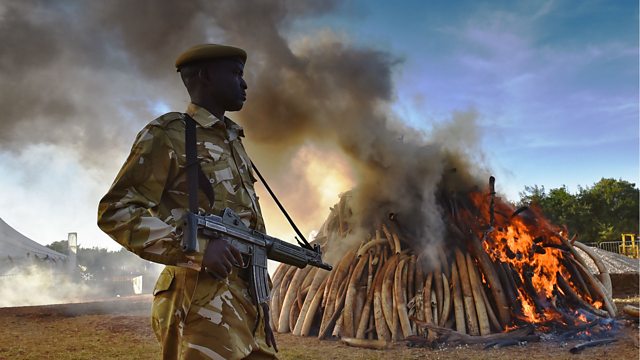
(Photo: Solider holding a gun in front of a pile of ivory on fire. Credit: Getty Images)
Last on

More episodes
Broadcasts
- Thu 6 Oct 201602:32GMTBBC World Service Americas and the Caribbean
- Thu 6 Oct 201604:32GMTBBC World Service Online, South Asia, Europe and the Middle East & UK DAB/Freeview only
- Thu 6 Oct 201605:32GMTBBC World Service East Asia
- Thu 6 Oct 201606:32GMTBBC World Service Australasia
- Thu 6 Oct 201612:32GMTBBC World Service except News Internet
- Thu 6 Oct 201618:32GMTBBC World Service except East and Southern Africa, News Internet & West and Central Africa
- Thu 6 Oct 201619:32GMTBBC World Service East and Southern Africa & West and Central Africa only
- Mon 10 Oct 201606:06GMTBBC World Service East Asia
Download this programme

Subscribe to this programme or download individual episodes
