Editing the Genome - Part Two
Farm animals immune to illness? Eradicating malaria by driving mosquitoes to extinction? Matthew Cobb explores more pros and cons in the brave new world of CRISPR gene editing.
There is a new genetic technology which promises to revolutionise agriculture and transform our influence over the natural world. Research is well underway to create pigs and chickens immune to pandemic influenza, cereals which make their own fertiliser and mosquitoes engineered to wipe out wild populations of the insects which transmit diseases to humans. These are just three examples of what we could create with CRISPR gene editing.
Should we be worried about this unprecedented power over animals and plants? The potential for good is enormous. The ethical challenges are profound. Professor Matthew Cobb of the University of Manchester explores the brave new world of CRISPR gene editing.
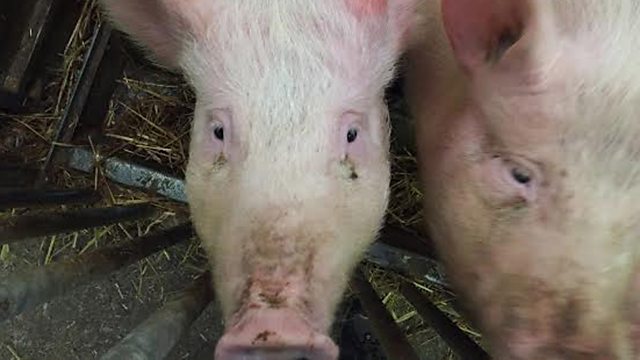
(Photo: Pigs at the Roslin Institute that have been gene-edited with the goal of making them resistant to African Swine Fever virus)
Last on

More episodes
Previous
Broadcasts
- Mon 14 Mar 201620:32GMTBBC World Service Online, Americas and the Caribbean, UK DAB/Freeview & Europe and the Middle East only
- Mon 14 Mar 201621:32GMTBBC World Service East Asia, Australasia, West and Central Africa & South Asia only
- Tue 15 Mar 201602:32GMTBBC World Service Americas and the Caribbean
- Tue 15 Mar 201603:32GMTBBC World Service Online, Europe and the Middle East, East Asia & UK DAB/Freeview only
- Tue 15 Mar 201604:32GMTBBC World Service South Asia
- Tue 15 Mar 201605:32GMTBBC World Service Australasia
- Tue 15 Mar 201607:32GMTBBC World Service East and Southern Africa & Europe and the Middle East only
- Tue 15 Mar 201613:32GMTBBC World Service Online & UK DAB/Freeview only
- Tue 15 Mar 201614:32GMTBBC World Service East Asia, Europe and the Middle East, East and Southern Africa, West and Central Africa & South Asia only
Space

The eclipses, spacecraft and astronauts changing our view of the Universe
The Curious Cases of Rutherford and Fry

A pair of scientific sleuths answer your perplexing questions. Ask them anything!
Podcast
![]()
Discovery
Explorations in the world of science.