Malaria and River Blindness Drugs Share Nobel Prize
Claudia Hammond discusses enormous public health impacts of the two anti-parasite drugs recognised by this year’s Nobel Prize for Medicine.
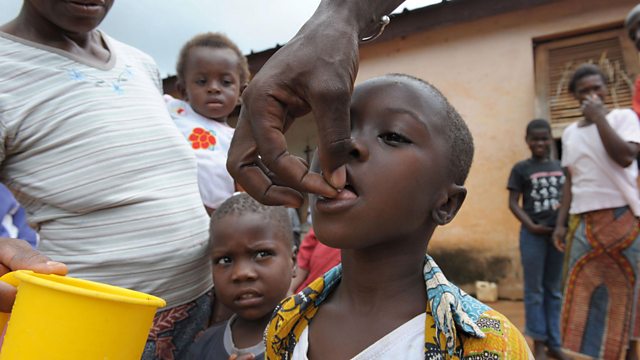
This year’s Nobel Prize for Medicine was awarded to three scientists whose research on parasitic diseases has saved the lives of millions and the sight of hundreds of millions of people in tropical countries. Following a lead from traditional Chinese medicine, Dr Youyou Tu discovered and isolated a chemical, artemisinin, from the sweet wormwood plant. Artemisinin is now the basis of successful malaria treatment worldwide. She shared the prize with Japanese microbiologist Satoshi Omura and Irish-born medicinal chemist William C Campbell for their discovery of a new chemical produced by a soil microbe. They discovered it killed roundworm parasites. It was modified into a drug, Ivermectin, which has been used to treat and prevent River Blindness (Onchocerciasis) and lymphatic filariasis in hundreds of millions of people in Sub-Saharan Africa.
Five years ago, 33 men were rescued from deep within a mine in Chile after being trapped for 69 days. Jane Chambers talks to two of the miners and experts involved in their ordeal about the psychological impact of the experience.
Picture: Ivermectin is administered. Credit: Getty Images
Last on
Broadcasts
- Wed 7 Oct 201518:32GMTBBC World Service except East and Southern Africa & West and Central Africa
- Wed 7 Oct 201519:32GMTBBC World Service East and Southern Africa & West and Central Africa only
- Wed 7 Oct 201523:32GMTBBC World Service
- Thu 8 Oct 201502:32GMTBBC World Service Australasia & Europe and the Middle East only
- Thu 8 Oct 201504:32GMTBBC World Service Online, Americas and the Caribbean, UK DAB/Freeview & South Asia only
- Thu 8 Oct 201505:32GMTBBC World Service East Asia
- Thu 8 Oct 201506:32GMTBBC World Service Europe and the Middle East
- Thu 8 Oct 201512:32GMTBBC World Service except Americas and the Caribbean & Australasia
- Thu 8 Oct 201513:32GMTBBC World Service Australasia
Podcast
![]()
Health Check
Health issues and medical breakthroughs from around the world.