Why do we have Human Rights?
Where do Human Rights come from? Mike Williams hears about the philosophical grounding of Human Rights, and some surprising new ways in which they are being applied.
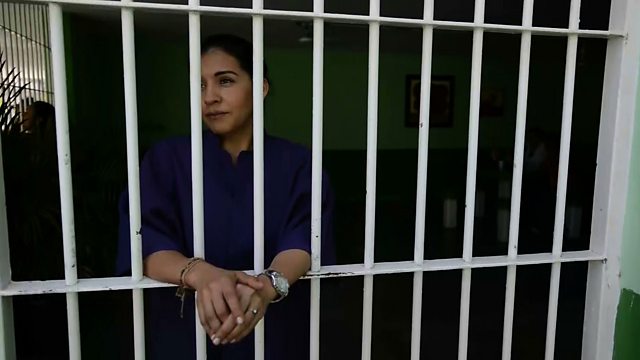
The UN proclaimed its Universal Declaration of Human Rights in 1948, after the horrors of World War Two. But they are far from universally upheld. Yecenia Armenta Graciano’s right not to be tortured was grievously violated in Mexico, when she was beaten, suffocated and sexually assaulted to sign a confession.
Yet Human Rights are being used in an increasingly wide range of legal cases, whether to force governments to provide food for the poor, or to cut CO2 emissions to help avert climate change. So what are they, how are they evolving, and what if one person’s human right clashes with that of another?
Mike Williams talks to philosopher and law professor John Tasioulas of Kings College London; international law scholar and former UN rapporteur Philip Alston; Dutch lawyer Dennis van Berkel of the environmentalist organisation Urgenda; and India Supreme Court lawyer and human rights campaigner Vrinda Grover.
(Photo: Yecenia spent three years in prison since she was tortured to sign a confession for a crime she says she didn’t commit. Credit: Amnesty International)
Last on

More episodes
Clip

Broadcasts
- Fri 4 Sep 201518:32GMTBBC World Service except East and Southern Africa & West and Central Africa
- Fri 4 Sep 201519:32GMTBBC World Service West and Central Africa & East and Southern Africa only
- Fri 4 Sep 201523:32GMTBBC World Service
- Sun 6 Sep 201521:32GMTBBC World Service
- Mon 7 Sep 201502:32GMTBBC World Service Europe and the Middle East & Australasia only
- Mon 7 Sep 201504:32GMTBBC World Service Online, South Asia, UK DAB/Freeview & Americas and the Caribbean only
- Mon 7 Sep 201505:32GMTBBC World Service East Asia
- Mon 7 Sep 201506:32GMTBBC World Service Europe and the Middle East
- Mon 7 Sep 201512:32GMTBBC World Service except Americas and the Caribbean & Australasia
- Mon 7 Sep 201513:32GMTBBC World Service Australasia
Get the podcast

Subscribe or download individual episodes for free
Why do we look the way we do?

Tattoos, trainers, jeans, hair, ties ... why?
Podcast
![]()
The Why Factor
The extraordinary and hidden histories behind everyday objects and actions