Afghan Women: Speaking out, Losing Lives
The lives of Afghan women, the war of attrition on their hard-won rights, and their fears for the future.
A vivid portrait of the everyday lives of girls and women at a turning point in Afghan history. Lyse Doucet visits Kabul to see how the lives of Afghan girls and women have changed since the fall of the Taliban 13 years ago, and to hear concerns that these hard-won gains are already being threatened as the troops depart.
From female illiteracy to maternal mortality and sexual violence, Afghanistan is still one of the worst places on earth for women's rights, though considerable advances have been made since the fall of the Taliban.
Lyse speaks with Rula Ghani, whose very public profile as the new First Lady - the first First Lady in a generation - gives a sense of how women's opportunities are improving, at least in cities such as Kabul.
She visits the Rabia Balkhi Women's Hospital and the Zarghuna High School for Girls - the largest girls' school in the country. As doctors, midwives, new mothers, teachers, schoolgirls and one of the country's very few female rappers share their personal stories, she hears optimism about life in cities, but grave concern about the rural areas, where the Taliban continue to wield power.
She hears shocking stories of domestic violence, rape and forced marriage, and she chances upon a tragic but all too common instance of still-birth. Additionally, the testimonies of two women whom Lyse had hoped to meet - a doctor who has gone into hiding and a head-teacher who is seeking political asylum in Britain, both because of fear of the Taliban - are read by the actor Olivia Coleman, giving voice to the women who fear even today to speak out.
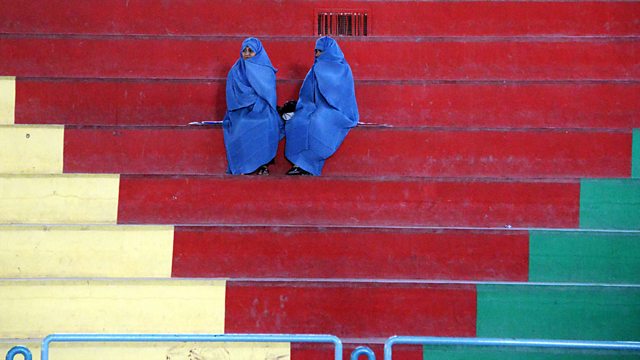
(Photo: Afghan women sit in the rafters as they watch girls compete in a Taekwon-Do match. Credit: Aref Karimi/AFP/Getty Images)
Last on
Broadcasts
- Wed 17 Dec 201402:32GMTBBC World Service Online
- Wed 17 Dec 201416:32GMTBBC World Service Online
- Wed 17 Dec 201420:32GMTBBC World Service Online
- Sun 21 Dec 201412:32GMTBBC World Service Online
