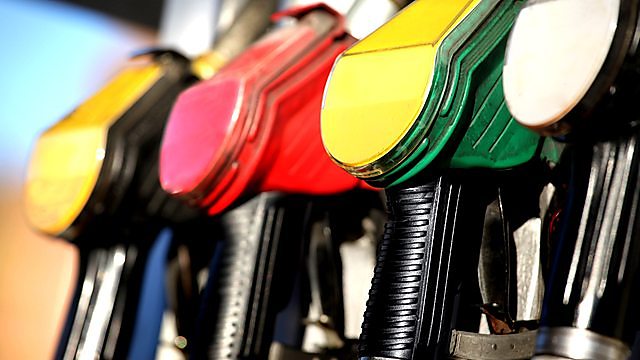
Whatever Happened to Biofuels - Part Two
Gaia Vince takes to the water of Strangford Lough in Northern Ireland to see an experiment in growing algae that can be turned into fuel. And could bacteria produce petrol?
Whatever happened to biofuels? They were seen as the replacement for fossil fuels until it was realised they were being grown on land that should have been used for food crops. But now there is serious research into new ways of producing biofuels, from waste materials, from algae and from bacteria.
Gaia Vince takes to the water of Strangford Lough in Northern Ireland where Professor Matthew Dring and Dr Karen Mooney from Queens University, Belfast, are experimenting in growing algae that could be turned into fuel. She visits Professor Alison Smith's algae lab at Cambridge University. Graham Ellis from Solazyme in California explains how his company has already made fuel from algae that has been sold at the pumps and powered a plane, in a mixture with conventional fuel. And Professor Nick Turner at Manchester University and Professor John Love at Exeter University talk about how they are manipulating bacteria to make diesel.
Last on

Broadcasts
- Mon 28 Apr 201418:32GMTBBC World Service Online
- Tue 29 Apr 201401:32GMTBBC World Service Online
- Tue 29 Apr 201408:32GMTBBC World Service Online
- Sun 4 May 201423:32GMTBBC World Service Online
Space
The eclipses, spacecraft and astronauts changing our view of the Universe
The Curious Cases of Rutherford and Fry

A pair of scientific sleuths answer your perplexing questions. Ask them anything!
Podcast
![]()
Discovery
Explorations in the world of science.