Sounds Familiar
After years of promise, voice recognition looks like a technology that might finally be coming of age. Peter Day reports.
After years of promise, voice recognition is at last becoming a significant method of using computers and accessing the Internet. Why now, and what difference does it make? Peter Day talks to the companies at the forefront of developments in the field (including Massachusetts-based Nuance, one of the largest makers of voice recognition technology), and asks whether our relationship with machines will change once we have the ability to talk to them.
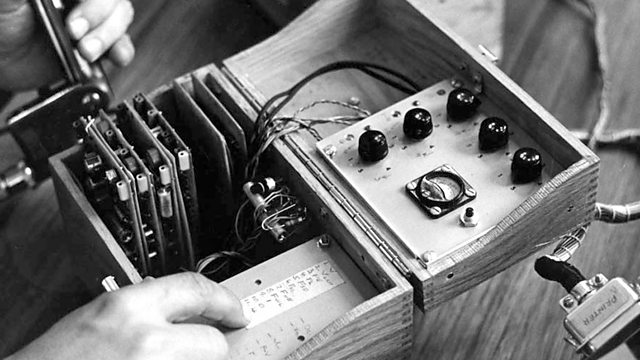
[Picture: The IBM Shoebox, introduced in 1962, could understand 16 words: zero, one, two, three, four, five, six, seven, eight, nine, minus, plus, subtotal, total, false, and off.]
Last on

Contributors to this programme
Vlad Sejnoha
Chief Technology Officer, Nuance
Barry Collins
Editor, PC Pro magazine
Steve Young
Professor of Information Engineering, Cambridge University
Professor Timothy Dawson
Lancashire Teaching Hospitals NHS Trust
Barbara Dumery
Director of Diagnostic Solutions Marketing, Nuance
Sean McGrath
Product Marketing Manager, Nuance
David Nahamoo
Speech Chief Technology Officer, IBM Research
Paul Saffo
Managing Director, Foresight, Discern Analytics
Broadcasts
- Sat 5 Jan 201311:32GMTBBC World Service Online
- Sat 5 Jan 201319:32GMTBBC World Service Online
- Sun 6 Jan 201304:32GMTBBC World Service Online
- Sun 6 Jan 201315:32GMTBBC World Service Online
Advice For Entrepreneurs

What is the one piece of advice successful global entrepreneurs would offer?
Download this programme

Subscribe to this programme or download individual episodes.
