
L’Aquila Scientists Guilty
Scientists are sentenced to six years for advice given before the L'Aquila earthquake.
Last on

More episodes
Previous
Chapters
L’Aquila scientists found guilty
Scientists are sentenced to six years for advice given before the L’Aquila earthquake.
Duration: 07:21
Dinosaur feathers
A new discovery pushes the evolution of feathers further back in time.
Duration: 03:38
Newsbelt
Cocaine in the atmosphere; and a whale with a human-like voice
Duration: 01:32
The grandmother hypothesis
An explanation for why humans live so much longer than other great apes.
Duration: 04:33
L’AQUILA SCIENTISTS GUILTY
Scientists around the world have been expressing shock this week after an Italian court sentenced six researchers and a government official to six years in prison. On the 6th April 2009, the Italian city of L'Aquila was struck by a magnitude 6.3 earthquake killing 309 people. Although no-one expected scientists to predict the quake, they were convicted for the 'incomplete and contradictory' information that emerged from a meeting held in the days leading up to the disaster. The trial has sparked international interest, with most scientists condemning the verdict. It also raises questions about how academics and those in charge of public safety should communicate risk to the public. As Chair of the International Commission on Earthquake Forecasting, US seismologist Thomas Jordan has been trying to find an answer. Meanwhile, journalist Nicola Nosengo has been keeping a close eye on the trial.
Photo by Marco Di Lauro/Getty Images
DINOSAUR FEATHERS
![DINOSAUR FEATHERS]()
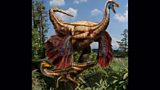
We know that modern birds evolved from dinosaurs but figuring out exactly when feathers came onto the scene is hard. The delicate structures are poorly preserved and have thus far been found almost exclusively in China. Now - thanks to a new paper in the journal Science by Professor Darla Zelenitsky - everything is changing. Not only have feathered dinosaurs now been discovered in North America for the very first time, but the details of the find raise new possibilities about why feathers evolved in the first place.
Image: Artistic reconstruction of the feathered ornithomimed dinosaurs found in Alberta, Canada (Credit: Julius T. Csotonyi)
GRANDMOTHER HYPOTHESIS
We humans live far longer than other apes – and a new study says we should thank our grandmothers for it. Humans live well past their childbearing years, whereas other primates usually die once they can no longer have children. One theory put forward by University of Utah anthropologist Kristen Hawkes is known as "the grandmother hypothesis" which says that having an older relative around to help means that mothers were free to have more children sooner, and therefore pass on more of their own longevity genes. It has always been controversial, but Professor Hawkes has now devised a computer model to show that the theory really does work.
Broadcasts
- Thu 25 Oct 201218:32GMTBBC World Service Online
- Fri 26 Oct 201203:32GMTBBC World Service Online
- Fri 26 Oct 201210:32GMTBBC World Service Online
Podcast
![]()
Science In Action
The BBC brings you all the week's science news.

Related Content
