Deep Listening - A way to better conversations
Deep listening is an approach that can be used to help people discuss difficult topics - a way of listening that makes a speaker feel heard and acknowledged, so the listener can be open to views they might disagree with.
In May 2022 as part of BBC 100 the BBC, in partnership with the British Council, brought together young people from 119 countries around the world to learn about deep listening and have conversations across divides.
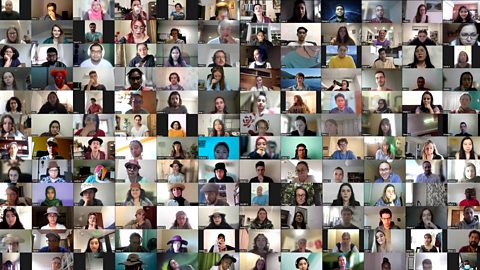
Crossing Divides around the Globe with Deep Listening for BBC100
Bringing together young people from 119 countries to have conversations across divides.

Social media: A force for good, or a cause of anxiety and fear of missing out?
An American influencer and an Indian student discuss very different views of social media
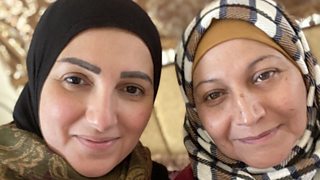
How does a conversation flow differently when deep listening skills are put into practice? Back in March 2021, 150 Lebanese citizens took part in a pilot programme to learn deep listening skills, led by the Editor of BBC Crossing Divides and executive coach Emily Kasriel. Khalil and Ahmed spoke to Outside Source about how the techniques they learned enabled them to have more meaningful conversations.

How 'deep listening' helped us have a richer conversation
Two people from Lebanon explain how the technique led to more meaningful conversations
What deep listening technique made the biggest impact?
One year on from the deep listening training, other participants from the training programme still use many of the techniques in their professional and personal lives.
Camilia: Reflecting back

Emily and Camilia demonstrate how when a listener captures a speaker’s emotions, even seemingly trivial conversations can go much deeper.
Mohammad: Use silence
Don't fill the conversation with your own assumptions. Let it take its path
"My tip is be patient. Create a space for the people you talk to, try to listen. If you actually want to listen, you need that space to be patient with them. And those 20 seconds will be like magic sometimes. Just wait, just wait! If 20 seconds is too much give it 10 at least. Give them that space, don't fill it with your own assumptions. Let the conversation take its path."
Hawraa: Don't judge

"Learn to listen more without judging while listening. Consider every story without trying to judge if what someone says goes with what [you] believe or not… If we are good to humanity, then we can all live happily. At least we don't add pain to others’ pain. And that's something that can be done only if we communicate effectively with people, listening with open hearts. Deep listening makes me feel peaceful. Humanity connects us."
Jad: Be in the moment

“Don’t get lost in your thoughts, our lives are so packed with so much to think about and do. In a conversation it’s easy to slip out of it. Be in the moment with a person and [you can] have a fruitful conversation.”
How can you learn and practise deep listening?
Techniques like using silence and intention, withholding judgement, along with non-verbal tools, can all be practised in day-to-day conversations. Used regularly, deep listening is an approach that can lead to more meaningful conversations with colleagues, family and friends, even when they have very different perspectives.
Emily uses all these key deep listening techniques in conversation with BBC presenter Nuala McGovern and shows how a speaker can be made to feel truly heard.
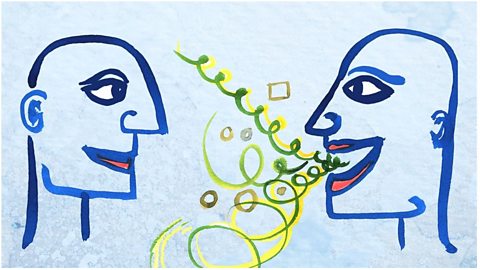
A 'deep listening' demo: How to have better conversations
Checking your understanding of what they have said can help them feel truly heard
![]()
I was against refugees but now I’m helping them
Hawraa was part of a project in Lebanon aimed at encouraging those with conflicting views to listen to each other.
![]()
Find out more about BBC 100
Crossing Divides around the globe is part of the BBC's centenary celebrations.