 | 13 November 2014 |

| |
| BBC Homepage | | |
| |||
| Contact Us | | |
Nature featuresYou are in: Oxford > Nature > Nature features > The Wildlife of Dry Sandford Pit 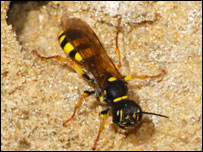 Solitary wasp at the pit by G. Hageman The Wildlife of Dry Sandford PitThis nationally important site, near Abingdon, is special both for both its biological and geological features. 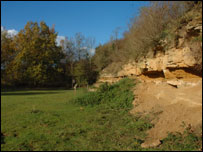 Dry Sandford Pit Dry Sandford Pit is famous among geologists for its sandstone exposures where Jurassic fossils can be found, and biologists love it for the unique combination of woodland, ponds and a fen that plays host to the nationally rare Southern Damselfly and the carpets of marsh helleborine orchids. Jo Thoenes and Gavin Hageman go in search of the solitary wasps and bees that live in tiny burrows in the sandstone cliffs. These wasps do not live in colonies but on their own in burrows. Their larvae also live in the burrows and are fed insects that have been paralysed by the wasps' sting! 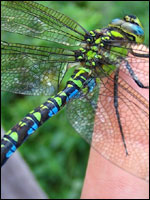 Southern Hawker by John Vallender Despite the storm weather approaching, Gavin and Jo investigate the early signs of autumn and not only find the burrowing wasps but also have a very close encounter with one of our largest dragonflies - the southern hawker! It is a tranquil place with a convenient car park right next to the Merry Miller pub in Dry Sandford. It is part of a complex of four reserves - known as the Cothill reserves - which includes Parsonage Moor, accessible from the footpath opposite Dry Sanford Pit car park. Listen to our feature on Dry Sandford by clicking on the links below. Help playing audio/video last updated: 12/09/2008 at 16:50 You are in: Oxford > Nature > Nature features > The Wildlife of Dry Sandford Pit    [an error occurred while processing this directive] |
| | About the BBC | Help | Terms of Use | Privacy & Cookies Policy |
