
Home > Opinion > We can be heroes
Tim Rushby-Smith
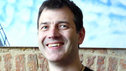
Tim studied at Chelsea School of Art before working variously as a painter and decorator, printer, barman, telephone engineer, landscape gardener and tree surgeon, while continuing to practice as an artist and writer. His first book, a memoir entitled Looking Up, was published in April 2008. He lives with his wife and daughter in Hackney, east London, and is mostly happy. Keep up with Tim via his blog.
We can be heroes
2nd October 2008
Are you a hero? Have you ever been described as heroic? I have. When I was in the spinal unit, people would visit and tell me that I was amazing, that they didn't know how I could do it, and that if they were in my position, they would be in pieces.
This left me feeling quite uneasy, because I don't see coming to terms with my disability as something that I had any choice over. I'm not even sure that I have fully come to terms with it, and I don't feel like I have handled things any better than anyone else. In fact, I can tell you that, at first, I tried everything to avoid facing up to what had happened to me. Sadly, morphine and positive thoughts do not repair spinal cord injury. Instead, I found out how my previous perception of disability compares to the reality.
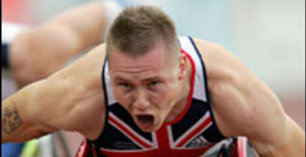
The recent Paralympics was the first I'd watched since becoming a potential competitor, and it made me challenge the attitudes that I used to hold with regards to disability. It's hard to remember exactly how I felt before, but I certainly remember finding it easier to relate to people with impairments that I could imagine myself having.
But did sudden disability seem more heroic than being disabled since birth?
I'm reminded of a conversation I had with a friend who has spina-bifida. He told me that when he meets people for the first time, he often sees relief cross their face when they find out that he has been disabled all his life. Relief because they don't have to hear about some 'tragedy' that left him in a wheelchair and which could have happened to anyone, including them. It's as if there's some kind of collective sense of guilt about sudden disability. He also reckoned that 'new' paraplegics are on the top of the wheelchair pile - not only because they have full dexterity in their upper limbs, which allows them to remain independent, but also because they meet lots of sympathy and understanding from the wider world.
Did I feel like that before my injury? I think I probably did. I do remember trying really hard to show no interest, as if that's the right way to treat disabled people as normal. But now I'm on the other side of the fence, I find that I actually prefer people to acknowledge my disability and then move on, so it doesn't become the half-paralysed elephant in the room.
But did sudden disability seem more heroic than being disabled since birth?
I'm reminded of a conversation I had with a friend who has spina-bifida. He told me that when he meets people for the first time, he often sees relief cross their face when they find out that he has been disabled all his life. Relief because they don't have to hear about some 'tragedy' that left him in a wheelchair and which could have happened to anyone, including them. It's as if there's some kind of collective sense of guilt about sudden disability. He also reckoned that 'new' paraplegics are on the top of the wheelchair pile - not only because they have full dexterity in their upper limbs, which allows them to remain independent, but also because they meet lots of sympathy and understanding from the wider world.
Did I feel like that before my injury? I think I probably did. I do remember trying really hard to show no interest, as if that's the right way to treat disabled people as normal. But now I'm on the other side of the fence, I find that I actually prefer people to acknowledge my disability and then move on, so it doesn't become the half-paralysed elephant in the room.
What I can remember is that I didn't feel like disabled people were all 'heroes' just for getting on with their lives. I did wonder what would be worse: to be blind or deaf or in a wheelchair or 'a bit mental', but that was when I was about seven years old. I was also affected by being a child of the Joey Deacon era, when attempts to make heroes of people with severe disability merely provided more fodder for playground jeers.
We have come a long way since those days, but the danger is that through events such as the Paralympics we may create unrealistic expectations, so that disabled people feel they need to be competing for a medal if they are to be taken seriously. Another elephant, except that this one is wearing lycra.
Do we want to be perceived as heroes? Is it a little patronising? Or is this how able-bodied people try to acknowledge that life is more difficult with a disability? The Paralympics could just be helping to move attitudes in the right direction: if disabled medallists are lauded as sporting heroes, then maybe the rest of us can be allowed to get on with just being 'normal'.
Do we want to be perceived as heroes? Is it a little patronising? Or is this how able-bodied people try to acknowledge that life is more difficult with a disability? The Paralympics could just be helping to move attitudes in the right direction: if disabled medallists are lauded as sporting heroes, then maybe the rest of us can be allowed to get on with just being 'normal'.
More articles about
Bookmark with...
Live community panel
Our blog is the main place to go for all things Ouch! Find info, comment, articles and great disability content on the web via us.
Listen to our regular razor sharp talk show online, or subscribe to it as a podcast. Spread the word: it's where disability and reality almost collide.
More from the BBC

All the latest news from the paralympics.

News and views for people who are blind or partially sighted.

Weekdays 12.40pm. Radio 4's consumer affairs programme.

~RS~q~RS~_bbc_=0&__ip__=54.77.33.255&dnainitialtitle=We%20can%20be%20heroes&dnahostpageurl=http://www.bbc.co.uk/ouch/opinion/we-can-be-heroes.shtml&dnauid=ouch:article:1634&s_baseHeadingLevel=1&dnashow=10&dnafrom=0&dnato=9&dna_encoding=utf-8&s_sssicomponent=1&s_sssiCommentCount=&dnacommentforumlistprefix=%5B_%5D&dnarecentcommentsprefix=%5B_%5D&s_commentprofileurl=/dna/mbouch/CommentProfile?&s_contact=0~RS~z~RS~18~RS~)

Comments