
Home > Opinion > The Twilight Zone
Tim Rushby-Smith
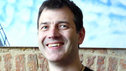
Tim studied at Chelsea School of Art before working variously as a painter and decorator, printer, barman, telephone engineer, landscape gardener and tree surgeon, while continuing to practice as an artist and writer. His first book, a memoir entitled Looking Up, was published in April 2008. He lives with his wife and daughter in Hackney, east London, and is mostly happy. Keep up with Tim via his blog.
The Twilight Zone
After years as an able-bodied consumer, thinking that disabled access was broadly pretty good but possibly needed a tweak here and there, I now want to access these facilities myself and appreciate the inside story. The thing that strikes me most is the lack of consistency, especially all the 'almost right's'.

A restaurant may feel that they have provided for disabled clientele by having a toilet set up with the requisite wide door and grabrails, but if the relative rarity of disabled customers tempts them into filling the space with staff lockers, a coat stand and eighteen gallons of cooking oil, then they may just as well not bother. Provision for disabled people has to be more than a box ticking exercise.
I was at a sailing centre recently. The manager told me the local authority demanded to see his 'Health and safety policy for people with disabilities.' Quite what this would include is a bit of a mystery. The notion of an easily presented blanket policy that covers the needs of a wheelchair user, a blind person, an epileptic, a deaf person, someone with learning difficulties, etc. is unrealistic. But the policy wasn't about the needs of a diverse group of people. It was about meeting the requirements of a compliance procedure.
I'm sure, like me, you've been irritated by people assuming you are incapable of doing something well. For me, the best service I get is from those who are helpful and flexible enough to be able to work out solutions to any problems I may encounter, not to be treated as if I have every conceivable disability.
In the grey area between disabled and able bodied people, lives the fear factor. Often people are so terrified of offending that they are unable to think logically about what someone's needs might be. There are occasions when as a disabled person, it is useful to bear this in mind as it can help to explain away some of the more bizarre 'help' that may be offered. For instance, there's nothing quite like falling out of your wheelchair and having a panicky passer-by rush over and lift your legs up. Great. You're still on the ground, but at least your shoes aren't getting dirty.
Another misunderstanding is over the economic implications of disabled access. If I go out for dinner, I may be going out with half a dozen friends, and when the restaurant is selected, then wheelchair access is a factor. By being wheelchair accessible, the restaurant will enjoy not only my custom, but also that of all my friends.
When I was first discharged from hospital, I was emphatic: "If everyone's going somewhere that's not accessible, then I'll get in somehow. Even if I have to be carried."
Like many people, I have been lifted up stairs, hanging on to the frame of my wheelchair for dear life as I am held aloft like a hunting trophy. Not the most subtle way to make an entrance, especially if you arrive with the stairwell lampshade on your head.
I have encountered cramped toilets that are too narrow for a wheelchair so that I've had to fumble with catheters while only my nose and front wheels are in the cubicle. I have even taken a leak in a dinner host's office, spare room and hall. I carry the aforementioned catheters with bags attached for just this eventuality, in case any of you have the unfortunate image of me peeing all over furniture and leaving friends to clear up the mess.
I have climbed every mountain. And, yes, I am glad that I did. But now? Well, to be honest, I just can't be arsed. I don't want to be a 'special case', held aloft or clambered over. I just want to be anonymous. You know...NORMAL.
Wheelchair users are relatively rare. This is a good thing, for we are bipeds by nature. I know there are some people who may take umbrage at this statement, but while I have no wish to offend, I think it's pretty indisputable. As such our built environment has evolved based upon walking as the default and these problems are going to arise again and again.
My conclusion is that we should all just take a minute and talk to each other… It's OK to not fully understand the needs of every individual person, and it's OK to ask. But importantly, it's also OK to be asked, because that's how people get to understand.
I was at a sailing centre recently. The manager told me the local authority demanded to see his 'Health and safety policy for people with disabilities.' Quite what this would include is a bit of a mystery. The notion of an easily presented blanket policy that covers the needs of a wheelchair user, a blind person, an epileptic, a deaf person, someone with learning difficulties, etc. is unrealistic. But the policy wasn't about the needs of a diverse group of people. It was about meeting the requirements of a compliance procedure.
I'm sure, like me, you've been irritated by people assuming you are incapable of doing something well. For me, the best service I get is from those who are helpful and flexible enough to be able to work out solutions to any problems I may encounter, not to be treated as if I have every conceivable disability.
In the grey area between disabled and able bodied people, lives the fear factor. Often people are so terrified of offending that they are unable to think logically about what someone's needs might be. There are occasions when as a disabled person, it is useful to bear this in mind as it can help to explain away some of the more bizarre 'help' that may be offered. For instance, there's nothing quite like falling out of your wheelchair and having a panicky passer-by rush over and lift your legs up. Great. You're still on the ground, but at least your shoes aren't getting dirty.
Another misunderstanding is over the economic implications of disabled access. If I go out for dinner, I may be going out with half a dozen friends, and when the restaurant is selected, then wheelchair access is a factor. By being wheelchair accessible, the restaurant will enjoy not only my custom, but also that of all my friends.
When I was first discharged from hospital, I was emphatic: "If everyone's going somewhere that's not accessible, then I'll get in somehow. Even if I have to be carried."
Like many people, I have been lifted up stairs, hanging on to the frame of my wheelchair for dear life as I am held aloft like a hunting trophy. Not the most subtle way to make an entrance, especially if you arrive with the stairwell lampshade on your head.
I have encountered cramped toilets that are too narrow for a wheelchair so that I've had to fumble with catheters while only my nose and front wheels are in the cubicle. I have even taken a leak in a dinner host's office, spare room and hall. I carry the aforementioned catheters with bags attached for just this eventuality, in case any of you have the unfortunate image of me peeing all over furniture and leaving friends to clear up the mess.
I have climbed every mountain. And, yes, I am glad that I did. But now? Well, to be honest, I just can't be arsed. I don't want to be a 'special case', held aloft or clambered over. I just want to be anonymous. You know...NORMAL.
Wheelchair users are relatively rare. This is a good thing, for we are bipeds by nature. I know there are some people who may take umbrage at this statement, but while I have no wish to offend, I think it's pretty indisputable. As such our built environment has evolved based upon walking as the default and these problems are going to arise again and again.
My conclusion is that we should all just take a minute and talk to each other… It's OK to not fully understand the needs of every individual person, and it's OK to ask. But importantly, it's also OK to be asked, because that's how people get to understand.
More articles about
Bookmark with...
Live community panel
Our blog is the main place to go for all things Ouch! Find info, comment, articles and great disability content on the web via us.
Listen to our regular razor sharp talk show online, or subscribe to it as a podcast. Spread the word: it's where disability and reality almost collide.
More from the BBC

All the latest news from the paralympics.

News and views for people who are blind or partially sighted.

Weekdays 12.40pm. Radio 4's consumer affairs programme.


