
Home > Opinion > That disability 'get it' moment
Flash Wilson

Flash works as a website accessibility consultant. When not evangelising about the needs of different users she maintains her website, The Gorge, which includes everything from her sponsor children to a large gallery of electricity pylons.
That disability 'get it' moment
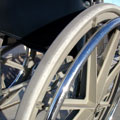
Today, my first wheelchair arrived. Scary, but this is me buying back my independence. However, getting to the point where I felt OK about ordering a wheelchair has been quite a long journey ...
Impairments can creep up on you slowly. I used to not consider myself disabled at all. As my mobility grew worse I was embarrassed to accept help and ashamed that I needed it. I saw taking the help and benefits that come with it as a step backwards. Identifying as disabled was not for me. I'd seen disabled people attending my brother's Special School, and I certainly wasn't one of them!
Sometimes being a strong and fiercely independent person works against you. When I left home and moved to London, I thought I was weak for not being able to manage things at work or in my social life that others took for granted. I signed up for Aikido classes because a boy I fancied did it, and instead of admitting that I couldn't manage the exercises I took prescription painkillers to get through them. I also took driving lessons, but after an hour of using the clutch I could barely walk. Of course, I failed my test. If only I'd asked for help ...
Sometimes being a strong and fiercely independent person works against you. When I left home and moved to London, I thought I was weak for not being able to manage things at work or in my social life that others took for granted. I signed up for Aikido classes because a boy I fancied did it, and instead of admitting that I couldn't manage the exercises I took prescription painkillers to get through them. I also took driving lessons, but after an hour of using the clutch I could barely walk. Of course, I failed my test. If only I'd asked for help ...
One day, my mother came to visit me and we went out to the London Eye. She walked up to the ticket office and asked for "one disabled and one assistant". I was mortified! But I did note that it was cheaper for her to go on the Eye with me than without; concessionary tickets hadn't even occurred to me as a possibility.
At a neighbouring exhibition I was offered the use of a wheelchair. But I certainly didn't need to be pushed around, thank you very much - I could manage with my stick at my own pace, and that was that. Other people can manage, after all!
I remained unimpressed, and later talked to my mum about it. She said: "It's normal for you, and you make do, but from the point of view of other people I can see you need and deserve all the assistance you can get".
But as a disabled person struggling to make a good impression, do you ever think of it that way?
Over time, I started to see people more able than me using orange badges. I knew some who got Disability Living Allowance. These included my own grandparents, who had to be cajoled into applying. They needed the help, but felt a loss of pride in admitting it. Those DLA forms are so daunting and ask you to say how dependent you are by listing what you can't do. As for me, I didn't want the stigma of relying on benefits, so I carried on having difficulties.
During the next few years my mobility slowly worsened. My employers started to make time allowances because I couldn't use rush hour trains - only those where I could sit down. Fire drills had to be planned - my boss would tip me off beforehand and I would go downstairs in the lift on an impromptu break, and happen to run into everyone outside as they evacuated. "You'd manage somehow if there really was a fire, wouldn't you?"
At home, I already chose to rent a ground floor flat so I wouldn't have issues with stairs - even though it was more expensive to do this because it was a 'garden flat'. At music festivals (which I love), I constantly injured myself by trying to trek through the general camping areas to my tent, or when getting pushed around in the crowd.
I'm sure you're getting the idea - I kept 'making do'. Isn't it easier to carry on as you are, if you can muddle through? At that stage, I thought "living with it" meant putting up and shutting up.
At a neighbouring exhibition I was offered the use of a wheelchair. But I certainly didn't need to be pushed around, thank you very much - I could manage with my stick at my own pace, and that was that. Other people can manage, after all!
I remained unimpressed, and later talked to my mum about it. She said: "It's normal for you, and you make do, but from the point of view of other people I can see you need and deserve all the assistance you can get".
But as a disabled person struggling to make a good impression, do you ever think of it that way?
Over time, I started to see people more able than me using orange badges. I knew some who got Disability Living Allowance. These included my own grandparents, who had to be cajoled into applying. They needed the help, but felt a loss of pride in admitting it. Those DLA forms are so daunting and ask you to say how dependent you are by listing what you can't do. As for me, I didn't want the stigma of relying on benefits, so I carried on having difficulties.
During the next few years my mobility slowly worsened. My employers started to make time allowances because I couldn't use rush hour trains - only those where I could sit down. Fire drills had to be planned - my boss would tip me off beforehand and I would go downstairs in the lift on an impromptu break, and happen to run into everyone outside as they evacuated. "You'd manage somehow if there really was a fire, wouldn't you?"
At home, I already chose to rent a ground floor flat so I wouldn't have issues with stairs - even though it was more expensive to do this because it was a 'garden flat'. At music festivals (which I love), I constantly injured myself by trying to trek through the general camping areas to my tent, or when getting pushed around in the crowd.
I'm sure you're getting the idea - I kept 'making do'. Isn't it easier to carry on as you are, if you can muddle through? At that stage, I thought "living with it" meant putting up and shutting up.

My crunch point came when I was suddenly made redundant and I found that things had changed. Ever been offered a job interview only to find that it's up several flights of stairs with no lift? I can tell you that it really does happen!
Bills were piling up, and there were things I needed help with that cost money so, reluctantly, I applied for DLA. It was filling out the form that made me realise how many things I couldn't do. Of course I had my own work-arounds, but things like carrying out the kitchen bin were impossible.
Luckily I had some very supportive people around me, and my mother, ex-flatmate and partner each wrote a statement of support. My ex-flatmate expressed frustration that we had to catch a bus just to go a few hundred yards down the road when he could have walked it before the bus arrived. My mother detailed our trip to the Eye and the museum, explaining how every detail had to be planned - getting from A to B, where I could rest and so on.
Looking back, they were absolutely right, but at the time I had no idea of how much planning I required. This was normal for me, but in my blinkered frame of mind I hadn't realised how abnormal it was for everyone else. It sounds bad, but suddenly I started to realise that I might be a disabled person ... and that 'disabled' didn't necessarily mean 'obviously crippled'!
I was awarded higher rate mobility and it made me feel terribly guilty: some of the people I saw around and about seemed worse than me - I mean, some people don't have legs at all, do they? So many mixed feelings still.
Receiving DLA is much more significant than simply getting money to compensate for my situation, as you may know. It opens the door to other assistance given automatically to those on the higher rate; things like free tube travel and a blue badge for parking, which made my life easier. Best of all was Taxicard, which provides black cab travel in London at a discount. not only could I avoid the stress of using buses, but I could arrive in style! I was beginning to get my dignity back ... thanks to admitting that I had difficulties.
I started using the disabled facilities at festivals, including the reserved campsite, and found that it made life much easier - I could concentrate on enjoying myself rather than constantly anticipating the next hurdle.
I wrote a guide called Glastonbury Festival Onna Stick, which I published on my website, and then something odd happened - people began to contact me to say how useful it was. Unlike me, I would consider them to be bona fide disabled people - and yet they could relate to my situation. One of the comments even said: "So good to see someone tackling the actual practical problems we have". The use of the word "we" struck a chord ... the time had come to admit that I was one of them after all.
Bills were piling up, and there were things I needed help with that cost money so, reluctantly, I applied for DLA. It was filling out the form that made me realise how many things I couldn't do. Of course I had my own work-arounds, but things like carrying out the kitchen bin were impossible.
Luckily I had some very supportive people around me, and my mother, ex-flatmate and partner each wrote a statement of support. My ex-flatmate expressed frustration that we had to catch a bus just to go a few hundred yards down the road when he could have walked it before the bus arrived. My mother detailed our trip to the Eye and the museum, explaining how every detail had to be planned - getting from A to B, where I could rest and so on.
Looking back, they were absolutely right, but at the time I had no idea of how much planning I required. This was normal for me, but in my blinkered frame of mind I hadn't realised how abnormal it was for everyone else. It sounds bad, but suddenly I started to realise that I might be a disabled person ... and that 'disabled' didn't necessarily mean 'obviously crippled'!
I was awarded higher rate mobility and it made me feel terribly guilty: some of the people I saw around and about seemed worse than me - I mean, some people don't have legs at all, do they? So many mixed feelings still.
Receiving DLA is much more significant than simply getting money to compensate for my situation, as you may know. It opens the door to other assistance given automatically to those on the higher rate; things like free tube travel and a blue badge for parking, which made my life easier. Best of all was Taxicard, which provides black cab travel in London at a discount. not only could I avoid the stress of using buses, but I could arrive in style! I was beginning to get my dignity back ... thanks to admitting that I had difficulties.
I started using the disabled facilities at festivals, including the reserved campsite, and found that it made life much easier - I could concentrate on enjoying myself rather than constantly anticipating the next hurdle.
I wrote a guide called Glastonbury Festival Onna Stick, which I published on my website, and then something odd happened - people began to contact me to say how useful it was. Unlike me, I would consider them to be bona fide disabled people - and yet they could relate to my situation. One of the comments even said: "So good to see someone tackling the actual practical problems we have". The use of the word "we" struck a chord ... the time had come to admit that I was one of them after all.

Slowly, I began to value my blue badge and all the other benefits, and I realised that far from being unmerited, I was now using them to do things that I couldn't otherwise manage. Best of all, my partner bought an automatic car so that I could learn to drive it - and I passed! My legs might not work properly, but I'm getting my mobility back. If you're in any doubt about how liberating it is to admit you need assistance and to see what you can achieve, just give it a try.
I've now met other people with impairments - through my website and in the festival camping areas - and have come to realise that, just like me, you might use mobility aids out and about, but just like me, some of you can also walk around at home, or do a spot of light cooking or DIY.
Disability ain't what I thought it was. I've stopped feeling guilty about getting DLA and other help and started to realise I deserve it just as much as anyone else.
And that awkward word 'disabled'? I've found that whether you like it or not, you need to become comfortable with using it. Asking for the 'accessible' toilet is often met with a blank look, or directions to the regular one. When I ask for the 'disabled' toilet, I know that I'll be sent to one I can use - bingo! Does the terminology really matter, if you get what you need in the end?
I've come to realise that identifying as disabled is not the step backwards that I thought it would be. It means that we as disabled people can accept the assistance we need in order to move forward with life - it's a very positive thing. In fact, I've now realised that embracing disability is the best way to maintain that fierce independence which burns in me! So yesterday, I bought my first chair, and today I'm going to test drive it. Let's see how far I can get ...
I've now met other people with impairments - through my website and in the festival camping areas - and have come to realise that, just like me, you might use mobility aids out and about, but just like me, some of you can also walk around at home, or do a spot of light cooking or DIY.
Disability ain't what I thought it was. I've stopped feeling guilty about getting DLA and other help and started to realise I deserve it just as much as anyone else.
And that awkward word 'disabled'? I've found that whether you like it or not, you need to become comfortable with using it. Asking for the 'accessible' toilet is often met with a blank look, or directions to the regular one. When I ask for the 'disabled' toilet, I know that I'll be sent to one I can use - bingo! Does the terminology really matter, if you get what you need in the end?
I've come to realise that identifying as disabled is not the step backwards that I thought it would be. It means that we as disabled people can accept the assistance we need in order to move forward with life - it's a very positive thing. In fact, I've now realised that embracing disability is the best way to maintain that fierce independence which burns in me! So yesterday, I bought my first chair, and today I'm going to test drive it. Let's see how far I can get ...
More articles about
Bookmark with...
Live community panel
Our blog is the main place to go for all things Ouch! Find info, comment, articles and great disability content on the web via us.

Listen to our regular razor sharp talk show online, or subscribe to it as a podcast. Spread the word: it's where disability and reality almost collide.
More from the BBC

All the latest news from the paralympics.

News and views for people who are blind or partially sighted.

Weekdays 12.40pm. Radio 4's consumer affairs programme.


