
Home > Interviews > Audio: Sue Townsend extended interview
Audio: Sue Townsend extended interview
31st January 2010
Listen to a full length version of Ouch's recent interview with the Adrian Mole author. (transcript also available below)
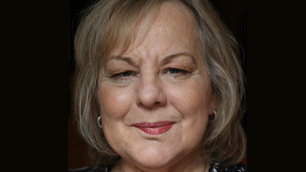
Sue Townsend has a long list of disabilities that she has collected over the past 30 years. She's now a wheelchair user, is blind and has recently received a donor kidney from her son.
In a wide-ranging interview, she discusses politics, Jeremy Kyle, what people say to her in the street now she's more obviously disabled and much more. Interviewed by Liz Carr and Rob Crossan from our monthly talk show. This is an extended version of the original broadcast.
In a wide-ranging interview, she discusses politics, Jeremy Kyle, what people say to her in the street now she's more obviously disabled and much more. Interviewed by Liz Carr and Rob Crossan from our monthly talk show. This is an extended version of the original broadcast.
In order to see this content you need to have both Javascript enabled and Flash installed. Visit BBC Webwise for full instructions
[+] Click to reveal transcript
Sue Townsend
Full Interview
ROB: Sue Townsend is perhaps best known for her Adrian Mole books a series of wildly popular diaries which started back in 1982 with The Secret Diary of Adrian Mole Aged 13¾. But her radio plays and Royal Family books firmly place her as a satirical social commentator. She developed diabetes 30 years ago and her health has gradually become more interesting and complicated ever since. Hello SUE:.
SUE: Hello, how are you?
ROB: Now Sue obviously you're something of a social commentator, how would you sum up the last decade?
SUE: In a personal sense it’s a decade of disappointment, well in fact very bitter disappointment, mainly because of, you know, this terrible phase the Labour party’s going at the moment, and I think it is only a phase of losing their sense of who they are and what they stand for. And hopefully they’ll get back on track eventually. But I think we need a generation to be born, you know, the Labour MPs of the future aren’t born yet. I think it’ll take a long while to get rid of this terrible kind of illness that’s seeped through the ? and it’s polluted, you know, the party.
LIZ: Sue, what’s it been for you then this last decade has it been... you said it’s been a year of ten... a decade of bitter disappointment, obviously politically in the social sense...
SUE: Yeah.
LIZ: ... how about for you personally?
SUE: I think it’s been, for me personally, it’s been quite a good decade because, you know, work wise I’ve, you know, I did... you know I do quite a lot of writing and only, you know, a proportion of it is any is... you get any satisfaction from in that you think you’ve done, you really have worked hard and you’ve done your best and you’re quite proud of a few bits and pieces you’ve done. And I’ve managed to do that this year.
ROB: And that’s quite impressive considering the list of ailments that have befallen you. Let’s just go through some of these: diabetes; a heart attack; blindness; Charcot’s disease; you’ve been a wheelchair user for a few years; four months ago you had a kidney transplant and you’ve described yourself as a manic depressive. So any room for any writing in the middle of that? Clearly there has been I’ve got to admire your work rate there Sue.
SUE: You forgot TB.
ROB: Oh.
SUE: I was quite proud of my TB.
LIZ: TB?
SUE: Yeah.
ROB: Are you allergic to shell fish? Let’s try and make the perfect ten.
SUE: No but I’m allergic to 23 different things.
ROB: Wow!
SUE: But luckily most of them grow by canals, they’re plants so...
ROB: Leicester has quite a lot of canals, your hometown, doesn’t it?
SUE: It does actually yeah.
ROB: Have you considered moving to a canal-less place?
SUE: Canal free.
ROB: Canal free zone.
SUE: I think Milton Keynes is canal free isn’t it?
ROB: Yeah but it’s also free of a lot of other things...
SUE: I know.
ROB: ... life, personality, character.
SUE: I know.
ROB: So yes as we were saying that’s one, it’s probably the biggest list of disabilities I’ve ever heard in nearly four years of doing the Ouch! podcast.
SUE: Yeah but this is over a lifetime.
ROB: Adrian Mole himself has now got prostate cancer...
SUE: He has yes.
ROB: ... in the new book.
SUE: He has yeah.
ROB: Now in an interview I read that you said you wanted him to face death. He’s not always the most sympathetic of characters but death - really why do you feel that this is right time for Adrian to meet with mortality?
SUE: Well it’s an extremely weird, you know, I’ve always thought this since a child since I found out that we actually die, I think I was about seven, most children realise that they’re going to die and everything dies when they’re about seven which is why they call it the age of reason I think. And it’s such a shock to kids. And then nothing’s ever made of it nobody ever counsels you or says, you know, you’re going to die and, you know, everything dies, you know, nobody talks about it. And, you know, it really puzzled me why people didn’t then run screaming in the streets, “I’m going to die, I’m going to die”. And I’ve always thought that, you know, I think about it on a daily basis and quite a lot of people do, I thought... and Mole naturally does because he’s, you know, he’s a worrier. And I just thought I would give him something to worry about. I wanted to know how he would react to serious illness and getting older. Because, you know, I’m sixty, I think I’m sixty one, and my friends are developing, you know, the usual things that, you know, older people get. And it’s a complete shock to them, and to me as well, because we were the first teenagers as well, you know, we were almost told no we’ll never die, we’re going to, you know, forge a new generation, everything’s going to change, you know, thanks to Bob Dylan and The Rolling Stones and not The Beatles so much. And, you know, we’re going to live for - The Who - we’re going to live forever. And I was just curious to know how people react to their own mortality and especially Mole. And so I gave him an illness. I wanted to write about something serious because I think, you know, comedy has to be based on something very serious. I mean the first book was about divorce and the effect it has on children, or on Mole, just a single child at that time. Because, you know, I think we all underestimate the importance of the effect it has on children I mean it lasts throughout their lives. They have a sense of grievance.
LIZ: Reading the book it seemed to me that there is, I mean as well as Adrian’s cancer, there’s a lot of disability in there, I mean, and I loved that of course because, you know, you don’t often read books...
SUE: No you don’t.
LIZ: ... that reflect your life and the reality of life. And was that a conscious thing for you?
SUE: Well this I suppose it’s because this is increasingly my world, you know, because, you know, I’m registered blind and I’m in a wheelchair I naturally sort of every day is a different... every single day I meet different people with similar disabilities I suppose. And it’s just a fact of life it’s just that you don’t see that many people. And all the people who are suffering from cancer it’s not visible. You know they walk around with an invisible illness that could kill them, you know, eventually or even, you know, quite soon after they’re diagnosed. So, you know, there are a lot of people walking around who don’t get any sympathy. Like, you know, I get kind of sympathy from people most days.
LIZ: Sympathy...
ROB: But do you want that sympathy though?
SUE: No I don’t want the sympathy no, no. I just want the common courtesy that should...
ROB: How does that come out then?
SUE: It’s a kind of patronising tone. You know, and quite often, you know, drunks...
LIZ: Ah yes.
SUE: ... drunks shout “God bless yer” from the other side of the street.
LIZ: This is one of the things we talk about regularly on here.
SUE: Is it?
LIZ: Oh dear yeah.
SUE: “God bless yer m’ dear.”
ROB: But you seem, listening to you, you seem relatively benign about... when you talk about disability, but then you’ve got this character Nigel who’s been in all of the Adrian Mole books and...
SUE: Yeah his best friend.
ROB: Yeah Adrian’s best friend and in your last book Adrian Mole and the Weapons of Mass Destruction he was going blind as I recall. And in The Prostate Years, the new book, he’s completely blind.
SUE: Yeah he is.
ROB: Now he’s not very nice at all he’s a rather an irascible obstreperous character extremely rude and I wonder is he a bit of a proxy vehicle for you for all the things that you really wish you could say in real life. Did you make sure that your venom vicariously goes through Nigel?
SUE: At last, at last somebody... an interviewer who understands the book. Yes he stands for all the kind of bitter, twisted angst...
ROB: The things you want to say...
SUE: ... that a blind person...
ROB: ... but you're too nice to say.
SUE: Yeah, yes he does, he stands in for me quite well.
LIZ: But he’s fantastic because I love it when he then decides to marry a blind partner, a blind guy, and Adrian’s discussion about “What? A blind person going out with a blind person you’ve made a rod for your own back” he says. And it’s that kind of honesty in saying the things that we all want to say and think that’s what I l--... that’s what... you know you’re not just writing about disability you’re writing about it in such a... obviously you know what it’s like and it’s very clear I think incredibly clear that you know.
SUE: Yeah. It’s because I do, you know, I’m not one of these battlers, you know, battlers for, “No let me do it” I’m actually quite happy for other people to do things for me because it’s so much quicker. You know, I am a very independent person and I, you know, I maintain that independence but, you know, certain things I mean it takes, you know, it’s just much easier for other people if other people can help you every now and again.
ROB: I completely agree. I think being blind or visually impaired in many aspects of your life you’re getting a business class upgrade I think and it’s quite enjoyable.
SUE: That’s right. And oh my God and going to London on the train, you know, in a wheelchair with the ramps and everything it’s like being royalty.
ROB: Minor royalty admittedly.
SUE: Very, very minor. But you often do travel first class and, you know, they’re incredibly good to you.
LIZ: And you do get a free cup of tea as well it’s worth it isn’t it.
SUE: Yeah you get a free cup of tea and then, you know, when I go to London with my husband, you know, then we get into a taxi and then, you know, we go to a shop, say, and I’m being pushed around Selfridges like a queen, it’s fantastic, you know, he’s flagging a bit but I'm fine.
ROB: A lot of people I think who listen to the podcast have creative leanings I think we should say, so I’d like to talk to you a little bit about the actual practical writing process for somebody like yourself. So I think I did read somewhere that you still do write in big marker pens and scrawl over pages still and then you have other people who type up for you. Can you take us through the practical process of how a book like The Prostate Years is written?
SUE: Well of course I can’t read but I can write still, you never forget how to write. And the problem is I can’t read it back, you know...
ROB: But do you type or do you just write?
SUE: No I dictate it now to my granddaughter.
ROB: Right, okay.
SUE: You know she’s a good typist and a very intelligent girl and I dictate it to her. And she saves me from a lot of trouble and a lot of mistakes because she has got a memory, unlike me, and she remembers, for instance, what colour eyes one character has, you know, I can give them three different colours of eyes throughout the book, but not that I go on about physical characteristics very often, you know I prefer people to imagine what the characters look like. But she keeps me on the straight and narrow because she kind of edits as we go along.
ROB: So you find it’s actually speeding up the process of writing then so it seems from what you're saying?
SUE: Yeah because yeah I find it less of a torture now. I mean, you know in the early days it was, you know, I used to weep while I was writing. I used to grab at any kind of anything, any hint, any tip of how to make it easy. I remember listening to another writer who I admired a great deal I think it was Alan Coren who used to write for Punch. Lovely, you know, wrote comedy and I remember him saying that, you know, he used to reach for champagne, you know, when he was writing to get the day started and whatnot. But I used...
ROB: That sounds very sound advice.
SUE: I think so as well. I think alcohol has a very good effect on most people.
LIZ: Have you become a better writer then, Sue, do you think?
ROB: Or just a better drinker?
SUE: Less of a drinker now because, well just less of a drinker. But I think yeah I think I am a better writer because, you know, I get the work done in my brain before I speak it, and then I get my granddaughter to read it back to me and we may go over that simple paragraph seven or eight times before I'm satisfied. You know you have to get the rhythm right when you’re writing comedy especially it’s just like a stand up comedian’s pauses, it’s like punctuation. So you have to get the rhythm right and the punctuation right.
ROB: Once we get into the real nuts and bolts of it here it actually sounds rather complex and difficult I think.
SUE: No I don’t think so no it’s not for me now it’s not. And this was the first time that I’ve really missed the Mole family and the Mole world. You know when I finished this book I really did... I used to think it was a bit [beep] when people went on about, “Oh I’m missing my characters” you know I used to put my fingers down my throat. But, you know, I did miss, I miss that kind of that I really wanted to know what every character was doing, you know, and there’s about 50 characters in the Mole books.
LIZ: So have started on the next one have you?
SUE: No I haven’t.
LIZ: Oh okay.
SUE: No, no, no I’ve got to wait and see what happens to the country first. I’ve got to wait and see what happens to the, you know, the elections.
LIZ: Post election.
SUE: Yeah. Yeah. But I do miss it, it’s... you know, I do miss it. But I’m writing a play at the moment, a half hour play for the National Theatre. They’re doing a season of women and politics. So I’m doing a very short play for them.
LIZ: And that’s a comedy?
SUE: It always turns out to be comedy yeah.
LIZ: Whether you want it to be or not yeah. Who do you think is going to get there in the election who do you think is going to win?
SUE: Erm, I think it’s completely equal at the moment. Like they say on Jeremy Kyle ((0:14:55?)) say I think 150%.
ROB: Kyle could sort out the next ((0:15:03?)) no two ways about it.
LIZ: Are you slightly obsessed with Jeremy Kyle, Sue, am I sensing...
SUE: Yeah I am.
LIZ: He ((0:15:09?)) a lot in the book, he’s there a lot.
SUE: I am because, you know, because they are undoubtedly exploited those people and I think they are scraping the barrel at the moment because they are getting people who are obviously mentally...
ROB: Deficient.
SUE: Do you think they’re seriously, seriously mentally deficient. And it makes you sound like a fascist when you wish those mothers, you know, those tattooed mums with their wrinkly cleavage showing and, you know, their oh terrible teeth, I mean what’s happened to the working class?
LIZ: Is this part of your new play?
SUE: No but... yeah.
ROB: I don’t think British teeth were ever ((0:15:54?)) thing that we were particularly exemplary at.
SUE: No I know but I think you can tell that the dentistry is difficult now let’s say, let’s put it like that.
ROB: If you can get a dentist.
LIZ: Maybe that’s around Leicester in particular.
SUE: Well it emerged a woman just two counties away pulled her own teeth out with pliers. I mean that was I heard that on Talk Radio.
ROB: Is this depressing or is this an example of the Dunkirk spirit I’m never quite sure, it depends what newspaper you read.
LIZ: DIY.
SUE: I think it is the Dunkirk spirit, you know, she was a very cheerful sounding woman and she was quite proud because she’d found herself a role in the community pulling other people’s teeth out who couldn’t find a dentist.
ROB: Well I read a piece by the late and very great Alistair Cook recently in one of his old books and I think he said the difference between the Americans and the British is that the Americans don’t assume that discomfort is naturally character building. Whereas we...
SUE: We do.
ROB: ... seem to adore it.
SUE: We do. We do and I think there’s something in that you know in a bit of... My mother was saying the other day “What these young people need is a war”. But I am obsessed with Jeremy Kyle because, you know, I really love the people that are on, I mean, my heart bleeds for them. And, you know, I love and loathe them both at the same time, you know, it distresses me to think they go home and they’ve got small children to look after, you know, I hate it but at the same time I can’t stop watching it and I am writing about it.
LIZ: And Five Live and Jeremy Kyle and Judge Judy things that I’ve read that, you know, you like that you listen to are they...
SUE: Yeah.
LIZ: ... where you get your inspirations from?
SUE: Yeah but I also get inspiration from, you know, being slightly more intellectual than those programmes ((0:17:49?)) appear to be.
ROB: You can’t get more intellectual than Jeremy Kyle.
SUE: I mean my...
ROB: I’ve looked it’s not possible.
SUE: You know I do like, you know, very good documentaries and Iranian film.
LIZ: Ah yes there's a dead end for us to talk about there.
ROB: So what’s your favourite colour Sue?
LIZ: What’s your favourite Christmas song? You’ve been in the press a lot more recently about the book obviously the book’s just come out, but also because of your kidney transplant.
SUE: Yeah that’s... yeah that was made bigger than it was meant to be. I mean it really was, I mean, I haven’t talked about my kidney transplant. My son seriously won’t be even identified.
LIZ: So you, just for the listeners that don’t know, about four months ago was it you had to have a kidney transplant...
SUE: Yeah.
LIZ: ... and your older son...
SUE: Yeah he donated it yeah.
LIZ: And was that when he... How does that work did they have tests, did he offer, did you say...?
SUE: Well in my case when I was told that I was far too ill and my medical history as you well know wasn’t sufficiently, you know, I wasn’t a good case for transplant. But on the other hand I wasn’t very... I was a worse case for dialysis because my blood pressure used to drop disastrously whilst I was on dialysis, so eventually they put me onto the transfer list. And it makes me sound like a footballer doesn't it? And the transplant rather not the transfer list sorry. The transplant...
LIZ: The transfer list is more funny though it’s better keep it with that.
SUE: And without me knowing, you know, my family - four children and my husband - had a meeting and decided that they would all offer their kidney.
LIZ: All club together.
SUE: Yeah. They would offer their kidney. And then the process started of cross matching, you know, they gave quite a small amount of blood in case anybody’s thinking of donating, and then they were sent off to the lab and the results came back that my son was the closest match.
ROB: Did you have that hunch from the start that your son was going to be the closest match? Did you have sweepstakes on it?
SUE: He was the best candidate in the sense that he has no children of his own, you know, all the other kids the other three kids have their own children. And so he thought that, kind of socially and... Yeah he thought as well that he would be the one. He said, “I’ll be the one” and he was right.
ROB: And was it easy to accept that?
SUE: I... yeah I didn’t feel like a lot of people who are on dialysis who are, you know, slowly dying of kidney disease they won’t take kidneys from their, you know, their children or their partners or their brothers and sisters because they feel that they don’t want to endanger them. But I feel that, and I’m serious about this, I feel that I think people want the chance to be good, they want the chance to do something generous for somebody else. And I’ve never known it that people aren’t... don’t want to give something and contribute in some way and be altruistic. And I knew that my son really seriously wanted to do it. And he did and it was fine.
LIZ: So now are you, I know you say it’s been blown up and, you know, it’s become a major feature that of course the papers love anything like that and that’s what they’ve done. But just so... are you well? Are you as well as you do get with your many, many, many medical conditions at the moment?
SUE: Yes I am, yeah I am yeah.
LIZ: I was impressed at you saying that you’d won quite a few awards, Sue, in recent months. We weren’t wanting to give you...
ROB: A wheelchair festooned with medals.
LIZ: And rosettes like a gymkhana pony.
SUE: I know. I mean it has to be said that, you know, it’s either because the organisers of different occasions... award organisations think that you’re going to die soon, so they’re getting in quick. Or it’s because, you know, the wheelchair signifies some quality that I certainly don’t possess. You know I’m not brave and I’m not... No I’m not at all. I mean, I’ve just inherited a sense of humour from my family.
LIZ: You don’t think you're particularly getting these awards because you’re a good writer or anything like that?
SUE: No I didn’t get them before, you know, a few years ago no.
LIZ: There’s something spooky there.
ROB: Yeah. I’m putting two and two together I don’t know about you?
SUE: I mean I had, you know, I’ve had massive sales, you know, and loads of different translations, I’ve won awards abroad but never in this country because somehow they don’t think comedy, you know, comedic writing, you know, receives awards - it doesn’t.
LIZ: Well I think probably like a lot of listeners when we heard that you were coming in and we could talk to you we were so excited, I grew up I’m about the same age as Adrian, I know that Rob’s a huge fan and it’s great, I can’t wait for the next one to see what happens whether you kill him off, whether you give him any more medical conditions. As you get more I’m convinced you’re going to give more, I mean, every other character now in the book’s disabled so I can’t wait for the next book. So Adrian Mole...
ROB: Adrian Mole: The Hospice Years.
SUE: Oh that is so good.
LIZ: He will accept royalties when you ((0:23:52?))
ROB: I’m really serious I will.
SUE: That is funny.
LIZ: Adrian Mole: The Prostate Years is out now you can get copies of it everywhere at the moment. What’s next then, Sue, for you?
SUE: Well, as I say, I’m writing this play about women and politics and, you know, it’ll have... it’ll be full of venom...
LIZ: Excellent.
SUE: ... no doubt.
LIZ: And that will be on at the National Theatre in London.
SUE: Yeah it will yeah.
LIZ: Okay.
SUE: But with others, you know, it’s not a full-length play it’s a shortie.
LIZ: And for you personally I was reading that you harboured a desire to go to North Korea?
SUE: Well...
LIZ: Is that true or something you said in an interview?
SUE: I’ve always been fascinated by totalitarian regimes. I’m not an admirer of them.
LIZ: You don’t really need to leave the country then.
SUE: No. Soon when we’re all being... when all our nether regions are being photographed, you know, at the airport.
ROB: When is it going to get to the point where people just say, “Look I’d rather just not travel” I’m getting to that point now and I’m a travel writer I think I'm about to become unemployed really because it’s becoming unbearable.
LIZ: I just say thank God for the caravan, do you know what I mean?
SUE: Well I think well the terrorists have won haven’t they because of they’ve made us change our way of life. And that’s what terrorism aims to do. And we lost the battle with them years ago. I mean if the Government don’t think that there are, you know, there are terrorists already working in Government positions, having been enrolled and quietly gone to university and then applied for a job and been accepted, you know, they are not kind of savages living in a... Watch how the Yemen is now going to be vilified and how Yemen is somehow a, you know, accused of all sorts of different crimes, you know, it’s fascinating to see how the Government works it’s works it’s evil arts of propaganda. I mean of course it’s a serious threat I’m not by any means minimising it the threat of terrorism, but, as I say, I think they’ve won already.
ROB: Well we’ll be thinking of you going through your full body scanner God knows how many ((0:26:03?))
LIZ: On your way to North Korea.
SUE: In North Korea.
LIZ: Hm lucky you.
ROB: And what a pleasure it’s been to chat to you, Sue, we’ve enjoyed it so much.
SUE: Well I’ve really enjoyed it. It’s great to talk to somebody who understands.
Full Interview
ROB: Sue Townsend is perhaps best known for her Adrian Mole books a series of wildly popular diaries which started back in 1982 with The Secret Diary of Adrian Mole Aged 13¾. But her radio plays and Royal Family books firmly place her as a satirical social commentator. She developed diabetes 30 years ago and her health has gradually become more interesting and complicated ever since. Hello SUE:.
SUE: Hello, how are you?
ROB: Now Sue obviously you're something of a social commentator, how would you sum up the last decade?
SUE: In a personal sense it’s a decade of disappointment, well in fact very bitter disappointment, mainly because of, you know, this terrible phase the Labour party’s going at the moment, and I think it is only a phase of losing their sense of who they are and what they stand for. And hopefully they’ll get back on track eventually. But I think we need a generation to be born, you know, the Labour MPs of the future aren’t born yet. I think it’ll take a long while to get rid of this terrible kind of illness that’s seeped through the ? and it’s polluted, you know, the party.
LIZ: Sue, what’s it been for you then this last decade has it been... you said it’s been a year of ten... a decade of bitter disappointment, obviously politically in the social sense...
SUE: Yeah.
LIZ: ... how about for you personally?
SUE: I think it’s been, for me personally, it’s been quite a good decade because, you know, work wise I’ve, you know, I did... you know I do quite a lot of writing and only, you know, a proportion of it is any is... you get any satisfaction from in that you think you’ve done, you really have worked hard and you’ve done your best and you’re quite proud of a few bits and pieces you’ve done. And I’ve managed to do that this year.
ROB: And that’s quite impressive considering the list of ailments that have befallen you. Let’s just go through some of these: diabetes; a heart attack; blindness; Charcot’s disease; you’ve been a wheelchair user for a few years; four months ago you had a kidney transplant and you’ve described yourself as a manic depressive. So any room for any writing in the middle of that? Clearly there has been I’ve got to admire your work rate there Sue.
SUE: You forgot TB.
ROB: Oh.
SUE: I was quite proud of my TB.
LIZ: TB?
SUE: Yeah.
ROB: Are you allergic to shell fish? Let’s try and make the perfect ten.
SUE: No but I’m allergic to 23 different things.
ROB: Wow!
SUE: But luckily most of them grow by canals, they’re plants so...
ROB: Leicester has quite a lot of canals, your hometown, doesn’t it?
SUE: It does actually yeah.
ROB: Have you considered moving to a canal-less place?
SUE: Canal free.
ROB: Canal free zone.
SUE: I think Milton Keynes is canal free isn’t it?
ROB: Yeah but it’s also free of a lot of other things...
SUE: I know.
ROB: ... life, personality, character.
SUE: I know.
ROB: So yes as we were saying that’s one, it’s probably the biggest list of disabilities I’ve ever heard in nearly four years of doing the Ouch! podcast.
SUE: Yeah but this is over a lifetime.
ROB: Adrian Mole himself has now got prostate cancer...
SUE: He has yes.
ROB: ... in the new book.
SUE: He has yeah.
ROB: Now in an interview I read that you said you wanted him to face death. He’s not always the most sympathetic of characters but death - really why do you feel that this is right time for Adrian to meet with mortality?
SUE: Well it’s an extremely weird, you know, I’ve always thought this since a child since I found out that we actually die, I think I was about seven, most children realise that they’re going to die and everything dies when they’re about seven which is why they call it the age of reason I think. And it’s such a shock to kids. And then nothing’s ever made of it nobody ever counsels you or says, you know, you’re going to die and, you know, everything dies, you know, nobody talks about it. And, you know, it really puzzled me why people didn’t then run screaming in the streets, “I’m going to die, I’m going to die”. And I’ve always thought that, you know, I think about it on a daily basis and quite a lot of people do, I thought... and Mole naturally does because he’s, you know, he’s a worrier. And I just thought I would give him something to worry about. I wanted to know how he would react to serious illness and getting older. Because, you know, I’m sixty, I think I’m sixty one, and my friends are developing, you know, the usual things that, you know, older people get. And it’s a complete shock to them, and to me as well, because we were the first teenagers as well, you know, we were almost told no we’ll never die, we’re going to, you know, forge a new generation, everything’s going to change, you know, thanks to Bob Dylan and The Rolling Stones and not The Beatles so much. And, you know, we’re going to live for - The Who - we’re going to live forever. And I was just curious to know how people react to their own mortality and especially Mole. And so I gave him an illness. I wanted to write about something serious because I think, you know, comedy has to be based on something very serious. I mean the first book was about divorce and the effect it has on children, or on Mole, just a single child at that time. Because, you know, I think we all underestimate the importance of the effect it has on children I mean it lasts throughout their lives. They have a sense of grievance.
LIZ: Reading the book it seemed to me that there is, I mean as well as Adrian’s cancer, there’s a lot of disability in there, I mean, and I loved that of course because, you know, you don’t often read books...
SUE: No you don’t.
LIZ: ... that reflect your life and the reality of life. And was that a conscious thing for you?
SUE: Well this I suppose it’s because this is increasingly my world, you know, because, you know, I’m registered blind and I’m in a wheelchair I naturally sort of every day is a different... every single day I meet different people with similar disabilities I suppose. And it’s just a fact of life it’s just that you don’t see that many people. And all the people who are suffering from cancer it’s not visible. You know they walk around with an invisible illness that could kill them, you know, eventually or even, you know, quite soon after they’re diagnosed. So, you know, there are a lot of people walking around who don’t get any sympathy. Like, you know, I get kind of sympathy from people most days.
LIZ: Sympathy...
ROB: But do you want that sympathy though?
SUE: No I don’t want the sympathy no, no. I just want the common courtesy that should...
ROB: How does that come out then?
SUE: It’s a kind of patronising tone. You know, and quite often, you know, drunks...
LIZ: Ah yes.
SUE: ... drunks shout “God bless yer” from the other side of the street.
LIZ: This is one of the things we talk about regularly on here.
SUE: Is it?
LIZ: Oh dear yeah.
SUE: “God bless yer m’ dear.”
ROB: But you seem, listening to you, you seem relatively benign about... when you talk about disability, but then you’ve got this character Nigel who’s been in all of the Adrian Mole books and...
SUE: Yeah his best friend.
ROB: Yeah Adrian’s best friend and in your last book Adrian Mole and the Weapons of Mass Destruction he was going blind as I recall. And in The Prostate Years, the new book, he’s completely blind.
SUE: Yeah he is.
ROB: Now he’s not very nice at all he’s a rather an irascible obstreperous character extremely rude and I wonder is he a bit of a proxy vehicle for you for all the things that you really wish you could say in real life. Did you make sure that your venom vicariously goes through Nigel?
SUE: At last, at last somebody... an interviewer who understands the book. Yes he stands for all the kind of bitter, twisted angst...
ROB: The things you want to say...
SUE: ... that a blind person...
ROB: ... but you're too nice to say.
SUE: Yeah, yes he does, he stands in for me quite well.
LIZ: But he’s fantastic because I love it when he then decides to marry a blind partner, a blind guy, and Adrian’s discussion about “What? A blind person going out with a blind person you’ve made a rod for your own back” he says. And it’s that kind of honesty in saying the things that we all want to say and think that’s what I l--... that’s what... you know you’re not just writing about disability you’re writing about it in such a... obviously you know what it’s like and it’s very clear I think incredibly clear that you know.
SUE: Yeah. It’s because I do, you know, I’m not one of these battlers, you know, battlers for, “No let me do it” I’m actually quite happy for other people to do things for me because it’s so much quicker. You know, I am a very independent person and I, you know, I maintain that independence but, you know, certain things I mean it takes, you know, it’s just much easier for other people if other people can help you every now and again.
ROB: I completely agree. I think being blind or visually impaired in many aspects of your life you’re getting a business class upgrade I think and it’s quite enjoyable.
SUE: That’s right. And oh my God and going to London on the train, you know, in a wheelchair with the ramps and everything it’s like being royalty.
ROB: Minor royalty admittedly.
SUE: Very, very minor. But you often do travel first class and, you know, they’re incredibly good to you.
LIZ: And you do get a free cup of tea as well it’s worth it isn’t it.
SUE: Yeah you get a free cup of tea and then, you know, when I go to London with my husband, you know, then we get into a taxi and then, you know, we go to a shop, say, and I’m being pushed around Selfridges like a queen, it’s fantastic, you know, he’s flagging a bit but I'm fine.
ROB: A lot of people I think who listen to the podcast have creative leanings I think we should say, so I’d like to talk to you a little bit about the actual practical writing process for somebody like yourself. So I think I did read somewhere that you still do write in big marker pens and scrawl over pages still and then you have other people who type up for you. Can you take us through the practical process of how a book like The Prostate Years is written?
SUE: Well of course I can’t read but I can write still, you never forget how to write. And the problem is I can’t read it back, you know...
ROB: But do you type or do you just write?
SUE: No I dictate it now to my granddaughter.
ROB: Right, okay.
SUE: You know she’s a good typist and a very intelligent girl and I dictate it to her. And she saves me from a lot of trouble and a lot of mistakes because she has got a memory, unlike me, and she remembers, for instance, what colour eyes one character has, you know, I can give them three different colours of eyes throughout the book, but not that I go on about physical characteristics very often, you know I prefer people to imagine what the characters look like. But she keeps me on the straight and narrow because she kind of edits as we go along.
ROB: So you find it’s actually speeding up the process of writing then so it seems from what you're saying?
SUE: Yeah because yeah I find it less of a torture now. I mean, you know in the early days it was, you know, I used to weep while I was writing. I used to grab at any kind of anything, any hint, any tip of how to make it easy. I remember listening to another writer who I admired a great deal I think it was Alan Coren who used to write for Punch. Lovely, you know, wrote comedy and I remember him saying that, you know, he used to reach for champagne, you know, when he was writing to get the day started and whatnot. But I used...
ROB: That sounds very sound advice.
SUE: I think so as well. I think alcohol has a very good effect on most people.
LIZ: Have you become a better writer then, Sue, do you think?
ROB: Or just a better drinker?
SUE: Less of a drinker now because, well just less of a drinker. But I think yeah I think I am a better writer because, you know, I get the work done in my brain before I speak it, and then I get my granddaughter to read it back to me and we may go over that simple paragraph seven or eight times before I'm satisfied. You know you have to get the rhythm right when you’re writing comedy especially it’s just like a stand up comedian’s pauses, it’s like punctuation. So you have to get the rhythm right and the punctuation right.
ROB: Once we get into the real nuts and bolts of it here it actually sounds rather complex and difficult I think.
SUE: No I don’t think so no it’s not for me now it’s not. And this was the first time that I’ve really missed the Mole family and the Mole world. You know when I finished this book I really did... I used to think it was a bit [beep] when people went on about, “Oh I’m missing my characters” you know I used to put my fingers down my throat. But, you know, I did miss, I miss that kind of that I really wanted to know what every character was doing, you know, and there’s about 50 characters in the Mole books.
LIZ: So have started on the next one have you?
SUE: No I haven’t.
LIZ: Oh okay.
SUE: No, no, no I’ve got to wait and see what happens to the country first. I’ve got to wait and see what happens to the, you know, the elections.
LIZ: Post election.
SUE: Yeah. Yeah. But I do miss it, it’s... you know, I do miss it. But I’m writing a play at the moment, a half hour play for the National Theatre. They’re doing a season of women and politics. So I’m doing a very short play for them.
LIZ: And that’s a comedy?
SUE: It always turns out to be comedy yeah.
LIZ: Whether you want it to be or not yeah. Who do you think is going to get there in the election who do you think is going to win?
SUE: Erm, I think it’s completely equal at the moment. Like they say on Jeremy Kyle ((0:14:55?)) say I think 150%.
ROB: Kyle could sort out the next ((0:15:03?)) no two ways about it.
LIZ: Are you slightly obsessed with Jeremy Kyle, Sue, am I sensing...
SUE: Yeah I am.
LIZ: He ((0:15:09?)) a lot in the book, he’s there a lot.
SUE: I am because, you know, because they are undoubtedly exploited those people and I think they are scraping the barrel at the moment because they are getting people who are obviously mentally...
ROB: Deficient.
SUE: Do you think they’re seriously, seriously mentally deficient. And it makes you sound like a fascist when you wish those mothers, you know, those tattooed mums with their wrinkly cleavage showing and, you know, their oh terrible teeth, I mean what’s happened to the working class?
LIZ: Is this part of your new play?
SUE: No but... yeah.
ROB: I don’t think British teeth were ever ((0:15:54?)) thing that we were particularly exemplary at.
SUE: No I know but I think you can tell that the dentistry is difficult now let’s say, let’s put it like that.
ROB: If you can get a dentist.
LIZ: Maybe that’s around Leicester in particular.
SUE: Well it emerged a woman just two counties away pulled her own teeth out with pliers. I mean that was I heard that on Talk Radio.
ROB: Is this depressing or is this an example of the Dunkirk spirit I’m never quite sure, it depends what newspaper you read.
LIZ: DIY.
SUE: I think it is the Dunkirk spirit, you know, she was a very cheerful sounding woman and she was quite proud because she’d found herself a role in the community pulling other people’s teeth out who couldn’t find a dentist.
ROB: Well I read a piece by the late and very great Alistair Cook recently in one of his old books and I think he said the difference between the Americans and the British is that the Americans don’t assume that discomfort is naturally character building. Whereas we...
SUE: We do.
ROB: ... seem to adore it.
SUE: We do. We do and I think there’s something in that you know in a bit of... My mother was saying the other day “What these young people need is a war”. But I am obsessed with Jeremy Kyle because, you know, I really love the people that are on, I mean, my heart bleeds for them. And, you know, I love and loathe them both at the same time, you know, it distresses me to think they go home and they’ve got small children to look after, you know, I hate it but at the same time I can’t stop watching it and I am writing about it.
LIZ: And Five Live and Jeremy Kyle and Judge Judy things that I’ve read that, you know, you like that you listen to are they...
SUE: Yeah.
LIZ: ... where you get your inspirations from?
SUE: Yeah but I also get inspiration from, you know, being slightly more intellectual than those programmes ((0:17:49?)) appear to be.
ROB: You can’t get more intellectual than Jeremy Kyle.
SUE: I mean my...
ROB: I’ve looked it’s not possible.
SUE: You know I do like, you know, very good documentaries and Iranian film.
LIZ: Ah yes there's a dead end for us to talk about there.
ROB: So what’s your favourite colour Sue?
LIZ: What’s your favourite Christmas song? You’ve been in the press a lot more recently about the book obviously the book’s just come out, but also because of your kidney transplant.
SUE: Yeah that’s... yeah that was made bigger than it was meant to be. I mean it really was, I mean, I haven’t talked about my kidney transplant. My son seriously won’t be even identified.
LIZ: So you, just for the listeners that don’t know, about four months ago was it you had to have a kidney transplant...
SUE: Yeah.
LIZ: ... and your older son...
SUE: Yeah he donated it yeah.
LIZ: And was that when he... How does that work did they have tests, did he offer, did you say...?
SUE: Well in my case when I was told that I was far too ill and my medical history as you well know wasn’t sufficiently, you know, I wasn’t a good case for transplant. But on the other hand I wasn’t very... I was a worse case for dialysis because my blood pressure used to drop disastrously whilst I was on dialysis, so eventually they put me onto the transfer list. And it makes me sound like a footballer doesn't it? And the transplant rather not the transfer list sorry. The transplant...
LIZ: The transfer list is more funny though it’s better keep it with that.
SUE: And without me knowing, you know, my family - four children and my husband - had a meeting and decided that they would all offer their kidney.
LIZ: All club together.
SUE: Yeah. They would offer their kidney. And then the process started of cross matching, you know, they gave quite a small amount of blood in case anybody’s thinking of donating, and then they were sent off to the lab and the results came back that my son was the closest match.
ROB: Did you have that hunch from the start that your son was going to be the closest match? Did you have sweepstakes on it?
SUE: He was the best candidate in the sense that he has no children of his own, you know, all the other kids the other three kids have their own children. And so he thought that, kind of socially and... Yeah he thought as well that he would be the one. He said, “I’ll be the one” and he was right.
ROB: And was it easy to accept that?
SUE: I... yeah I didn’t feel like a lot of people who are on dialysis who are, you know, slowly dying of kidney disease they won’t take kidneys from their, you know, their children or their partners or their brothers and sisters because they feel that they don’t want to endanger them. But I feel that, and I’m serious about this, I feel that I think people want the chance to be good, they want the chance to do something generous for somebody else. And I’ve never known it that people aren’t... don’t want to give something and contribute in some way and be altruistic. And I knew that my son really seriously wanted to do it. And he did and it was fine.
LIZ: So now are you, I know you say it’s been blown up and, you know, it’s become a major feature that of course the papers love anything like that and that’s what they’ve done. But just so... are you well? Are you as well as you do get with your many, many, many medical conditions at the moment?
SUE: Yes I am, yeah I am yeah.
LIZ: I was impressed at you saying that you’d won quite a few awards, Sue, in recent months. We weren’t wanting to give you...
ROB: A wheelchair festooned with medals.
LIZ: And rosettes like a gymkhana pony.
SUE: I know. I mean it has to be said that, you know, it’s either because the organisers of different occasions... award organisations think that you’re going to die soon, so they’re getting in quick. Or it’s because, you know, the wheelchair signifies some quality that I certainly don’t possess. You know I’m not brave and I’m not... No I’m not at all. I mean, I’ve just inherited a sense of humour from my family.
LIZ: You don’t think you're particularly getting these awards because you’re a good writer or anything like that?
SUE: No I didn’t get them before, you know, a few years ago no.
LIZ: There’s something spooky there.
ROB: Yeah. I’m putting two and two together I don’t know about you?
SUE: I mean I had, you know, I’ve had massive sales, you know, and loads of different translations, I’ve won awards abroad but never in this country because somehow they don’t think comedy, you know, comedic writing, you know, receives awards - it doesn’t.
LIZ: Well I think probably like a lot of listeners when we heard that you were coming in and we could talk to you we were so excited, I grew up I’m about the same age as Adrian, I know that Rob’s a huge fan and it’s great, I can’t wait for the next one to see what happens whether you kill him off, whether you give him any more medical conditions. As you get more I’m convinced you’re going to give more, I mean, every other character now in the book’s disabled so I can’t wait for the next book. So Adrian Mole...
ROB: Adrian Mole: The Hospice Years.
SUE: Oh that is so good.
LIZ: He will accept royalties when you ((0:23:52?))
ROB: I’m really serious I will.
SUE: That is funny.
LIZ: Adrian Mole: The Prostate Years is out now you can get copies of it everywhere at the moment. What’s next then, Sue, for you?
SUE: Well, as I say, I’m writing this play about women and politics and, you know, it’ll have... it’ll be full of venom...
LIZ: Excellent.
SUE: ... no doubt.
LIZ: And that will be on at the National Theatre in London.
SUE: Yeah it will yeah.
LIZ: Okay.
SUE: But with others, you know, it’s not a full-length play it’s a shortie.
LIZ: And for you personally I was reading that you harboured a desire to go to North Korea?
SUE: Well...
LIZ: Is that true or something you said in an interview?
SUE: I’ve always been fascinated by totalitarian regimes. I’m not an admirer of them.
LIZ: You don’t really need to leave the country then.
SUE: No. Soon when we’re all being... when all our nether regions are being photographed, you know, at the airport.
ROB: When is it going to get to the point where people just say, “Look I’d rather just not travel” I’m getting to that point now and I’m a travel writer I think I'm about to become unemployed really because it’s becoming unbearable.
LIZ: I just say thank God for the caravan, do you know what I mean?
SUE: Well I think well the terrorists have won haven’t they because of they’ve made us change our way of life. And that’s what terrorism aims to do. And we lost the battle with them years ago. I mean if the Government don’t think that there are, you know, there are terrorists already working in Government positions, having been enrolled and quietly gone to university and then applied for a job and been accepted, you know, they are not kind of savages living in a... Watch how the Yemen is now going to be vilified and how Yemen is somehow a, you know, accused of all sorts of different crimes, you know, it’s fascinating to see how the Government works it’s works it’s evil arts of propaganda. I mean of course it’s a serious threat I’m not by any means minimising it the threat of terrorism, but, as I say, I think they’ve won already.
ROB: Well we’ll be thinking of you going through your full body scanner God knows how many ((0:26:03?))
LIZ: On your way to North Korea.
SUE: In North Korea.
LIZ: Hm lucky you.
ROB: And what a pleasure it’s been to chat to you, Sue, we’ve enjoyed it so much.
SUE: Well I’ve really enjoyed it. It’s great to talk to somebody who understands.
More articles about
Bookmark with...
Live community panel
Our blog is the main place to go for all things Ouch! Find info, comment, articles and great disability content on the web via us.
Listen to our regular razor sharp talk show online, or subscribe to it as a podcast. Spread the word: it's where disability and reality almost collide.
More from the BBC

All the latest news from the paralympics.

News and views for people who are blind or partially sighted.

Weekdays 12.40pm. Radio 4's consumer affairs programme.


