
Home > Interviews > Audio: Frank Gardner
Audio: Frank Gardner
14th July 2010
In this extended interview, Frank Gardner from BBC News talks about his love of travel and adapting to life with a disability since being shot by al-Qaeda gunmen 6 years ago.
In order to see this content you need to have both Javascript enabled and Flash installed. Visit BBC Webwise for full instructions

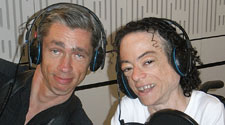
Both big travel fanatics, presenters Liz Carr and Simon Minty share experiences of watching their wheelchair getting destroyed by baggage handlers ... and find time to ask Frank how many benefits he's on (?)
An edited version of this interview was originally aired as part of July's Ouch! Talk Show, available monthly from this website.
An edited version of this interview was originally aired as part of July's Ouch! Talk Show, available monthly from this website.
[+] Click to reveal transcript
LIZ On ISDN from his home, we have Frank Gardner. Hello, Frank.
FRANK Hi, Liz.
LIZ It’s very good to have you at last on the Ouch! Talk Show. Frank Gardner is the BBC security correspondent, and you may know him because he was disabled on duty in Saudi Arabia when shot by an Al-Qaeda operative in 2004. So many of us will have heard of you, but it’s brilliant to have you on the Talk Show. Thank you for joining us, Frank.
FRANK Pleasure, it was more than one who shot me, but we’ll move on from that, but anyway.
LIZ Really, really? – a number of them?
FRANK Yep.
LIZ We’ve got you on here today really because you’ve brought out a book, “Far Horizons: Unusual Journeys and Strange Encounters from a Travelling Life”, and that’s what we really want to talk to you about. We’re both huge fans of travel.
SI Absolutely.
FRANK I was hoping you were going to say, huge fans of me!
(((they laugh)))
LIZ And of you.
SI Well, of you, of very much so, of you.
FRANK No no, too late now – you missed the slot.
LIZ Frank, on that note, where are you going on your summer holidays this year?
FRANK Croatia.
LIZ Croatia?
FRANK Yep.
SI It’s an up-and-coming place – is there a particular reason?
FRANK No, not really, I mean I went there, gosh, in the Eighties, before Dubrovnik got shelled, and it was brilliant. I have to say, there were rather too many kind of naturist beaches, which I probably won’t be visiting, actually, with all my accoutrements, but no, we’re going to go back as a family, and I think it should be nice, I think.
LIZ So it’s kind of a regular family holiday, not one of the Frank Gardner expeditions that we’ve been reading about in your book?
FRANK No, I mean I’m sort of trying to push the envelope a bit with the family and kind of get them to go to unusual places. I mean, my wife loves beach, one of the kids is very much into comfort, the other one’s into adventure. So I’m trying to juggle all of this, but we did manage Borneo this year, which was really good, and I’d totally recommend it.
SI You mentioned actually about Croatia, do the places they go to, they have to have this extra interest? I mean, is it something about conflict, is it something, or is it just happens that they take your fancy?
FRANK Croatia just took my fancy. I have to say, it’s probably not an ideal choice for somebody who’s a wheelchair user. Maybe I should be saying this after I get back, but I’ve been warned that all the kind of budget places tend to be on the slopes of fairly steep hills that are going down to the sea, and I’m sure this is familiar for you guys, but it’s very frustrating. The choice is very limited if you can’t get up and down steps. So we’ve managed to find it, but it’s taken a bit of thrashing around.
SI Just a quick personal question, because you’ve gone to a couple of places that, and this is someone who, I’ve been disabled all my life, and used my scooter for the last however many years, and yours is six years, so you’re a relative newcomer, if you forgive me, for phrasing it like that.
FRANK Yeah, I’m a novice, yeah.
SI Yeah, well I don’t know about a novice, I think you’re doing very well. So you’ve been to Cambodia, you’ve been to Thailand – have you done that since you’ve been disabled?
FRANK Yes.
SI Because I’ve hesitated, I’ve always thought, are people going to stare, is it just going to be really hard work, are the pavements – there’s kerbs and so on. How did you get on, were they ...?
FRANK It was fine, Cambodia especially was really very good, because, I suppose because of Cambodia’s own tragic history. They had the Khmer Rouge, and then the place was littered with landmines. That’s not to say that the tourist areas are littered with landmines, but the country, particularly the east and the kind of jungly bits, did have a big problem with landmines, so there are so many amputees there, so they’re completely used to seeing people in wheelchairs. Whereas in Thailand, I found that people were kind of rushing to help, which is very nice, but actually I really needed to learn the Thai for, back off thanks, I’ll do it myself.
But in Cambodia, it doesn’t raise an eyebrow, and they’ve got a wonderful can-do attitude. I mean, I suppose I travelled by jeep some of the time, and then on boats around Tonlé Sap, which is a big lake in (inaudible), it’s the largest inland lake in south-east Asia, and we were going round these kind of stilt-, just myself and a mate, round these stilted fishing villages, and the Cambodians were just so helpful. They just took one look at the wheelchair, and instead of saying, ooh well, I dunno mate, you know, aah, my back’s not what it used to be – there was none of that. It was just like, within seconds, four of them grabbed it, or two of them grabbed it, and up we went, and there I was, up in the heart, cross legged, or trying to be, and eating fish, or swinging around on a hammock, which was great, which to me is what travelling’s about, without having any kind of fixed big agenda.
LIZ So you became a wheelchair user six years ago, but before then you were, you had an adventurous side, you travelled all over the world before, and it seems like becoming a wheelchair user hasn’t stopped that – is that right?
FRANK It was a temporary blip, Liz, definitely. I mean, when I came out of hospital, I’d had 14 operations, I was in five hospitals seven months, and I was absolutely knackered. I had no energy, no drive, physically, for the first year. With the compensation money, using that, we went off to Thailand to recover, to recuperate, and I was kind of ashamed of myself, because all I did was, I just flopped on a sun lounger under a palm tree, and I didn’t do anything. With a lot of encouragement, I got into the pool, and sort of wallowed around like a walrus, and then kind of flolloped out again. I just had no interest, I was exhausted, and it was really like that for the first twelve months.
Then after that, I started to kind of get my mojo back really, and say, look, actually there’s so much more of the world that I want to see, and yes, I’ve done some great things, some great trips, train trips down the Sudan and going off picnicking with the Foreign Legion in Djibouti and climbing a volcano in Sumatra, and fun things like that, but there’s so much more, and yes, a lot of those things I won’t be able to do in a wheelchair, but there are far more things that I can do than that I can’t do. So you’ve got to look on the positive side, and I’ve had a great time. I’ve been twice to Afghanistan, Colombia, Cambodia, Borneo, all ssince my injuries.
SI You’re a master of understatement, I mean, calling the experience a blip or being exhausted for those twelve months, and so on. I think both Liz and I, we were talking about you earlier, we had this sort of admiration that you had one foot in the disability, understanding that, and have adapted amazingly well, but you also have one foot also in your mainstream, what your job is, and all of the other parts. Now, you make out that that actually was a relatively easy switch, except for those twelve months. Has it been, or were there still little times where it catches you short, makes you think?
FRANK Yeah, there are. I mean, I think the times when I don’t notice it are where I’m happily rolling around in a jeep, bouncing round somewhere, and you’re holding on to the dashboard or something to kind of balance yourself, but you think, hey, this is fun, where you’ve got mobility. I did a great trip up to the Arctic about three weeks ago, no, a month ago, I think, in Swalbart (inaudible), you might have seen it. We were following these amputees who were going to make an attempt to cross the polar ice cap next year to the North Pole. So I spent three days on a skidoo, and sleeping in teepees, in these tents, and I didn’t use the wheelchair at all. The only time I used it was to get to transfer from the skidoo, or the snowmobile rather, to the tent, and that was it – the rest of the time I was completely mobile and independent on the snowmobile, which was fantastic. The times I think I probably do notice it are those sort of social occasions, where there’s a very fluid movement of people in a kind of quite upbeat place, a bar or something like that, and if I’m wearing callipers, and I’ll be standing up, that’s fine, but if everyone’s kind of surging towards the door, or something ... I mean, I did a trip to Columbia, and I ended up covering a hostage situation in the street, and the crowd suddenly moved, and I thought, if there’s a stampede, I’m stuffed here.
SI Yeah. I can understand, so there’s certain situations that you may be a little bit more aware. Now, I have a confession – I saw you, I was at the BBC, there was a disability and talent event happening, and there was 30 wheelchair users in the foyer, and you happened to be finishing your day’s work, and you came down in the lift, and you came out, and it was a joyous moment, because obviously you were a little bit surprised, as anyone would be, to see 30 wheelchair users suddenly there. But then there was just this very big, natural smile, and I thought, this man is very cool, he’s very kind of, I don’t know what the word is.
FRANK It’s all a facade.
SI Well yes, I did wonder that too, but it worked. Now, I have a naughty question, which is, when I see you on BBC News at Ten, I love it when I get to see just a little bit of your wheelchair. However, I’ve seen you with callipers, did you say? – or a frame, or sort of leaning against a wall? Now, this is a really rubbish disability question, but is that your call? Is it the ...
FRANK It’s my call, yeah.
SI Right, and what influences that decision?
FRANK A lot of it depends on kind of what the format of the programme is, so if it’s me commenting on something that’s happened, or kind of having a bit of what we call a one plus one, sitting down with the presenter, whether it’s Huw Edwards or Fiona Bruce, then it makes sense for me to still be in my wheelchair, to sit down next to them, and have a bit of a chat about it. If it’s talking through something like graphics, then I actually prefer to stand up, gripping my Zimmerframe, my walking frame, with one hand, and use the other hand to kind of gesticulate, because I feel I can project better when I’m standing. I never say to anybody, don’t show the wheelchair, or for that matter, I never say to them, do show it. I leave it up to the, entirely up to the kind of gallery director, the studio director, how much of the wheelchair they show.
SI What I should be doing is obviously listening to what you’re saying, and explaining, rather than worrying about whether I can see you – do people say that?
FRANK No, no – no-one ever listens to our pieces to cameras.
LIZ No, we just get very excited when we see a wheelchair user on TV, particularly as a reporter.
FRANK Well, do you know what? – I had a really nice email when I was out in Afghanistan earlier this year from, I think, is it Chris Heaney, a guy who writes ... it’s under Healy, I think, no, Andy Healy, that’s it. He writes for Forward, the SIA, Spinal Injuries Association magazine.
LIZ OK, yep.
Frank And he said, we were so chuffed to see you in your wheelchair in Afghanistan. I kind of broke the mould there a bit on that, because to be honest, I don’t think the Ministry of Defence would massively welcome 30 wheelchair users all arriving at one time in the theatre, as it’s called. But we had our own safety guy with us, we were taken care of, we took care of ourselves, and I wasn’t really a problem for anybody. There were a few, there’s a lot of pebbles there, and you do occasionally have to move quite quickly, but it was fine getting out there.
LIZ Now Frank, me and simon, lifelong disabled people; you’re a newbie, you’re doing well, but you’re new. We want to make sure that you are getting everything that you’re entitled to, so we’ve just got a checklist here. Do you get Disability Living Allowance?
FRANK Yes.
LIZ Do you have a blue badge?
FRANK Check.
LIZ Do you have a radar key?
FRANK Check.
LIZ Motability car?
FRANK About to.
LIZ Oh, excellent.
SI Wow.
LIZ A Freedom Pass?
FRANK No.
LIZ We’ll talk about that later. National bus pass?
Frank No.
LIZ We’ll talk about that later. Access to work?
FRANK Yes.
LIZ Excellent! I don’t want to say the last thing, the producer makes me say it – he’s thinking (I’m blaming him) of introducing a cartoon to the website called “The Blue Badger”.
FRANK (((laughs)))
LIZ Well, the question was, do you think that’s funny?
FRANK Yeah, I do. I’m afraid so, sorry about that, but I think it is, that’s good.
LIZ I was slightly ashamed, he thinks it’s funny, I think it’s quite funny.
FRANK Yeah.
SI Seeing as we’ve been very helpful for you, you’ve mentioned in a couple of articles and I’m absolutely with you – at that moment when you’re on the aeroplane, just coming in to land and you’ve already reminded them that you want your wheelchair brought to the door. Now is your strategy stay seated until they bring it?
FRANK Yeah. I’m really awkward because I’ve had an experience, I think it was Dubai or somewhere, where it got off loaded and went off to the carosel and they gave me some rubbishy thing and then we couldn’t find my wheelchair. And, you know, these things are not only personalised, they’re also quite expensive, so I just have a policy now, until they bring the wheelchair I refuse to get off the plane.
LIZ Have you ever said the immortal lines: do you not know who I am?
FRANK Um, I’ve said similar things-
LIZ Excellent! I’d love to say that, I don’t have the fame to say that, but good for you (laughs)
FRANK What I’ve done is I’ve hid behind the press pass, I’ve said: this is a BBC press pass, you don’t want to mess with this, you really don’t. But actually it’s probably pretty hollow because everybody complains about this type of stuff. I’ve got a great bit of kit, well I did have, a hand bike, which is brilliant, slots into the sockets at the front of my wheelchair. I took it to Malaysia and Malaysian airlines really smashed it up. I am getting it back on my insurance, but my goodness, I don’t know what happens down in the hold, maybe they let loose some sort of kimono dragon in there or something and, do your best you’ve got five minutes. I don’t know what they do to break these things up. I hear a lot of tales from people whose wheelchairs have been smashed up.
LIZ Frank, can I ask, you’ve travelled so much both before and after becoming disabled, what would you say are your travel tips for disabled travellers, based on your experience?
FRANK Initially at any rate, go with somebody who knows you well, it doesn’t have to be your carer but go with somebody who knows you well, who you’re comfortable with and can sort of think ahead for you at least initially. I mean, I do quite a lot of travelling on my own now and I think the one thing I’d say is be very forward in saying exactly what you need people to do and what you don’t. So you know if you’ve got complete upper body movement you need to say it’s ok, you don’t need to grab my arm you know because people are really well meaning, but it’s also pretty irritating – the one thing I can’t stand of course is when you’re pushing yourself up a very slight incline and some – somebody! (laughter) – comes up and-
SI Thanks for that!
FRANK Yeah
LIZ I do think you should write a travel phrase book with the real nitty gritty phrases we all need. That should be your next book to be honest.
SI Sorry, I didn’t mean to interrupt but I just know that absolute frustration. I mean I’ve been occasionally picked up and you don’t know it’s coming. People pick me up and plonk me into a taxi. And how do you say to someone that’s not the right thing without perhaps offending them deeply although-
FRANK Oh I don’t care about offending them you know, if someone’s being a bit aggressive about handling me I’ll say to them back the hell off and stare at them manically.
SI But even culturally I worry about people losing face even more than my embarrassment, or you don’t worry about that?
FRANK Well actually to be honest here I’m thinking more about handling staff in European airports. You’re right, in developing world places where people are being genuinely warm-hearted you don’t want to upset them. I had this ludicrous situation in Amsterdam’s --- airport last year where I turned up to check in and the woman said, well you’ll have to give up the wheelchair, and I said no I don’t, the wheelchair stays with me until I get to the door of the aircraft and then you take it. No, no, no, you’ve got to sit in this thing, and she brought out this Dickensian clanky thing and I said I’m not getting into that, I don’t need to I’m sticking with this. And we had a chase, I wheeled away from her and hid in the bookshop, and I could see her going past. It was like something out of – you know, it was just ridiculous
SI This wasn’t an excuse to check whether your new book was actually on the shelves was it?
FRANK Yeah, second reason for not liking the airport (laughter)
SI We have a lot of empathy with that and I’m sure there’s a million other stories about this. Thank you so much, Frank
SI Just for those of you that are interested, Frank Gardner’s new book is out now. It’s entitled “Far Horizons: Unusual Journeys and Strange Encounters from a Travelling Life.”
SI Thank you so much, Frank.
LIZ Thank you. And of course you can see Frank regularly through his reports on BBC news, either standing up or sitting down, it depends. Frank, you’ve been a delight to talk to, a delight.
FRANK All the best, cheers.
FRANK Hi, Liz.
LIZ It’s very good to have you at last on the Ouch! Talk Show. Frank Gardner is the BBC security correspondent, and you may know him because he was disabled on duty in Saudi Arabia when shot by an Al-Qaeda operative in 2004. So many of us will have heard of you, but it’s brilliant to have you on the Talk Show. Thank you for joining us, Frank.
FRANK Pleasure, it was more than one who shot me, but we’ll move on from that, but anyway.
LIZ Really, really? – a number of them?
FRANK Yep.
LIZ We’ve got you on here today really because you’ve brought out a book, “Far Horizons: Unusual Journeys and Strange Encounters from a Travelling Life”, and that’s what we really want to talk to you about. We’re both huge fans of travel.
SI Absolutely.
FRANK I was hoping you were going to say, huge fans of me!
(((they laugh)))
LIZ And of you.
SI Well, of you, of very much so, of you.
FRANK No no, too late now – you missed the slot.
LIZ Frank, on that note, where are you going on your summer holidays this year?
FRANK Croatia.
LIZ Croatia?
FRANK Yep.
SI It’s an up-and-coming place – is there a particular reason?
FRANK No, not really, I mean I went there, gosh, in the Eighties, before Dubrovnik got shelled, and it was brilliant. I have to say, there were rather too many kind of naturist beaches, which I probably won’t be visiting, actually, with all my accoutrements, but no, we’re going to go back as a family, and I think it should be nice, I think.
LIZ So it’s kind of a regular family holiday, not one of the Frank Gardner expeditions that we’ve been reading about in your book?
FRANK No, I mean I’m sort of trying to push the envelope a bit with the family and kind of get them to go to unusual places. I mean, my wife loves beach, one of the kids is very much into comfort, the other one’s into adventure. So I’m trying to juggle all of this, but we did manage Borneo this year, which was really good, and I’d totally recommend it.
SI You mentioned actually about Croatia, do the places they go to, they have to have this extra interest? I mean, is it something about conflict, is it something, or is it just happens that they take your fancy?
FRANK Croatia just took my fancy. I have to say, it’s probably not an ideal choice for somebody who’s a wheelchair user. Maybe I should be saying this after I get back, but I’ve been warned that all the kind of budget places tend to be on the slopes of fairly steep hills that are going down to the sea, and I’m sure this is familiar for you guys, but it’s very frustrating. The choice is very limited if you can’t get up and down steps. So we’ve managed to find it, but it’s taken a bit of thrashing around.
SI Just a quick personal question, because you’ve gone to a couple of places that, and this is someone who, I’ve been disabled all my life, and used my scooter for the last however many years, and yours is six years, so you’re a relative newcomer, if you forgive me, for phrasing it like that.
FRANK Yeah, I’m a novice, yeah.
SI Yeah, well I don’t know about a novice, I think you’re doing very well. So you’ve been to Cambodia, you’ve been to Thailand – have you done that since you’ve been disabled?
FRANK Yes.
SI Because I’ve hesitated, I’ve always thought, are people going to stare, is it just going to be really hard work, are the pavements – there’s kerbs and so on. How did you get on, were they ...?
FRANK It was fine, Cambodia especially was really very good, because, I suppose because of Cambodia’s own tragic history. They had the Khmer Rouge, and then the place was littered with landmines. That’s not to say that the tourist areas are littered with landmines, but the country, particularly the east and the kind of jungly bits, did have a big problem with landmines, so there are so many amputees there, so they’re completely used to seeing people in wheelchairs. Whereas in Thailand, I found that people were kind of rushing to help, which is very nice, but actually I really needed to learn the Thai for, back off thanks, I’ll do it myself.
But in Cambodia, it doesn’t raise an eyebrow, and they’ve got a wonderful can-do attitude. I mean, I suppose I travelled by jeep some of the time, and then on boats around Tonlé Sap, which is a big lake in (inaudible), it’s the largest inland lake in south-east Asia, and we were going round these kind of stilt-, just myself and a mate, round these stilted fishing villages, and the Cambodians were just so helpful. They just took one look at the wheelchair, and instead of saying, ooh well, I dunno mate, you know, aah, my back’s not what it used to be – there was none of that. It was just like, within seconds, four of them grabbed it, or two of them grabbed it, and up we went, and there I was, up in the heart, cross legged, or trying to be, and eating fish, or swinging around on a hammock, which was great, which to me is what travelling’s about, without having any kind of fixed big agenda.
LIZ So you became a wheelchair user six years ago, but before then you were, you had an adventurous side, you travelled all over the world before, and it seems like becoming a wheelchair user hasn’t stopped that – is that right?
FRANK It was a temporary blip, Liz, definitely. I mean, when I came out of hospital, I’d had 14 operations, I was in five hospitals seven months, and I was absolutely knackered. I had no energy, no drive, physically, for the first year. With the compensation money, using that, we went off to Thailand to recover, to recuperate, and I was kind of ashamed of myself, because all I did was, I just flopped on a sun lounger under a palm tree, and I didn’t do anything. With a lot of encouragement, I got into the pool, and sort of wallowed around like a walrus, and then kind of flolloped out again. I just had no interest, I was exhausted, and it was really like that for the first twelve months.
Then after that, I started to kind of get my mojo back really, and say, look, actually there’s so much more of the world that I want to see, and yes, I’ve done some great things, some great trips, train trips down the Sudan and going off picnicking with the Foreign Legion in Djibouti and climbing a volcano in Sumatra, and fun things like that, but there’s so much more, and yes, a lot of those things I won’t be able to do in a wheelchair, but there are far more things that I can do than that I can’t do. So you’ve got to look on the positive side, and I’ve had a great time. I’ve been twice to Afghanistan, Colombia, Cambodia, Borneo, all ssince my injuries.
SI You’re a master of understatement, I mean, calling the experience a blip or being exhausted for those twelve months, and so on. I think both Liz and I, we were talking about you earlier, we had this sort of admiration that you had one foot in the disability, understanding that, and have adapted amazingly well, but you also have one foot also in your mainstream, what your job is, and all of the other parts. Now, you make out that that actually was a relatively easy switch, except for those twelve months. Has it been, or were there still little times where it catches you short, makes you think?
FRANK Yeah, there are. I mean, I think the times when I don’t notice it are where I’m happily rolling around in a jeep, bouncing round somewhere, and you’re holding on to the dashboard or something to kind of balance yourself, but you think, hey, this is fun, where you’ve got mobility. I did a great trip up to the Arctic about three weeks ago, no, a month ago, I think, in Swalbart (inaudible), you might have seen it. We were following these amputees who were going to make an attempt to cross the polar ice cap next year to the North Pole. So I spent three days on a skidoo, and sleeping in teepees, in these tents, and I didn’t use the wheelchair at all. The only time I used it was to get to transfer from the skidoo, or the snowmobile rather, to the tent, and that was it – the rest of the time I was completely mobile and independent on the snowmobile, which was fantastic. The times I think I probably do notice it are those sort of social occasions, where there’s a very fluid movement of people in a kind of quite upbeat place, a bar or something like that, and if I’m wearing callipers, and I’ll be standing up, that’s fine, but if everyone’s kind of surging towards the door, or something ... I mean, I did a trip to Columbia, and I ended up covering a hostage situation in the street, and the crowd suddenly moved, and I thought, if there’s a stampede, I’m stuffed here.
SI Yeah. I can understand, so there’s certain situations that you may be a little bit more aware. Now, I have a confession – I saw you, I was at the BBC, there was a disability and talent event happening, and there was 30 wheelchair users in the foyer, and you happened to be finishing your day’s work, and you came down in the lift, and you came out, and it was a joyous moment, because obviously you were a little bit surprised, as anyone would be, to see 30 wheelchair users suddenly there. But then there was just this very big, natural smile, and I thought, this man is very cool, he’s very kind of, I don’t know what the word is.
FRANK It’s all a facade.
SI Well yes, I did wonder that too, but it worked. Now, I have a naughty question, which is, when I see you on BBC News at Ten, I love it when I get to see just a little bit of your wheelchair. However, I’ve seen you with callipers, did you say? – or a frame, or sort of leaning against a wall? Now, this is a really rubbish disability question, but is that your call? Is it the ...
FRANK It’s my call, yeah.
SI Right, and what influences that decision?
FRANK A lot of it depends on kind of what the format of the programme is, so if it’s me commenting on something that’s happened, or kind of having a bit of what we call a one plus one, sitting down with the presenter, whether it’s Huw Edwards or Fiona Bruce, then it makes sense for me to still be in my wheelchair, to sit down next to them, and have a bit of a chat about it. If it’s talking through something like graphics, then I actually prefer to stand up, gripping my Zimmerframe, my walking frame, with one hand, and use the other hand to kind of gesticulate, because I feel I can project better when I’m standing. I never say to anybody, don’t show the wheelchair, or for that matter, I never say to them, do show it. I leave it up to the, entirely up to the kind of gallery director, the studio director, how much of the wheelchair they show.
SI What I should be doing is obviously listening to what you’re saying, and explaining, rather than worrying about whether I can see you – do people say that?
FRANK No, no – no-one ever listens to our pieces to cameras.
LIZ No, we just get very excited when we see a wheelchair user on TV, particularly as a reporter.
FRANK Well, do you know what? – I had a really nice email when I was out in Afghanistan earlier this year from, I think, is it Chris Heaney, a guy who writes ... it’s under Healy, I think, no, Andy Healy, that’s it. He writes for Forward, the SIA, Spinal Injuries Association magazine.
LIZ OK, yep.
Frank And he said, we were so chuffed to see you in your wheelchair in Afghanistan. I kind of broke the mould there a bit on that, because to be honest, I don’t think the Ministry of Defence would massively welcome 30 wheelchair users all arriving at one time in the theatre, as it’s called. But we had our own safety guy with us, we were taken care of, we took care of ourselves, and I wasn’t really a problem for anybody. There were a few, there’s a lot of pebbles there, and you do occasionally have to move quite quickly, but it was fine getting out there.
LIZ Now Frank, me and simon, lifelong disabled people; you’re a newbie, you’re doing well, but you’re new. We want to make sure that you are getting everything that you’re entitled to, so we’ve just got a checklist here. Do you get Disability Living Allowance?
FRANK Yes.
LIZ Do you have a blue badge?
FRANK Check.
LIZ Do you have a radar key?
FRANK Check.
LIZ Motability car?
FRANK About to.
LIZ Oh, excellent.
SI Wow.
LIZ A Freedom Pass?
FRANK No.
LIZ We’ll talk about that later. National bus pass?
Frank No.
LIZ We’ll talk about that later. Access to work?
FRANK Yes.
LIZ Excellent! I don’t want to say the last thing, the producer makes me say it – he’s thinking (I’m blaming him) of introducing a cartoon to the website called “The Blue Badger”.
FRANK (((laughs)))
LIZ Well, the question was, do you think that’s funny?
FRANK Yeah, I do. I’m afraid so, sorry about that, but I think it is, that’s good.
LIZ I was slightly ashamed, he thinks it’s funny, I think it’s quite funny.
FRANK Yeah.
SI Seeing as we’ve been very helpful for you, you’ve mentioned in a couple of articles and I’m absolutely with you – at that moment when you’re on the aeroplane, just coming in to land and you’ve already reminded them that you want your wheelchair brought to the door. Now is your strategy stay seated until they bring it?
FRANK Yeah. I’m really awkward because I’ve had an experience, I think it was Dubai or somewhere, where it got off loaded and went off to the carosel and they gave me some rubbishy thing and then we couldn’t find my wheelchair. And, you know, these things are not only personalised, they’re also quite expensive, so I just have a policy now, until they bring the wheelchair I refuse to get off the plane.
LIZ Have you ever said the immortal lines: do you not know who I am?
FRANK Um, I’ve said similar things-
LIZ Excellent! I’d love to say that, I don’t have the fame to say that, but good for you (laughs)
FRANK What I’ve done is I’ve hid behind the press pass, I’ve said: this is a BBC press pass, you don’t want to mess with this, you really don’t. But actually it’s probably pretty hollow because everybody complains about this type of stuff. I’ve got a great bit of kit, well I did have, a hand bike, which is brilliant, slots into the sockets at the front of my wheelchair. I took it to Malaysia and Malaysian airlines really smashed it up. I am getting it back on my insurance, but my goodness, I don’t know what happens down in the hold, maybe they let loose some sort of kimono dragon in there or something and, do your best you’ve got five minutes. I don’t know what they do to break these things up. I hear a lot of tales from people whose wheelchairs have been smashed up.
LIZ Frank, can I ask, you’ve travelled so much both before and after becoming disabled, what would you say are your travel tips for disabled travellers, based on your experience?
FRANK Initially at any rate, go with somebody who knows you well, it doesn’t have to be your carer but go with somebody who knows you well, who you’re comfortable with and can sort of think ahead for you at least initially. I mean, I do quite a lot of travelling on my own now and I think the one thing I’d say is be very forward in saying exactly what you need people to do and what you don’t. So you know if you’ve got complete upper body movement you need to say it’s ok, you don’t need to grab my arm you know because people are really well meaning, but it’s also pretty irritating – the one thing I can’t stand of course is when you’re pushing yourself up a very slight incline and some – somebody! (laughter) – comes up and-
SI Thanks for that!
FRANK Yeah
LIZ I do think you should write a travel phrase book with the real nitty gritty phrases we all need. That should be your next book to be honest.
SI Sorry, I didn’t mean to interrupt but I just know that absolute frustration. I mean I’ve been occasionally picked up and you don’t know it’s coming. People pick me up and plonk me into a taxi. And how do you say to someone that’s not the right thing without perhaps offending them deeply although-
FRANK Oh I don’t care about offending them you know, if someone’s being a bit aggressive about handling me I’ll say to them back the hell off and stare at them manically.
SI But even culturally I worry about people losing face even more than my embarrassment, or you don’t worry about that?
FRANK Well actually to be honest here I’m thinking more about handling staff in European airports. You’re right, in developing world places where people are being genuinely warm-hearted you don’t want to upset them. I had this ludicrous situation in Amsterdam’s --- airport last year where I turned up to check in and the woman said, well you’ll have to give up the wheelchair, and I said no I don’t, the wheelchair stays with me until I get to the door of the aircraft and then you take it. No, no, no, you’ve got to sit in this thing, and she brought out this Dickensian clanky thing and I said I’m not getting into that, I don’t need to I’m sticking with this. And we had a chase, I wheeled away from her and hid in the bookshop, and I could see her going past. It was like something out of – you know, it was just ridiculous
SI This wasn’t an excuse to check whether your new book was actually on the shelves was it?
FRANK Yeah, second reason for not liking the airport (laughter)
SI We have a lot of empathy with that and I’m sure there’s a million other stories about this. Thank you so much, Frank
SI Just for those of you that are interested, Frank Gardner’s new book is out now. It’s entitled “Far Horizons: Unusual Journeys and Strange Encounters from a Travelling Life.”
SI Thank you so much, Frank.
LIZ Thank you. And of course you can see Frank regularly through his reports on BBC news, either standing up or sitting down, it depends. Frank, you’ve been a delight to talk to, a delight.
FRANK All the best, cheers.
More articles about
media, travel, audio, wheelchair, work
Bookmark with...
Live community panel
Our blog is the main place to go for all things Ouch! Find info, comment, articles and great disability content on the web via us.
Listen to our regular razor sharp talk show online, or subscribe to it as a podcast. Spread the word: it's where disability and reality almost collide.
More from the BBC

All the latest news from the paralympics.

News and views for people who are blind or partially sighted.

Weekdays 12.40pm. Radio 4's consumer affairs programme.


