
Home > Features > We've found the solution, now let's create the problem
We've found the solution, now let's create the problem
21st September 2006
As the Man Booker Prize short list is announced for another year, visually impaired radio presenter Ian Macrae laments the fact that he still can't get hold of accessible books in the United Kingdom.
What does Sir Alf Ramsey have in common with the 9 surviving moonwalkers, the Fab Four and the Atlantic slave trade? Well, they're all the subjects of books which Ian Macrae has recently read despite the fact that they aren't available to purchase in an accessible form for blind people, like myself, or anyone else who has problems reading standard print text.
For anyone who has not been following, or has lost, the plot, here's a bit of back-story.
For anyone who has not been following, or has lost, the plot, here's a bit of back-story.

Of all the books published each year, 95% are not and will never be made accessible, that means readable by print disabled people. Admittedly among these will be things no one would ever want to read like weighty tomes only of interest to three people who're experts on municipal street lighting, or else rubbish like the Da Vinci Code. But that still leaves a hell of a lot of books.
So what if you're one of the three street-lighting anoraks, or you want to read Dan Brown's two-dimensional flight of fancy, but also can't read standard ink print? Well, let's use that immortal phrase, here's one I made earlier.
In spring this year, I heard about the publication of Hugh Thomas's big history of the slave trade, approximately 900 pages in paperback. I headed for my nearest book store, waved my white stick, and bought the book.
Having got it, I sat down at my PC which is additionally equipped with a flatbed scanner (about £130), an Optical Character Recognition software package (not far shy of a grand), and lets not forget the book itself (£8.99). I didn't scan the book in one hit, and didn't keep a log of exactly how long it took me to scan it, but it was a considerable portion of my remaining time on the planet and can certainly be measured in days.
A scanned version is never perfect. Having finished, I could have gone through the electronic text, checking for and correcting the errors which occurred during the process. But hey, life's too short and I wanted to read the bloody book.
So what if you're one of the three street-lighting anoraks, or you want to read Dan Brown's two-dimensional flight of fancy, but also can't read standard ink print? Well, let's use that immortal phrase, here's one I made earlier.
In spring this year, I heard about the publication of Hugh Thomas's big history of the slave trade, approximately 900 pages in paperback. I headed for my nearest book store, waved my white stick, and bought the book.
Having got it, I sat down at my PC which is additionally equipped with a flatbed scanner (about £130), an Optical Character Recognition software package (not far shy of a grand), and lets not forget the book itself (£8.99). I didn't scan the book in one hit, and didn't keep a log of exactly how long it took me to scan it, but it was a considerable portion of my remaining time on the planet and can certainly be measured in days.
A scanned version is never perfect. Having finished, I could have gone through the electronic text, checking for and correcting the errors which occurred during the process. But hey, life's too short and I wanted to read the bloody book.
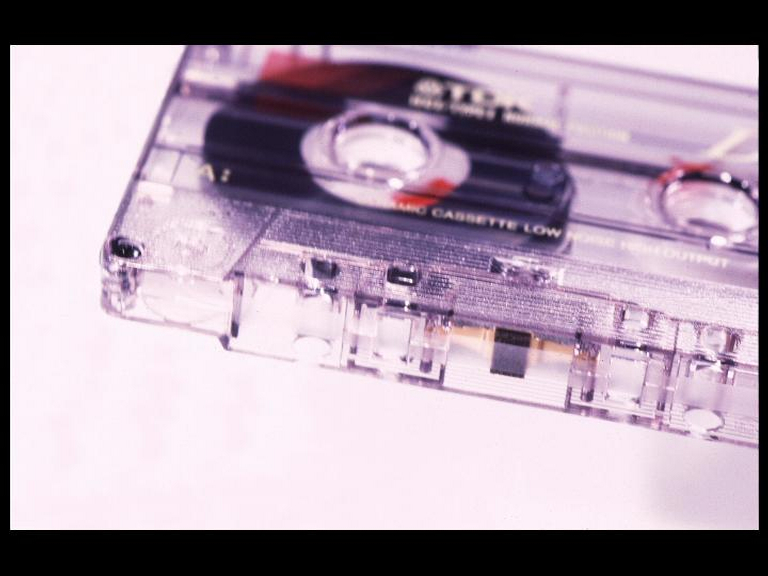
Now you probably think that, having gone to all that effort, if I have a blind friend who's as interested in the history of the slave trade as I am, I could just pass the scan on to them in the same way as we made tapes of Billy Joel albums back in the 70s? Well, yes, I can, provided I also give them the original book from which I made the scan otherwise I'm committing an illegal act. That means that if I have more than one blind friend who's interested in the book, the rest luck out.
But if an accessible copy of the book now exists thanks to the personal hard work of a dedicated individual, and the internet exists to help share that accessible copy, why should others go to extremes to scan and create yet another?
Part of the answer, of course, is that people are already happily sharing scanned books by email - and let the law go hang. But a combination of the copyright law and publishers, who are unsurprisingly keen to protect their interests, continues to present a huge obstacle.
But if an accessible copy of the book now exists thanks to the personal hard work of a dedicated individual, and the internet exists to help share that accessible copy, why should others go to extremes to scan and create yet another?
Part of the answer, of course, is that people are already happily sharing scanned books by email - and let the law go hang. But a combination of the copyright law and publishers, who are unsurprisingly keen to protect their interests, continues to present a huge obstacle.
In the states, the sharing of scanned texts is allowed via an organisation called Bookshare, which not only uses scans done by blind people, but also has volunteers providing scans around the clock.
When the much anticipated autobiography of Bill Clinton was published, for example, it was available in an accessible electronic text format two days after its print publication. Thanks to a bit of friendly transatlantic piracy, it was also available to people over here.
Until publishers sort themselves out in the UK, if you know where to look, there are already places on the web where it's possible to share texts, send your scans or find books which might otherwise not be available to you.
One popular but illegal site has a stock which is already getting on for 50% greater than the combined number of books held by the two big lending libraries for visually impaired people in this country, the RNIB Talking Book service and the National Library for the Blind.
All of this - not to mention the thriving and informal cottage industry that exists on the blind grapevine - is good news for print disabled book lovers despite remaining highly illegal.
The publishers just don't buy the Billy Joel cassette argument which says that people giving each other taped copies of "the stranger" didn't materially affect sales of the original album. They think we can't be trusted not to get into the scanning business in such a big way as to seriously erode their profit margins.
What's needed, they believe, is a "trusted intermediary". Would-be readers are perhaps entitled to feel patronised now!
When the much anticipated autobiography of Bill Clinton was published, for example, it was available in an accessible electronic text format two days after its print publication. Thanks to a bit of friendly transatlantic piracy, it was also available to people over here.
Until publishers sort themselves out in the UK, if you know where to look, there are already places on the web where it's possible to share texts, send your scans or find books which might otherwise not be available to you.
One popular but illegal site has a stock which is already getting on for 50% greater than the combined number of books held by the two big lending libraries for visually impaired people in this country, the RNIB Talking Book service and the National Library for the Blind.
All of this - not to mention the thriving and informal cottage industry that exists on the blind grapevine - is good news for print disabled book lovers despite remaining highly illegal.
The publishers just don't buy the Billy Joel cassette argument which says that people giving each other taped copies of "the stranger" didn't materially affect sales of the original album. They think we can't be trusted not to get into the scanning business in such a big way as to seriously erode their profit margins.
What's needed, they believe, is a "trusted intermediary". Would-be readers are perhaps entitled to feel patronised now!

Enter the RNIB, who, if they don't actually agree with the publishers, certainly offer an appearance of subscribing to their point of view. RNIB are currently running a feasibility study aimed at finding out whether books can be made accessible by said trusted intermediary, but produced in a restricted format, not just as plain electronic texts like the American system.
And guess who they think said trusted intermediary should be? Not that the government's given them any money to undertake this, according to my source at the institute. And not that anything is guaranteed to come out of it to ensure that more people can read more of the books they want more readily and quickly.
And this, dear reader, is the conundrum with which I leave you. A solution not only exists to this problem but is being widely used legally in the states and piratically elsewhere. Why bother looking for another? And why do we need a trusted intermediary? The answer seems to be that it has more to do with the publishers' requirement than with our genuine need.
And guess who they think said trusted intermediary should be? Not that the government's given them any money to undertake this, according to my source at the institute. And not that anything is guaranteed to come out of it to ensure that more people can read more of the books they want more readily and quickly.
And this, dear reader, is the conundrum with which I leave you. A solution not only exists to this problem but is being widely used legally in the states and piratically elsewhere. Why bother looking for another? And why do we need a trusted intermediary? The answer seems to be that it has more to do with the publishers' requirement than with our genuine need.
More articles about
Bookmark with...
Live community panel
Our blog is the main place to go for all things Ouch! Find info, comment, articles and great disability content on the web via us.
Listen to our regular razor sharp talk show online, or subscribe to it as a podcast. Spread the word: it's where disability and reality almost collide.
More from the BBC

All the latest news from the paralympics.

News and views for people who are blind or partially sighted.

Weekdays 12.40pm. Radio 4's consumer affairs programme.

~RS~q~RS~_bbc_=0&__ip__=54.76.44.195&dnainitialtitle=We%27ve%20found%20the%20solution%2C%20now%20let%27s%20create%20the%20problem&dnahostpageurl=http://www.bbc.co.uk/ouch/features/weve_found_the_solution_now_lets_create_the_problem.shtml&dnauid=ouch:article:902&s_baseHeadingLevel=1&dnashow=10&dnafrom=0&dnato=9&dna_encoding=utf-8&s_sssicomponent=1&s_sssiCommentCount=&dnacommentforumlistprefix=%5B_%5D&dnarecentcommentsprefix=%5B_%5D&s_commentprofileurl=/dna/mbouch/CommentProfile?&s_contact=0~RS~z~RS~07~RS~)

Comments