
Home > Features > Japanese insights
Japanese insights
27th March 2006
In January, I spent a week in Japan, visiting Sapporo and Tokyo to talk about science. Such a brief immersion means that I can't compete with the insights of my colleague, Ouch's China correspondent Stephen Hallett, but it did give me some intriguing clues about disability issues in Japan, from the perspective of a gaijin (foreigner).
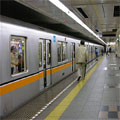
For example, I noticed widespread access facilities for disabled people. In particular, subway stations have more extensive tactile paving for visually impaired people than I've seen anywhere else in the world. The day I left, a front page scandal broke about Tokyo Inns, a major chain which had been illegally removing access provision and parking spaces for disabled people in their hotels. Government minister Kazuo Kitagawa said: "The modification is out of the question. It goes totally against the land ministry's policy of creating communities based on universal design". Which isn't the sort of thing you can imagine John Prescott saying, is it? But while there were usually lifts, ramps, and wheelchair spaces on trains, I only saw one other disabled person during my trip. The majority of disabled people, I was told, stay at home or in institutions. In Japan, gender roles are still very traditional: families play an important role in disability, which in practice means that women bear the brunt of caring.
Japanese attitudes to disability are complicated. Blindness seems to be rather venerated: think of the blind swordsman in the Beat Takeshi film, Zatoichi. People with learning difficulties also seem to be given a special status: I watched Believe, an amazing film about a group of people with learning difficulties shooting their own film about the Special Olympics, directed by Kenichi Oguri. However, there seems to be more ambivalence in Japanese culture about people with physical impairments or disfigurements, who challenge the concepts of purity, order, and balance. That said, I personally received a very friendly and respectful welcome and my hosts made considerable efforts to ensure I had a good time. Moreover, the culture of politeness means that I was never aware of being stared at or mocked by people in the street - a world first, in my experience.
Of course, in a society where the average height is shorter than in the West, perhaps my own restricted growth was less distinctive. My Tokyo colleague Tom Hope - blonde, blue eyed, and over six foot in height - tells me that he gets considerable attention from Japanese, who find him amazingly curious. He gets stared at, photographed, laughed at, not to mention cramped in a society designed for bodies a foot shorter than his own.
Japanese welfare provision is also mixed. Disabled people get a special identity card which entitles them to benefits, job quotas and other services. However, many companies do not achieve their 1.8% quota of disabled workers. People with mental health problems have only recently become eligible for disability protection. Despite the recent growth of the Independent Living movement, many people are still institutionalised, particularly those with mental illness. Personal assistance - the shienpi system - was recently introduced, and there has been rapid take-up. As a result, the Japanese government has been trying to restrict access to the system, and make disabled people pay towards the costs of support. In reaction to these problems of institutionalisation and cuts backs, there have been a series of major direct action protests in Japan - for example, 4,000 people turned up to a demonstration in May 2005.
There is a great interest in gadgets, technology and particularly robotics in Japanese culture. I'd been told that there are automatic dispensing machines for everything. But I didn't expect to find so many automatic washing/drying toilets - and for everyone, not just disabled people. I also learned that robots are being introduced into social care settings - for example, to support older people by dispensing their drugs or providing interaction to reduce dementia-related cognitive decline. Whereas in the West we tend to be suspicious of automation, many Japanese people would apparently prefer to engage with a machine than a person.
Japanese attitudes to disability are complicated. Blindness seems to be rather venerated: think of the blind swordsman in the Beat Takeshi film, Zatoichi. People with learning difficulties also seem to be given a special status: I watched Believe, an amazing film about a group of people with learning difficulties shooting their own film about the Special Olympics, directed by Kenichi Oguri. However, there seems to be more ambivalence in Japanese culture about people with physical impairments or disfigurements, who challenge the concepts of purity, order, and balance. That said, I personally received a very friendly and respectful welcome and my hosts made considerable efforts to ensure I had a good time. Moreover, the culture of politeness means that I was never aware of being stared at or mocked by people in the street - a world first, in my experience.
Of course, in a society where the average height is shorter than in the West, perhaps my own restricted growth was less distinctive. My Tokyo colleague Tom Hope - blonde, blue eyed, and over six foot in height - tells me that he gets considerable attention from Japanese, who find him amazingly curious. He gets stared at, photographed, laughed at, not to mention cramped in a society designed for bodies a foot shorter than his own.
Japanese welfare provision is also mixed. Disabled people get a special identity card which entitles them to benefits, job quotas and other services. However, many companies do not achieve their 1.8% quota of disabled workers. People with mental health problems have only recently become eligible for disability protection. Despite the recent growth of the Independent Living movement, many people are still institutionalised, particularly those with mental illness. Personal assistance - the shienpi system - was recently introduced, and there has been rapid take-up. As a result, the Japanese government has been trying to restrict access to the system, and make disabled people pay towards the costs of support. In reaction to these problems of institutionalisation and cuts backs, there have been a series of major direct action protests in Japan - for example, 4,000 people turned up to a demonstration in May 2005.
There is a great interest in gadgets, technology and particularly robotics in Japanese culture. I'd been told that there are automatic dispensing machines for everything. But I didn't expect to find so many automatic washing/drying toilets - and for everyone, not just disabled people. I also learned that robots are being introduced into social care settings - for example, to support older people by dispensing their drugs or providing interaction to reduce dementia-related cognitive decline. Whereas in the West we tend to be suspicious of automation, many Japanese people would apparently prefer to engage with a machine than a person.
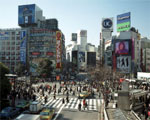
It is tantalising to visit such a very different culture for such a brief period. It's like one of the delicate and unusual Japanese meals I ate: an array of fleeting impressions, strange textures and new sensations, from sea urchin to octopus eggs, which left me hungry for more. For example, I wanted to meet Taihen, the group of disabled performers of Butoh (a Japanese dance / performance form), who have been making weird and wonderful work since 1983. I hardly explored Tokyo, a huge and sprawling city of 10 million people. And I never reached Kyoto or any of the historic sites of Japan. I need to know more about a society in which blowing your nose is disgusting, but urinating in public isn't, and in which people are entirely eclectic about their religion: Shinto rites for birth, Christian for weddings, Buddhist for funerals.
Clearly, I should persuade the people at Ouch that they need a more in-depth investigation of disability in Japan. But it will have to wait. I'm taking a break from this column for six months, so thanks for all your feedback, brickbats and bouquets over the last two years.
Clearly, I should persuade the people at Ouch that they need a more in-depth investigation of disability in Japan. But it will have to wait. I'm taking a break from this column for six months, so thanks for all your feedback, brickbats and bouquets over the last two years.
The BBC is not responsible for the content of external internet sites.
More articles about
Bookmark with...
Live community panel
Our blog is the main place to go for all things Ouch! Find info, comment, articles and great disability content on the web via us.
Listen to our regular razor sharp talk show online, or subscribe to it as a podcast. Spread the word: it's where disability and reality almost collide.
More from the BBC

All the latest news from the paralympics.

News and views for people who are blind or partially sighted.

Weekdays 12.40pm. Radio 4's consumer affairs programme.

~RS~q~RS~_bbc_=0&__ip__=54.77.33.255&dnainitialtitle=Japanese%20insights&dnahostpageurl=http://www.bbc.co.uk/ouch/features/japanese_insights.shtml&dnauid=ouch:article:733&s_baseHeadingLevel=1&dnashow=10&dnafrom=0&dnato=9&dna_encoding=utf-8&s_sssicomponent=1&s_sssiCommentCount=&dnacommentforumlistprefix=%5B_%5D&dnarecentcommentsprefix=%5B_%5D&s_commentprofileurl=/dna/mbouch/CommentProfile?&s_contact=0~RS~z~RS~07~RS~)

Comments