
Home > Features > Bottle tops for the disabled
Bottle tops for the disabled
19th November 2007
In January 2005 I wrote a column called Lotta Bottle. In it, I mentioned that we had received an email from someone who had loads of bottle tops that they wanted to give to a worthy cause.
Now, I thought I'd written something slightly satirical and questioning of the whole practice of helping disabled people by collecting bits of metal and plastic from milk bottles. I thought it was a bit old-fashioned, a bit Blue Peter Bring and Buy. But darn me if it didn't start up a flurry of emails from dozens of people who also have bottle tops they want to give to a worthy cause - not the response I expected.
We've received dozens and dozens of emails about this now with quite a few landing in our mailbox just in the past couple of weeks. Were these emails from people who just couldn't get Simon Groom and Goldie out of their heads? Old habits die hard, I know. Or is there something more to this, making it still relevant in 2006?
I discovered that GH Services Recycling (GHS) in Portsmouth give 50 pounds per tonne of milk bottle tops, that's approximately 100 black bin bags full - they're one of just a small number of companies who recycle bottle tops in this way.
So can all bottle tops be recycled and turned into cash? A spokesperson from GHS clarified the situation for me: "Only red, blue or green ones with a small triangle underneath with the numbers 2 4 or 5 within. Robinson's golden Ribena bottle tops can also be recycled."
And why would anyone want these apparently useless bits of plastic? We can understand how pots and pans were recycled in the war to make bomber planes but what's going on here?
"They are granulated on our property and then sold on to another company who turn them into pellets. These pellets can then be used to make new bottle tops or any other plastic materials."
I heartily condone anything to do with recycling and saving our planet. The thing that sends me into a whirlwind of confusion and weirdness is the fact that welfare of disabled people and bottle top recycling are so closely linked in peoples' minds (well, that and running Marathons).
In the article last year I told of how a woman pressed a large bag of bottle tops into my hand when walking down the street once; she assumed I'd find them useful. It just makes me want to laugh. It seems a crying shame that we look to throwaway cartons rather than to government to provide essential items for disabled people. Milk bottle tops. I mean, you've got to laugh haven't you? Milk bottle tops? Two years of collecting from milk drinkers, one hundred and sixty thousand tonnes of milk bottle tops plus one smiley backslapping reception at your local pub = one wheelchair.
Until the authorities sort themselves out though, maybe you'd like to send your bottle tops on to little Alex Eavis, a three year-old from Cossington in Somerset whose parents are trying to raise money to get him an electric wheelchair. If you read the article, you'll discover that the multinational coffee chain Starbucks are helping Alex's cause too ... by also collecting bottle tops.
• PLEASE DO NOT SEND US ANY MORE BLINKIN' EMAILS ABOUT BOTTLE TOPS AND RECYCLING. THANK YOU.
We've received dozens and dozens of emails about this now with quite a few landing in our mailbox just in the past couple of weeks. Were these emails from people who just couldn't get Simon Groom and Goldie out of their heads? Old habits die hard, I know. Or is there something more to this, making it still relevant in 2006?
I discovered that GH Services Recycling (GHS) in Portsmouth give 50 pounds per tonne of milk bottle tops, that's approximately 100 black bin bags full - they're one of just a small number of companies who recycle bottle tops in this way.
So can all bottle tops be recycled and turned into cash? A spokesperson from GHS clarified the situation for me: "Only red, blue or green ones with a small triangle underneath with the numbers 2 4 or 5 within. Robinson's golden Ribena bottle tops can also be recycled."
And why would anyone want these apparently useless bits of plastic? We can understand how pots and pans were recycled in the war to make bomber planes but what's going on here?
"They are granulated on our property and then sold on to another company who turn them into pellets. These pellets can then be used to make new bottle tops or any other plastic materials."
I heartily condone anything to do with recycling and saving our planet. The thing that sends me into a whirlwind of confusion and weirdness is the fact that welfare of disabled people and bottle top recycling are so closely linked in peoples' minds (well, that and running Marathons).
In the article last year I told of how a woman pressed a large bag of bottle tops into my hand when walking down the street once; she assumed I'd find them useful. It just makes me want to laugh. It seems a crying shame that we look to throwaway cartons rather than to government to provide essential items for disabled people. Milk bottle tops. I mean, you've got to laugh haven't you? Milk bottle tops? Two years of collecting from milk drinkers, one hundred and sixty thousand tonnes of milk bottle tops plus one smiley backslapping reception at your local pub = one wheelchair.
Until the authorities sort themselves out though, maybe you'd like to send your bottle tops on to little Alex Eavis, a three year-old from Cossington in Somerset whose parents are trying to raise money to get him an electric wheelchair. If you read the article, you'll discover that the multinational coffee chain Starbucks are helping Alex's cause too ... by also collecting bottle tops.
• PLEASE DO NOT SEND US ANY MORE BLINKIN' EMAILS ABOUT BOTTLE TOPS AND RECYCLING. THANK YOU.
The BBC is not responsible for the content of external internet sites.
Bookmark with...
Live community panel
Our blog is the main place to go for all things Ouch! Find info, comment, articles and great disability content on the web via us.
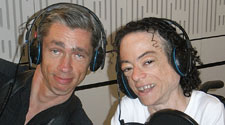
Listen to our regular razor sharp talk show online, or subscribe to it as a podcast. Spread the word: it's where disability and reality almost collide.
More from the BBC

All the latest news from the paralympics.

News and views for people who are blind or partially sighted.

Weekdays 12.40pm. Radio 4's consumer affairs programme.

~RS~q~RS~_bbc_=0&__ip__=54.77.33.255&dnainitialtitle=Bottle%20tops%20for%20the%20disabled&dnahostpageurl=http://www.bbc.co.uk/ouch/features/bottle_tops_for_the_disabled.shtml&dnauid=ouch:article:1031&s_baseHeadingLevel=1&dnashow=10&dnafrom=0&dnato=9&dna_encoding=utf-8&s_sssicomponent=1&s_sssiCommentCount=&dnacommentforumlistprefix=%5B_%5D&dnarecentcommentsprefix=%5B_%5D&s_commentprofileurl=/dna/mbouch/CommentProfile?&s_contact=0~RS~z~RS~47~RS~)

Comments