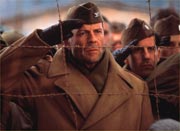

Lock me up as long as you like Sir, I'm not making Die Hard 4
 | |
Bruce Willis might be the big name but this is not a Bruce Willis film in the Die Hard mould.
Nigel Bell A Prisoner of War film with a racial twist. At times it's cliché but by the end it's almost redeemed itself. The Plot
Lieutenant Thomas Hart (Farrell) has never seen front line action, but is thrust into the full horrors of combat when he runs into a bunch of German soldiers in Belgium. 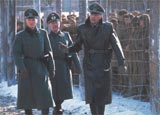 | | Anyone mentioning 5-1 and Michael Owen will be in big trouble |
He's interrogated then sent to a POW camp at Augsberg, Germany. Instead of being allowed to stay in the officers barracks he's banished to the rank and file. It turns out US Colonel McNamara (Willis) thinks he caved in too easily under German questioning and isn't worthy of an officer berth. That issue is quickly sidelined when two new POWs arrive at the camp. They may have fought the enemy but to the many southern Americans in camp they're worse than fascists. The reason - they're black. When a white American is killed there's only one suspect but Hart, with half a legal degree behind him, agrees to defend the black officer Lincoln Scott (Howard). The verdict
A film in three parts. Hart's capture, interrogation and march to camp set's you up for that classic war movie. 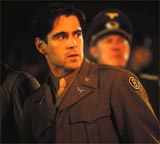 | | News of Beckham's injury was greeted with shock |
When the racial element comes in, your heart sinks, not because of the subject matter but because the way it's treated is almost cliché. Once the trial of Scott begins, however, other plot twist are introduced again which raise the film, not to great but at least passable standards. Willis puts in a very understated performance - quiet, few words. Farrell does enough as the naive college boy thrown to the lions. Marcel Iures, as the German commandant, is probably the actor who stands out most. 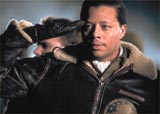 | | The American's always took the playing of their national anthem seriously |
His character switches from the nasty German, to the racially tolerant understanding human (he's seen to love black jazz records) and back again. This at the same time as you are questioning the character of Willis. Having said that, if he'd been true to form, the body count should have been higher at the end. The real winner with the movie is the photography. Shot in Prague, the steely, blue-grey twilight countryside is very atmospheric and the battle scenes (what there are) are well produced. It's also a good advert for the BBC with lots of references to our radio broadcasts during the war. Hurrah. 
|