 | 29 October 2014 |

| |
| BBC Homepage | | |
| |||
| Contact Us | | |
Nature featuresYou are in: Nottingham > Nature > Nature features > Getting rid of pigeons 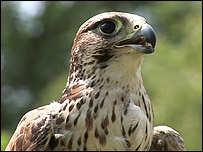 Ray Fretwell's Peregrine Falcon Getting rid of pigeonsBirds of prey are becoming man's best friend in the battle against nuisance pigeon, gull and corvid populations. Help playing audio/video To rid their places of work of pigeons, some companies will poison or shoot the birds. However, some Nottinghamshire businesses are turning to a method which is much cleaner and more ethical. 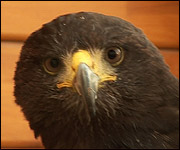 George the Harris Hawk Ray Fretwell of NBC Bird Solutions, uses hawks and falcons to combat pigeons, gulls and corvids (crows and magpies). It's rare that Ray's birds kill or maim the pests, as he explains: "Actually catching and killing a pigeon is a very, very rare occurrence for us. It's just a deterrent and that's all it needs to be [in order] to work." Ray has been scaring away a big pigeon population at Cottam Power Station in Retford, Nottinghamshire. The majority of the birds have now moved on but Ray has to keep patrolling the station with his Harris Hawk. 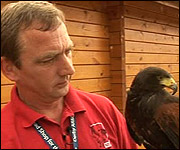 Ray Fretwell with his Harris Hawk "If we keep bringing the Harris Hawk in, it doesn't actually have to catch a pigeon, all it needs to do is be here so the pigeon believes this is a predator's territory. "The pigeon will disappear to somewhere where it feels safer." According to Ray it's a much more productive, less messy and less harmful approach to bird control. "Shooting or lethal methods should be a last resort. This is a good method. It's environmentally good, ecologically good... "It's just pitting nature against nature." Help playing audio/video last updated: 18/06/2008 at 11:13 SEE ALSOYou are in: Nottingham > Nature > Nature features > Getting rid of pigeons    [an error occurred while processing this directive] |
| | About the BBC | Help | Terms of Use | Privacy & Cookies Policy |
