 | 13 November 2014 |

| |
| BBC Homepage | | |
| |||
| Contact Us | | |
Nature featuresYou are in: Nottingham > Nature > Nature features > Project hopes owls will soar 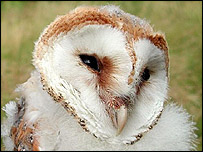 100th barn owl to be ringed in Notts Project hopes owls will soarClive James, from the Rushcliffe Barn Owl Project, explains why the birds need our help in Nottinghamshire. Why was the Rushcliffe barn owl project set up?In 1995, I read a national report released by the Hawk and Owl Trust that numbers of barn owls had declined as much as 95% since the 1830's. At the time Rushcliffe County Council were asking for ideas for projects or initiatives for European Nature Conservation Year. I approached Rushcliffe and with their help, and a few other grants and keen volunteers, we were able to get a conservation project underway. What's the appeal of barn owls?People have associated owls with spirits and magic for hundreds of years, they look very wise, have a round disc shaped face. Their big eyes look majestic and somehow stimulate a magical appearance about them. The barn owl has had many names, it’s been known as the church owl, the ghost owl, white owl to name a few. Where would we find barn owls? If there were owls nesting in our gardens, how best to protect them?Barn owls as their name suggests are associated with barns and they have had a long association with the agricultural landscape. They have been referred to as the farmer’s friends because of the good they do in controlling rodents. Barn owls are an open countryside bird; they like to hunt along ditch banks within field systems and large areas of rough grassland that support small mammals. You would not normally find barn owls in your garden unless you were adjacent to open countryside. But you may be lucky to have another species of owl, the tawny owl or brown owl as it is sometimes called. Why are we losing barn owls?We lose a large number of barn owls on our roads each year. They haven’t adapted the ability to hover like kestrels, barn owls swoop low and sometimes get sucked into the slipstream or they hit high sided vehicles. An estimated 5,000 are killed on the roads each year. A big decline in this species was greatly noticed in the early 1960's. Changes in agriculture began to have an effect on barn owl populations. Hedges were torn up to make larger fields for larger machinery and grants were given for hedgerow removal. It's estimated that 125,000 miles of hedgerow were removed within a 25 year period, this equating to some 5,000 miles a year. Of course, this also saw thousands of hedgerow trees also disappear. These being the nesting and roosting sites of many birds including the Barn Owl. The barn owl is now a 'red data' species which means it's afforded special protection by law. What can we do to help?We can help by encouraging farmers, landowners, land managers to take up grants for habitat improvements, plant trees within hedgerows and leave areas of rough grassland. People could also become tree wardens. As trees become to the end of their growing life, very few are being replaced especially within the countryside hedgerows. How are you achieving success?We must put a lot of our success down to our box hosts who, with their habitat improvements, have been the main player in the fight to increase barn owl numbers. Hopefully with continuing help from our sponsors, box hosts, terrific public support we may be able to spare the barn owl from disappearing from the British landscape. Let's hope so. Find out more about the Rushcliffe Barn Owl Project: The BBC is not responsible for the content of external websites last updated: 02/06/2009 at 17:05 SEE ALSOYou are in: Nottingham > Nature > Nature features > Project hopes owls will soar    [an error occurred while processing this directive] |
| | About the BBC | Help | Terms of Use | Privacy & Cookies Policy |
