 | 29 October 2014 |

| |
| BBC Homepage | | |
| |||
| Contact Us | | |
Nature featuresYou are in: Nottingham > Nature > Nature features > Plight of Nottinghamshire's predators 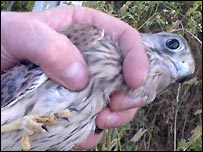 John Black examines a kestrel Plight of Nottinghamshire's predatorsPaul Bradshaw Climate factors could be impacting on Nottinghamshire's birds of prey. Paul Bradshaw went on patrol with John Black, Southern Reserves Officer for the Notts Wildlife Trust. Profile : Paul BradshawPaul is a photographer providing images for the Nottingham Evening Post, the Leicester Mercury and City Life magazine among others. He grew up in Clifton but now lives in West Bridgford and in his spare time provides vocals and guitar for the 4-piece progressive rock outfit 'Shatner's Bassoon'. He is a film-maker and has also worked on the feature films '24/7'; and 'One for the Road'; both shot in and around Nottingham. I've moved around a bit, living in London, Vancouver and Seattle (also Stoke on Trent!) but I love Nottingham, it's got a great mix of glitz but has retained it's gruff charm. It's too early for national nest-box data to be compiled and released, but evidence from local monitoring by John Black, and the British Trust for Ornithology, suggests that birds of prey, that rely on small mammal prey, have had very poor breeding success. John says, "Generally the number of breeding attempts have been similar to previous years, but the number of nest failures so far have been significantly higher than usual.
Owls"At one wood where three pairs of tawny owls breed annually, two of the three failed this year with chicks starving in their nest-boxes, and very few mammal prey remains were found compared to previous years. In one box, owls were even catching frogs!" According to John the number of nesting barn owls have been the same as last year but again the number of surviving chicks is about 50% lower, with five or six eggs hatching but only two or three fledging due to larger chicks eating the smaller chicks (recycling) due to lack of available food. KestrelsIt's a similar story for kestrels, where breeding attempts have been on a par with previous years but success is about 50% lower. Those figures are based on a small local sample, and hopefully may not be reflected nationally. 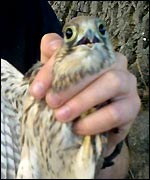 Population dynamics and breeding success is a very complex subject, with cyclical changes in numbers of prey species being followed by boom or bust years for predators such as owls and hawks, and you have to look at a long term trend to judge the health of the population. John says, "What we don't know is how small mammal populations are being affected by climate change, and if numbers of small mammals continue to be reduced, then owls and kestrels are likely to suffer even greater decline. "Great efforts have been made to replace lost breeding habitat with nest boxes in recent years, but if the mice decline the birds of prey are in great danger." last updated: 28/03/2008 at 09:59 SEE ALSOYou are in: Nottingham > Nature > Nature features > Plight of Nottinghamshire's predators    [an error occurred while processing this directive] |
| | About the BBC | Help | Terms of Use | Privacy & Cookies Policy |
