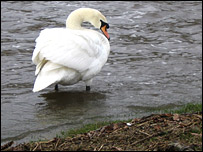
30 March 2006, Rawcliffe MeadowsHaving to finish off my annual leave, I took the opportunity, in between other errands, to call down to Rawcliffe Meadows, to see how the flooding was going. The Environment Agency had opened the sluice gate on Rawcliffe Ings on Tuesday and now both Clifton Ings and Rawcliffe Meadows were covered in water, just a metre or two below the top of the flood bank at the southern end. 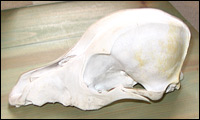 | | A Fox scull |
The flooding is quite spectacular, but I worry for all the wildlife! The mute swan was quite at home by himself, along with the pair of coots who had obviously lost their nest in the pond (now a metre or two under flood water), a pair of rooks were also happily collecting flood debris to build their nest with. The moles had obviously had to swim for it and I wondered about the fox who had made a home under the log pile near the pond? I’d found the skull of a dead fox just by the entrance hole on Sunday to add to the collection at home (once it was bleached!). The problem for the management of the nature park, is the amount of debris the flood brings with it. It also means that if we have beasts like heifers grazing, they have to be brought off quickly. 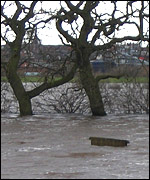 | | The water submerges the Friends notice board. |
The site is managed in the traditional manner for the Ings, which means that we try to graze in the spring, grow a healthy hay crop, which is cut early in July and then grazed again before the autumn. Impromptu floods make this all difficult, since the debris needs moving before the hay grows and the equipment damaged, it also means any cattle need moving. The flood also brings a variety of seeds, eggs, plants, fish and chemicals like nitrates from farms, gardens and ponds upstream. I also wonder about the Tansy beetles. How do they survive? Are their larvae buried deep under the resting plants? They can’t have all been washed away, surely, because they appear each year? Mick |