 | 24 September 2014 |

| |
| BBC Homepage | | |
| |||
| Contact Us | | |
FaithYou are in: North Yorkshire > Faith > Can religion & politics mix? 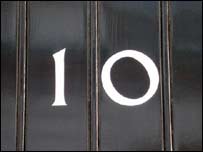 Does religion fit here? Can religion & politics mix?Many feel religion and politics don't mix well. It isn't hard to see why with some minority groups espousing extreme views. So should there be a complete divide, a line that isn't crossed? During the 2005 general election campaign both the Bishop of London and the Archbishop of Canterbury spoke out on political issues and closer to home the Bishop of Hull has urged Christians to vote. But is it right for religious leaders to intervene in national political issues? We asked some people in Helmsley if they thought religion and politics should be mixed. "No I don't, definitely not. I think there are enough issues with politics without getting involved with religion. I think religion is quite a separate thing." "No not at all. I think there's enough trouble and argument over politics. People of the church are there for the church and nothing else."
"I think they're quite separate things. But I suppose if you are a Catholic then you'd probably vote for a party which is antiabortion or something like that." So there you have it. The public have spoken. But of course not everyone agrees that things should be so clear. For example St Michael le Belfrey Church in York has organized a question & answer session with parliamentary candidates after the evening service on 01 May. Is this an unacceptable blurring of the line? We asked the church co-ordinator, Mark Rance. "We're hoping to help the members of St Michael's make an informed decision when it comes to voting. I think religion and politics are part of our life and therefore they do mix automatically and I think if we can help people to mix them in an informed way then that's what's important. "I don't think as Christians we should be in the ghetto and not taking part in what's going on in the world." And Mr Rance isn't alone in his belief that Christians need to engage with politics. Rod Breckon is the minister of New Life Baptist Church in Northallerton. "I feel our Christian faith affects every part of our lives. It isn't just something we keep for Sundays so we have an opinion on every part of our lives. The politicians about everything from defence to education to healthcare, and I believe there is a Christian perspective on all of those things. "I think the church has been too reluctant in the past to speak up and I believe it's time the Christian voice was heard. I'm pleased when our Christian leaders make a statement. It's not about party politics - there are Christians in all the major parties - but more about a Christian perspective." "I think some of the recent political involvement in the Make Poverty History campaign, for example, has been driven by the church. So it shows that we can be a voice when we speak sensitively." It probably comes as no surprise to hear these arguments from people closely involved with Christian organizations. So we spoke to Professor Haleh Afshar from the University of York Politics department to see what she thought of religious leaders intervening in politics. "In my opinion, in many ways religion is safer at home and politics in the public domain. But it can be very difficult to separate morality from practicality and politics, particularly at a time when politicians seem to be taking a moral stance on truth. So it becomes almost necessary for the religious institutions to intervene because no-one can claim to have a completely clean conscience in politics. "Of course as Iranian living away from a country ruled by theocrats I would rather politics were kept separate I don't think they mix very easily. But I do think in the current climate the use made of morality, which I feel itself is immoral, almost demands religious intervention. Against my own better judgement I think sometimes the church has to step in and ask these bad boys to behave themselves. Any sane person who intervenes is in my good books. So why does the British public get hung up about this issue? Pauline Kollontai is a Principle Lecturer in Religious Studies at York St John's College. "If you look at the development of Christianity, whilst it became aligned with the state by Constantine it seems there were also divisions created; 'We're the state and we have our responsibilities and you're the church so you need to deal with the spiritual side'." "I think as Christianity moved across Europe there became an over spiritualisation of the teachings. The quote 'Give to Caesar what is Caesar's and to God what is God's' is taken by some to mean there should be a separation of state and church. "For example in Nazi Germany the church was so imbued with this idea it even allowed itself to become part of the Nazi ideology and only a minority of Christians opposed that and the policies of Hitler "It seems people think that if you're going to be so spiritual and religious you have to disengage from the politics of the world and I don't think you can do that. "Of course in Judaism the line between religion and politics has always been blurred, and that's the case in Islam and in other religions we look at. It just seems to be Christianity where there's been that separation" But not every faith community agrees with political involvement. Tricia Castle is Secretary of York's Baha'i community. As she explains members of the Baha'i faith avoid getting involved in political arguments. "The Baha'i faith's underlying premise is unity so we are not encouraged to do anything that promotes the divisiveness of people. Party politics is one of those things because if you're for one lot you are per se against the other lot. "We're not absolutely forbidden to get involved in politics, and certainly politics in the wider sphere is fine because it covers everything you do, but you have to be very careful and you shouldn't be seen to be aligning yourself with one party. "We wouldn't be encouraged at all to try and persuade one party or another. Baha'is are working for the betterment of mankind but you wouldn't want influence politicians in a narrow sense." There are, of course, no definitive answers as ultimately it's a matter of personal conscience. What is clear is that cleanly separating personal faith from personal politics isn't possible for most people. Do you have an opinion on this subject? Here are some of the comments we've received so far: Kenneth Firby Ruby James Richard R. Stelz Edna Elbow Alice Prince Clive Billenness To have your say, fill in the form below. last updated: 21/06/07 Have Your Saysarahjane darby Ben Johnson Nicola Percival Mohammed SEE ALSOYou are in: North Yorkshire > Faith > Can religion & politics mix?
|
| | About the BBC | Help | Terms of Use | Privacy & Cookies Policy |



 Watch the