Board ChoicePosted: Iain, Adventure One, Letterkenny, Feb 06
 When you first go to a surf shop to buy a surfboard it can seem quite a daunting task, especially when presented with a rack of surfboards of all different shapes and sizes. If you are a complete beginner to the sport the first question you should ask yourself is: how much do I want to pay? Well as a beginner most surf schools would recommend a ‘mini-mal’ board which is a board with a longboard shape (usually fatter and rounder ends) but only 7’3” – 8 feet in length. As a basic rule of When you first go to a surf shop to buy a surfboard it can seem quite a daunting task, especially when presented with a rack of surfboards of all different shapes and sizes. If you are a complete beginner to the sport the first question you should ask yourself is: how much do I want to pay? Well as a beginner most surf schools would recommend a ‘mini-mal’ board which is a board with a longboard shape (usually fatter and rounder ends) but only 7’3” – 8 feet in length. As a basic rule of
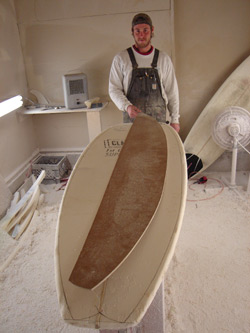
thumb you should try to get a board that is at least 1-1.5 feet taller than your own height. You generally have three options: 1. Buy a second hand board. You could get these from looking in a local trading paper or online on sites like irishsurfer.com. Many surf sites have a buy and sell page. Most surf shops also carry secondhand boards. 2. The second option is the plastic or epoxy moulded plastic board (Bic, NSP, Highfly). Some surfers call these kinds of boards ‘plastic fantastics’ and they are available in all good surf shops and are considerably cheaper than a hand-made or ‘custom’ board. Plastic boards usually cost around £200 upwards new. They are lightweight and durable and because of this tend to hold their re-sale value quite well. The only downside to these boards is that as you become an intermediate surfer you will outgrow the board as they tend not to be as responsive in turning as a hand-made board, due to the rails in the tail section being quite rounded. 3. The third, and most expensive option, is a hand-made or custom board tailored to your exact specification by a surf board maker (or ‘shaper’). Although you are initially paying more for the board, people tend to find that they will hold on especially to their hand-made mini-‘mal’s (ie Malibu, or longer boards) for several years longer as they come in handy for the small summer swells. Hand-made boards are more expensive due to the fact that the manufacturing process is more labour intensive with a board taking approx 3 days to shape, spray, glass and sand. As surfing explodes in popularity in Ireland there has been an increase in cheaper ‘hand made‘ boards imported from the Far East. This definitely gives the consumer more choice, but ask for people’s opinion on them before you spend your hard-earned money. It may be worth spending €100 more on a board that is well made by a recognised shaper. For intermediate surfers who want to downsize from a 7’3 – 8’ mini-mal the best way is to opt for a board 6’6 - 7’ in length, with a shortboard template. This type of board comes under many names, for example ‘Fat Boy Flier’, ‘Retro Rocket’ or ‘Slayer’, but essentially they are very similar in shape. They still have plenty of width and volume, usually 19 3/4” -21” which is what as an intermediate you will still need to help you paddle into the wave, but they respond more critically and will really help develop your surfing. These boards are also great for the older surfer who still wants to ride a shortboard but isn’t getting in the water enough to be able to ride at the level he/she used to. As you progress as a surfer you will begin to understand how boards work and what types of boards suit what kind of conditions. This will be where you will want to develop a ‘quiver’ of boards that can suit your needs, including the very shortest skinniest boards, called shortboards. Don’t make the mistake of buying a small skinny boards at the very start. At the start, many surfers buy a board that is far too short, and end up catching very few waves as a result. Smaller boards are generally harder to surf. For most people a quiver will include a longboard, a semi-gun and a shortboard or fish-style board for the smaller days. When you feel you’re at this stage you will probably want your boards custom made to your specifications by a shaper. Most shops can order custom made boards and tend to use the same shaper each time they place an order, but there are also a number of shapers around Ireland who make quality boards at great prices. Wherever you buy your board from, be it a shop or direct from a shaper, make sure you ask plenty of questions before you part with your cash. But most of all, be honest about your ability and you should end up with the right board. The right board means one thing - MORE WAVES!! Iain, Adventure One Anything to add? If you would like to contribute and share your experiences send us an email. |