|  | |  | | | Natural Wind Killers
9 December 2002
Most gardens will benefit from shelter and while walls, fences and hedges work well there may be the opportunity to plant a windbreak of trees.
More space is required but the resulting plantation adds another dimension to the garden providing a copse area, ideal for woodland plants and those which prefer shade. As the trees mature paths can be cut through for a woodland walk, glades can be formed where the sun can penetrate.
The area neednt be large. With a careful selection of trees and shrubs the wind will be filtered rather than blocked by a living screen offering colour, shape and flower for the twelve months. Wildlife will flock to the plantation and, as it matures, regular visitors will appear year after year.
The trees are usually planted as whips between 2-5 ft high at a spacing of 6 ft each way. Good preparation of the planting hole and adding compost and a handful of fertilizer to the soil will get them off to a quick start. If the area is large there is no need to cultivate. Instead dig the planting pits where required.
It is essential weeds are eliminated from around the plants as they will inhibit growth and even choke the young trees. They can be kept under control by using glyphosate weedkiller. Laying 18 inch diameter or square mats with a slit to allow them to fit round the stem will act as a mulch. Special mats may be purchased or old under felt cut to size.
 Firm the plants in spring after the winter winds and frost abate. Water regularly during the first season to help the roots become established. Firm the plants in spring after the winter winds and frost abate. Water regularly during the first season to help the roots become established.
Rabbits and hares do enormous damage. They eat the young bark causing the tree to die. Small areas should be fenced in using chicken wire with at least 9 inches buried to prevent them burrowing under. With larger areas it is better and cheaper to use wire or plastic wrap-round guards for each plant.
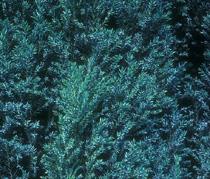
Where space allows, it is nice to have a mixture of deciduous and evergreen trees. Alder, birch and beech lose their leaves in autumn but their twiggy nature helps filter the wind even in winter. Pines, holly and Lawson cypress are evergreen creating interest and colour in the dead of winter.
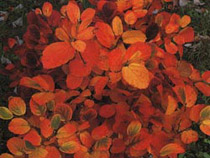
 Cherry and rowan tree have brilliant autumn colour as well as spring flowers. Once the wood becomes established small paths can be cut through it. By planting shade loving bulbs such as wood anemone, snowdrop, winter aconite and cyclamen the floor of the wood will be a riot of early spring colour. Honeysuckle and clematis look good clambering through the branches. Cherry and rowan tree have brilliant autumn colour as well as spring flowers. Once the wood becomes established small paths can be cut through it. By planting shade loving bulbs such as wood anemone, snowdrop, winter aconite and cyclamen the floor of the wood will be a riot of early spring colour. Honeysuckle and clematis look good clambering through the branches. Back to John's index page | |
| |
|  |
| 



|
| |
|