A Field Hedge To Be Proud Of
1 August 2002
 With increasing numbers of rural properties there are many more original field hedges which border gardens. Usually they are in a sorry state with gaps between plants and bare legs all along the base. The predominant plant is often hawthorn or blackthorn with a mixture of other shrubs, trees and scramblers making up the balance. Holly, spindle, gorse, honeysuckle, dog rose and elderberry are common. This combination of plants provides interest and colour throughout the four seasons. With increasing numbers of rural properties there are many more original field hedges which border gardens. Usually they are in a sorry state with gaps between plants and bare legs all along the base. The predominant plant is often hawthorn or blackthorn with a mixture of other shrubs, trees and scramblers making up the balance. Holly, spindle, gorse, honeysuckle, dog rose and elderberry are common. This combination of plants provides interest and colour throughout the four seasons.
Unfortunately other less welcome plants lurk in field hedges ready to send their offspring out to colonize the garden. Bindweed, coltsfoot, bishop weed, vetch and horse tail are weeds to be reckoned with. Where the hedge is bare at the base glyphosate weedkiller can be carefully applied by hand .It will have no adverse effect on woody bark. It will offer a reasonable kill of even the worst weeds by entering through the leaves and travelling down killing the weed at the root. When using weed killers wear protective clothing including gloves.
There are three types of planting which can be used to fill the gaps.
More hedging material may be planted into the gaps to grow up and knit in. Prepare the planting hole well adding bone meal and compost. Clip the new plants in June for a couple of years to encourage them to branch and become bushy. The soil under an established hedge is always dry so water regularly even in damp weather.
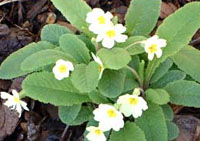 Herbaceous plants may be used to gap up and, at the same time, add colour. Foxgloves look so natural growing in a hedge especially the common purple flowering variety. Adding a few white flowered will brighten the hedge. They will seed readily and may become a weed. Removing most of the dead flowers before they seed will reduce the number of seedlings. The primrose is a wonderful spring plant and will thrive on the North side of the hedge. Bergenia, Elephants ears, is evergreen with big glossy leaves and pink, red or white flowers in winter. Achillea, yarrow, makes a good filler with its pink or yellow flat plates of flowers. Herbaceous plants may be used to gap up and, at the same time, add colour. Foxgloves look so natural growing in a hedge especially the common purple flowering variety. Adding a few white flowered will brighten the hedge. They will seed readily and may become a weed. Removing most of the dead flowers before they seed will reduce the number of seedlings. The primrose is a wonderful spring plant and will thrive on the North side of the hedge. Bergenia, Elephants ears, is evergreen with big glossy leaves and pink, red or white flowers in winter. Achillea, yarrow, makes a good filler with its pink or yellow flat plates of flowers.
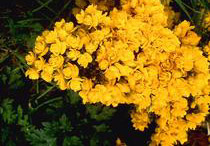
Try Achillea Coronation Gold or A.millefolium Cerise Queen. Scrambling or climbing plants are quick to fill gaps.Initial training to keep the shoots criss crossing the space helps. Vigorous plants include Clematis montana, C.tangutica and C.alpina. Fallopia, Russian vine, is rampant. Honeysuckle, especially Lonicera henryii, is evergreen.
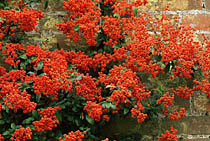 One last gap filler and it is thorny - Pyracantha Orange Glow, evergreen with white flowers and clusters of orange berries throughout the winter or until the birds devour them. One last gap filler and it is thorny - Pyracantha Orange Glow, evergreen with white flowers and clusters of orange berries throughout the winter or until the birds devour them.
Back to John's index page |