|  | |  | | | Go to Work on a Hedge
17 September 2003
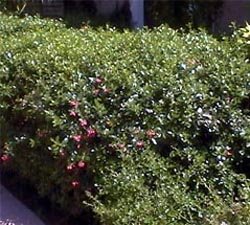 There are hedges suitable for shelter and screening, for demarkation and as a barrier. They are available as deciduous or evergreen plants, with flower and berries and a range of leaf colours including red, silver and variegated. There are hedges suitable for shelter and screening, for demarkation and as a barrier. They are available as deciduous or evergreen plants, with flower and berries and a range of leaf colours including red, silver and variegated.
Some hedges need more maintenance than others but there are no short cuts when it comes to good planting.
Container grown shrubs are available for planting at any time of the year. Bare root plants such as thorn quicks, rose, beech and laurel are only sold from the end of October until March.
A hedge is a permanent feature and deserves a well prepared, deeply cultivated soil. This should be free of perennial weeds such as thistle, dock, nettle and convolvulus. Adding well rotted farmyard manure will help retain moisture. Plant at the same depth as previously grown. Firm the soil with your foot and water to settle the soil round the roots. A surface mulch of bark will deter weeds and conserve moisture.
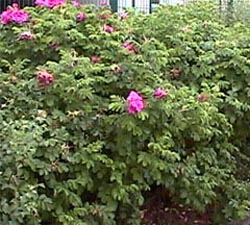 After planting reduce the height of the plants by one third to encourage them to thicken up by branching close to the base. Some varieties of shrub such as escallonia, forsythia and berberis can be pruned on a regular basis to keep them within bounds. Roses, including Rosa rugosa and R.canina, may be hard pruned as necessary to rejuvenate the plant and encourage extra flower. After planting reduce the height of the plants by one third to encourage them to thicken up by branching close to the base. Some varieties of shrub such as escallonia, forsythia and berberis can be pruned on a regular basis to keep them within bounds. Roses, including Rosa rugosa and R.canina, may be hard pruned as necessary to rejuvenate the plant and encourage extra flower.
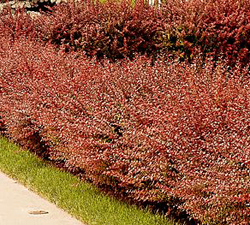 Avoid clipping hedges into shape until nesting birds have reared their young. Don’t cut late in the season as the cover will be sparse allowing frost to penetrate and kill young growths. Avoid clipping hedges into shape until nesting birds have reared their young. Don’t cut late in the season as the cover will be sparse allowing frost to penetrate and kill young growths.
Feeding high potash fertilizer in autumn will harden late growth. Gaps at the base of the hedge can be infilled with young plants. Water on a regular basis for the first season. Back to John's index page | |
| |
|  |
| 



|
| |
|