Under Cover Planting
1st September 2004
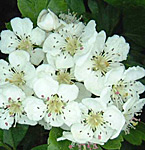 Perimeter hedges, especially those that started life as field boundary hedges can be an eyesore. They are often hawthorn with a rich mixture of other plants including the dog rose , honeysuckle, bramble, gorse and spindle. Many of them are just as likely to be full of gaps and in need of interplanting with a selection of fillers.These lines of plants can become collectors of a frightening selection of weeds that find refuge and a secure home along the base of the hedge. Perimeter hedges, especially those that started life as field boundary hedges can be an eyesore. They are often hawthorn with a rich mixture of other plants including the dog rose , honeysuckle, bramble, gorse and spindle. Many of them are just as likely to be full of gaps and in need of interplanting with a selection of fillers.These lines of plants can become collectors of a frightening selection of weeds that find refuge and a secure home along the base of the hedge. 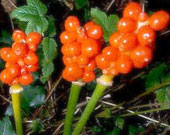 Chemical control is seldom an option for fear of killing the hedge and eliminating other enjoyable vegetation including primroses and Lords and ladies (Arum maculatum). Chemical control is seldom an option for fear of killing the hedge and eliminating other enjoyable vegetation including primroses and Lords and ladies (Arum maculatum).
Perennial weeds spread out from their safe base invading the rest of the garden. Bindweed, ground elder ,horse tail, scutch grass and buttercup. These are difficult to control even with chemical weedkillers and need to be eliminated at source. Smothering with old carpet or black plastic deprives the hedge row plants of moisture and often results in old, well established plants suffering to the point of failure.
The lesson to be learnt is to plant into clean ground free from nasty, perennial weeds and their seeds. Constant weeding by hand will sicken the worst of weeds. Pull off any ivy that is growing through the hedge.With weeds that spread by runners, stolons or underground roots excavate a 12 inch deep trench as close to the hedge as possible without damaging its roots.Erect a vertical barrier of plastic or timber in the trench and backfill. Keep the top of the barrier at least 2 inches above the surface to contain the roots and prevent them spreading into the garden.
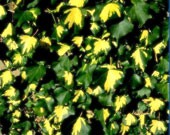 Frequently field hedges were planted on a raised bank of soil. A slope facing North will be shaded and cold while those on the opposite South side will be warm and sunny. Planting the base of the hedge will not only add colour and interest but will inhibit the re-growth of weeds. The introduced plants will be competing with the hedge roots for moisture and nutrients and will benefit from regular applications of water. A few feeds of a balanced liquid fertilizer during the growing season will get the new plants off to a good start and act as a tonic for the hedge. Frequently field hedges were planted on a raised bank of soil. A slope facing North will be shaded and cold while those on the opposite South side will be warm and sunny. Planting the base of the hedge will not only add colour and interest but will inhibit the re-growth of weeds. The introduced plants will be competing with the hedge roots for moisture and nutrients and will benefit from regular applications of water. A few feeds of a balanced liquid fertilizer during the growing season will get the new plants off to a good start and act as a tonic for the hedge.
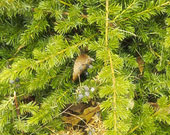 Suitable ground covering plants include the mat forming, evergreen Juniperus conferta , Ajuga reptans and Cotoneaster ‘Gnom’. Choose plants that will behave themselves. There are many cotoneasters and junipers that are claimed to be low growing but will, over a few years, grow to 4-5 ft high. Shaded areas may be planted with the low growing Pachysandra terminalis.A sunny, well drained bank under a hedge is the ideal location for wild strawberries. They will soon colonise the area and provide small, sweet fruit over long periods in summer. Suitable ground covering plants include the mat forming, evergreen Juniperus conferta , Ajuga reptans and Cotoneaster ‘Gnom’. Choose plants that will behave themselves. There are many cotoneasters and junipers that are claimed to be low growing but will, over a few years, grow to 4-5 ft high. Shaded areas may be planted with the low growing Pachysandra terminalis.A sunny, well drained bank under a hedge is the ideal location for wild strawberries. They will soon colonise the area and provide small, sweet fruit over long periods in summer.
Back to John's index page
|