|  | |  | | | Tough Plants for Play Areas
17th June 2004
 Gardens that have to accommodate children and plants require considerable thought and planning. Even model children and good design will not prevent occasional accidents where youthful enthusiam wrecks a choice plant. Gardens that have to accommodate children and plants require considerable thought and planning. Even model children and good design will not prevent occasional accidents where youthful enthusiam wrecks a choice plant.
Protection may work where groups of new plants are fenced to keep bicycles and balls at bay. The lawn is a favourite play area and surrounding plant beds will be in the firing line. The childrens’ area needs to be central rather than tucked into a corner.
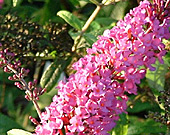
 Sheltered and screened by suitable plants it will fit into the overall plan and encourage children, from an early age,to take an interest in the garden and its plants. Some shrubs thrive on a bit of damage. Buddleia, better known as the Butterfly bush, needs to be pruned every year. It flowers on growths produced during early summer. Broken branches may seem a shame but at worst there will be less flower this summer while longer term the plant will benefit. Sheltered and screened by suitable plants it will fit into the overall plan and encourage children, from an early age,to take an interest in the garden and its plants. Some shrubs thrive on a bit of damage. Buddleia, better known as the Butterfly bush, needs to be pruned every year. It flowers on growths produced during early summer. Broken branches may seem a shame but at worst there will be less flower this summer while longer term the plant will benefit.
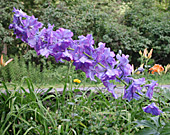
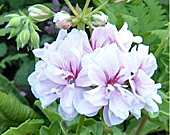 The majority of plants, especially annual bedding, such as geraniums and begonias, suffer badly when trampled. Herbaceous perennials including hostas and delphiniums are prone to damage in late spring when they are starting to grow. Others are tougher. Ground The majority of plants, especially annual bedding, such as geraniums and begonias, suffer badly when trampled. Herbaceous perennials including hostas and delphiniums are prone to damage in late spring when they are starting to grow. Others are tougher. Ground
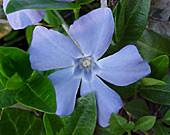
cover material such as the periwinkle (vinca), bugle (ajuga) and cotoneaster will act as a trampoline soaking up busy little feet without there being any lasting damage.
 Older children soon learn to recognise and avoid spiky plants. Berberis are a good example where, from an early age, boys and girls give them a wide berth. For the same reason roses are usually left alone. A clump of nettles is the best barrier between children and treasured plants! Shrubs with brittle branches should be planted in beds well away from the main play areas. Cotinus coggygria, the smoke bush, is easily damaged by play equipment and it is a shame that the plant may become badly shaped as the result of one careless kick of a ball. Older children soon learn to recognise and avoid spiky plants. Berberis are a good example where, from an early age, boys and girls give them a wide berth. For the same reason roses are usually left alone. A clump of nettles is the best barrier between children and treasured plants! Shrubs with brittle branches should be planted in beds well away from the main play areas. Cotinus coggygria, the smoke bush, is easily damaged by play equipment and it is a shame that the plant may become badly shaped as the result of one careless kick of a ball.
 When sowing a lawn to be used for games and sport include some of the harder wearing grass species. Creeping red fescue and Dogtail are tough grasses with the ability to recover - given a chance! When sowing a lawn to be used for games and sport include some of the harder wearing grass species. Creeping red fescue and Dogtail are tough grasses with the ability to recover - given a chance!
Back to John's index page
| |
| |
|  |
| 



|
| |
|