Wet, wet, wet
9 January 2003
Last year must have been the most trying I have ever experienced in the garden. I got more work completed during December than any other month since last April. Wet, wet, wet. It never seemed to stop and when it did, the ground was saturated without the opportunity to dry out, before the next downpour.
It’s a new year and hopefully things can only get better but just in case we get more of the same it is best to have a contingency plan, such as a boat!
Seriously though, if there is a part of the garden which really suffers during prolonged rain, remaining wet throughout the year, then it is sensible to treat it as a bog garden and plant accordingly.
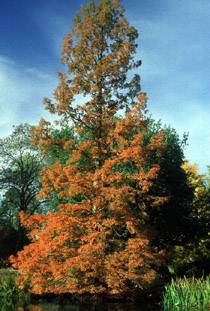 Less severe water logging can be overcome by forming raised beds or installing land drains. Large areas may be planted with trees such as the willow. It can be kept within bounds by pruning the stems hard every second year. The varieties with coloured bark can be striking in winter. Useful conifers include the Dawn Redwood (left), Metasequoia glyptostroboides, which enjoys wet ground. It is a fast growing deciduous tree with soft green leaves which turn to a buttery yellow in autumn. Taxodium distichum, the Swamp cypress, loves having its feet in water with its “knees” sticking out. It will make a big tree. Less severe water logging can be overcome by forming raised beds or installing land drains. Large areas may be planted with trees such as the willow. It can be kept within bounds by pruning the stems hard every second year. The varieties with coloured bark can be striking in winter. Useful conifers include the Dawn Redwood (left), Metasequoia glyptostroboides, which enjoys wet ground. It is a fast growing deciduous tree with soft green leaves which turn to a buttery yellow in autumn. Taxodium distichum, the Swamp cypress, loves having its feet in water with its “knees” sticking out. It will make a big tree.
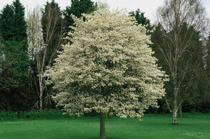
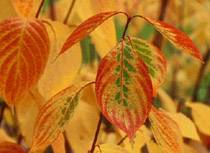 Good shrubs for wet land include the dogwoods. Cornus alba has bright red stems while C.stolonifera ‘Flaviramea’ produces yellow barked branches. The young stems have the best colour so cut them to within a few inches of the ground each spring before they come into leaf, to encourage new growth. Hostas, astilbe, candalabra primula, gunnera and houttuynia all succeed in wet, boggy soil. Vaccinium, better known as Blueberry will only crop well in wet, acid soil. My favourite small tree, Amelanchier likes it permanently damp. Good shrubs for wet land include the dogwoods. Cornus alba has bright red stems while C.stolonifera ‘Flaviramea’ produces yellow barked branches. The young stems have the best colour so cut them to within a few inches of the ground each spring before they come into leaf, to encourage new growth. Hostas, astilbe, candalabra primula, gunnera and houttuynia all succeed in wet, boggy soil. Vaccinium, better known as Blueberry will only crop well in wet, acid soil. My favourite small tree, Amelanchier likes it permanently damp.
 The other less likely contingency plan is to keep the garden hose handy and be prepared to bark mulch the planted beds in spring to conserve the moisture. The other less likely contingency plan is to keep the garden hose handy and be prepared to bark mulch the planted beds in spring to conserve the moisture. Back to John's index page |