|  | |  | | | Under Cover Plants
3 November 2002
In most gardens there is a tricky spot where it is difficult to get plants to grow. One of the most common and frustrating areas is in the shade under a mature tree. It is often cold and dark with bone dry soil. The mass of surface roots will have exhausted any nutrients and will make the preparation of planting holes difficult.
If the tree is an evergreen it adds to the problems.
Dont dispair, there are plants which will tolerate such conditions. They cant be expected to enjoy themselves so everything possible must be done to provide that extra bit of tender, loving care.
Buy plants which are young with a small root ball. They wont require as large a planting pit between the tree roots.If they are container grown plants tease out the roots to allow them to penetrate the soil.
When planting under mature trees it wont matter if a few roots have to be removed to make way for a plant. Make a clean cut. A pick axe or mattock is a useful tool when working between large roots. Improve the soil by adding moisture retentive compost or old, rotted farmyard manure. A general fertilizer containing nitrogen, phosphate and potash should be worked into the soil. If the soil is very dry the planting holes should be flooded the day before planting and allowed to drain. Always
water the plants after planting to settle the soil round the roots. If there is an existing layer of leaf mould work it into the soil.
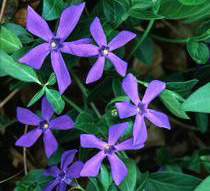 A surface mulch of chopped bark will help to retain moisture. A surface mulch of chopped bark will help to retain moisture.
When planting a climber to scramble up through the branches of the tree make the planting hole about 24 inches away from the trunk where its roots are further apart. Train the stems across to the trunk and provide plastic mesh to encourage them to grow up towards the branches.
Honeysuckle, rambler rose (Wedding Day and Rambling Rector), fallopia (Mile-a- Minute) and clematis such as C.montana and C.vitalba (Old mans beard) are all vigorous and will grow to at least 30 feet in height.
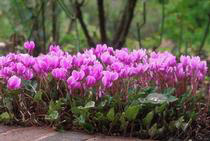 As a carpet under the tree, bulbs such as the hardy, dwarf Cyclamen hederifolium and C.coum will do well. Vinca minor (periwinkle) lamium (dead nettle) and ivy will survive in the worst of conditions. As a carpet under the tree, bulbs such as the hardy, dwarf Cyclamen hederifolium and C.coum will do well. Vinca minor (periwinkle) lamium (dead nettle) and ivy will survive in the worst of conditions.
Taller plants include mahonia, ruscus (Butchers broom) and aucuba (spotted laurel).
One good piece of news - even the weeds will find it difficult, I hope. Back to John's index page | |
| |
|  |
| 



|
| |
|