Perhaps its because we live in a damp part of the world but usually when I suggest cornus in a planting scheme Im told that the red and yellow stemmed types are already planted. There are many other species, some with spectacular flowers equal to any magnolia.
Quite often I do recommend the dogwoods. They are foolproof and succeed in wet ground where many other plants would fail. The secret is to coppice them every spring cutting the stems hard to within a few inches of the ground. The new growths will have excellent bark colour. Cornus alba and its varieties will be red with Cornus stolonifera Flaviramea yellow or pale green.
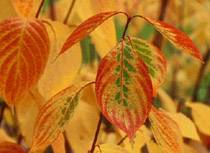
Cornus mas, the Cornelian cherry, will form a good sized tree if not pruned. The tiny yellow flowers are produced on the bare stems in February followed by edible, bright red berries. The leaves colour to red in autumn. The variety C.m.Macrocarpa has larger fruit. Cornus canadiensis is sometimes referred to as the creeping dogwood. It enjoys a well drained, open soil rich in humus. The stems spread over the ground carpeting large areas with small white, summer flowers followed by masses of bright red fruit.
C.florida is the flowering dogwood of North America. It forms a bushy tree with 4 petal-like white bracts which flowerin May. When grown in an acid soil, the leaves turn to a brilliant red in autumn. The variety C.f.Cloud Nine flowers as a young plant. Cornus kousa is a memorable sight in June with its large, conspicuous, white bracts standing on long stems all along the sweeping branches and followed by strawberry-like fruit. The autumn leaf colour is excellent when grown in acid soil.
C.Norman Hadden forms a tree. When mature the attractive bark starts to peel. It flowers in early summer with its creamy white bracts turning dark pink with age. The strawberry-like fruit hang in clusters. In cold areas the autumn leaves colour well and drop. Where there is shelter the plant may remain evergreen. C.nuttallii North Star. In mild areas this variety will form a medium sized tree. The 6 petaled white bracts age to pink with the stems of young shoots deep purple.
C.controversa Variegata is my favourite so I have kept it to last. The flowers are not large but cover the branches in May in creamy-white clusters followed by small black berries. The small leaves are beautifully margined with silver. Often referred to as the wedding cake tree the branches form horizontal tiers as though they have been trained. The next time you think of a cornus think again and again.







 Perhaps its because we live in a damp part of the world but usually when I suggest cornus in a planting scheme Im told that the red and yellow stemmed types are already planted. There are many
 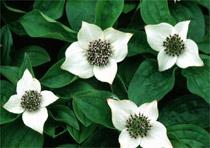 Cornus mas, the Cornelian cherry, will form a good sized tree if not pruned. The tiny yellow flowers are produced on the bare stems in February followed by edible, bright red berries. The leaves colour to red
 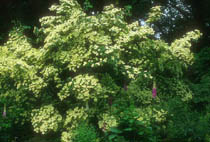 C.florida is the flowering dogwood of North America. It forms a bushy tree with 4 petal-like white bracts which flowerin May. When grown in an acid soil, the leaves turn to a brilliant red in autumn. The variety C.f.Cloud Nine flowers as a young plant. Cornus kousa is a memorable sight in June with its large, conspicuous, white bracts standing on long stems all along the sweeping branches and followed by strawberry-like fruit. The autumn leaf colour is excellent when grown in acid soil.
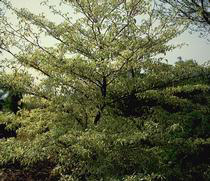 C.controversa Variegata is my favourite so I have kept it to last. The flowers are not large but cover the branches in May in creamy-white clusters followed by small black berries. The small leaves are