|  | |  | | | Healthy House Plants
13 September 2002
Traditionally house plants have been grown to brighten rooms adding interest and colour. Now you have the satisfaction of knowing that with the right choice of plants you can make your home a safer place to live in. There is a school of thought where it is claimed that modern houses and office blocks dont breathe. To conserve energy and heat there is double glazing, less ventilation, cavity wall and roof insulation. In offices the air is recycled.
 This is undoubtedly the age of synthetic materials and nowhere are they more commonly used than in the home and office. They all give off gases and vapours undoubtedly contributing to a dramatic increase in allergy and asthma cases. This is undoubtedly the age of synthetic materials and nowhere are they more commonly used than in the home and office. They all give off gases and vapours undoubtedly contributing to a dramatic increase in allergy and asthma cases.
If we consider the world as a larger than life example it is the plant life which is solely responsible for cleaning the natural and man made impurities. Whole forests worldwide are working non stop to scrub the air, leaving it fresh and clean for us to live in.
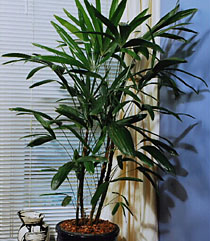 In homes and offices our house plants can carry out the same function. Some are better than others at tackling sick building syndrome. Other plants carry out specialist functions. Some of the worst chemical emissions in the home are formaldehyde, ammonia, benzene and alcohols. Ceiling tiles, floor coverings, paints and wall coverings are the worst offenders in the house. Office equipment such as computer screens, printers and photocopiers all add to the pollution. In homes and offices our house plants can carry out the same function. Some are better than others at tackling sick building syndrome. Other plants carry out specialist functions. Some of the worst chemical emissions in the home are formaldehyde, ammonia, benzene and alcohols. Ceiling tiles, floor coverings, paints and wall coverings are the worst offenders in the house. Office equipment such as computer screens, printers and photocopiers all add to the pollution.
Gardening is well recognised as therapeutic and while I dont personally talk to my house plants I do enjoy their company indoors.
 For removing formaldehyde from the air grow either the Boston fern or the pot chrysanthemum. The Lady palm (Rhapis) absorbs large quantities of ammonia. The Peace lily (Spathiphyllum ) is probably For removing formaldehyde from the air grow either the Boston fern or the pot chrysanthemum. The Lady palm (Rhapis) absorbs large quantities of ammonia. The Peace lily (Spathiphyllum ) is probably
the best all round cleaner especially good for removing acetone, alcohol and benzene from the atmosphere.
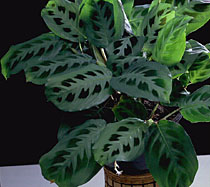
Gerbera daisies are the whole rage at present and do a good job at removing chemicals. Mother-in-laws tongue (sansevieria), the Prayer plant (maranta) and Christmas cactus (schlumbergera) are of little use but they are attractive and in the fight for clean air every little helps. Back to John's index page | |
| |
|  |
| 



|
| |
|