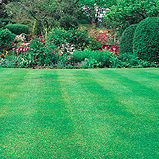
 I wasn’t fussy on geometry at college but I love shapes in the garden. Curved edges to beds and borders look good and make lawn cutting easier to manage.
The fashion has swung back to topiary with every conceivable shape of every variety of plant available in garden centres. The good, well grown and shaped plants are expensive but there is no reason why you shouldn’t make your own. The two essential ingredients for success are patience and a good eye for a balanced shape.
Select your plant with care. There are a lot of shaped shrubs on the market that are not suitable. Slow growing plants with small leaves are ideal and, in my book, neither Photinia x frazeri ‘Red Robin’ or Viburnum tinus ‘Eve Price’ qualify.
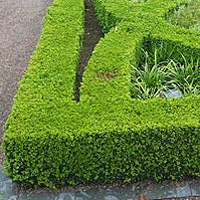 | Contain yourself and try not to be too ambitious. Simple shapes such as balls and pyramids are not as easy as they look. Use bushy plants of Buxus sempervirens ‘Suffruticosa’(dwarf box) or Lonicera nitida. The variety L.nitida ‘Baggesen’s Gold’ has small, bright gold foliage.
It is essential that the plant is kept growing with a balanced liquid fertilizer and is clipped regularly to build up the shape. |
| Buxus sempervirens ‘Suffruticosa’(dwarf box) | |
Feeding with a high nitrogen fertilizer will make fast growth but it will be soft and liable to damage from frost and cold winds. A few feeds of a high potash fertilizer will harden the growths up ready for the winter.
Pre-formed wire frames are available. These are fitted over the plant and as the growths grow beyond the frame they are clipped. Eventually the plant takes shape and the frame can be removed.
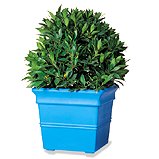 You can make your own shapes using a frame of wire or bamboo canes but get them right. This brings me back to geometry with “ the sum of the squares of the other two sides”. All the sides of the pyramid must be equal and the ball should be football and not rugby. If it does end up egg shaped then it was a rugby ball that you had planned from the beginning!