|  | |  | | | The Right Dose
21 May 2003
Garden centre shelves are stacked high with an amazing array of fertilizers. Many, it is claimed, are ideal for every crop and plant in your garden. It is not as simple as it would appear though. Apply the wrong nutrients and the tree may refuse to fruit and your cabbages will remain stunted.
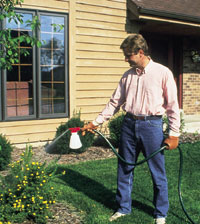 Fertilizers are sold in three forms, powder, granular or liquid. The latter is immediately available to the plant whereas the other two have to be dissolved by available water in the soil before they can be absorbed by the plant roots. Fertilizers are sold in three forms, powder, granular or liquid. The latter is immediately available to the plant whereas the other two have to be dissolved by available water in the soil before they can be absorbed by the plant roots.
Slow release fertilizers are granular and provide the nutrients over a 3-6 month period. Liquid foliar feeds are applied to, and absorbed through, the leaves.
There are three main nutrients in most fertilizers. N (nitrogen ), P2O5 (phosphate) and K (potash) each shown as a percentage. Specialist fertilizers such as those sold for roses contain minute quantities of trace elements such as manganese, zinc and iron. Without these the rose foliage would be discoloured and the plant stunted. Each of the main nutrients has a roll to play and certain plants need more or less of each. Nitrogen promotes growth and when applied to the lawn makes the grass grow more quickly with a rich, dark green colour. It is ideal for leafy vegetables such as cabbage.
Extra nitrogen in the feed will speed up the growth of a hedge producing soft stems, which, unfortunately, are more prone to frost damage.
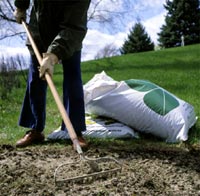 Phosphate is essential for good flower colour and encourages sturdy growth. Potash is needed to produce a good root system, helps the plants to resist disease and firms up soft growth. Phosphate is essential for good flower colour and encourages sturdy growth. Potash is needed to produce a good root system, helps the plants to resist disease and firms up soft growth.
A high nitrogen fertilizer can be used during late spring and summer to promote extra stems and foliage. When followed by high potash feeds in autumn, that growth will be hardened and immune to winter frosts.
The most popular liquid tomato feeds have a potash reading double that of nitrogen. Lawn feeds are usually high in nitrogen. Many others are balanced with an equal percentage of the three main nutrients
back to John's index page | |
| |
|  |
| 



|
| |
|