APPLYING WATER TO THE GARDEN
15 May 2007 You don’t have to live in the South of England to have dry winters. In N. Ireland, last winter was mild and dry and the spring has brought less rain than in previous years. By the middle of April my ground was dry and starting to crack. Depending how you look at it the good or the bad news is that all that can change overnight. The plants that suffer most from dry weather are those that have recently been planted and whose roots haven’t managed to spread out in search of water. Plants such as young trees and hedging that were planted with their roots bare will be more at risk than those planted from pots with a ball of compost or soil held together by the roots. 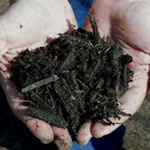 Trees, shrubs and perennials that were planted last spring and have had time to become established should be able to fend for themselves although, in a prolonged dry period, these too may need to be watered. Trees, shrubs and perennials that were planted last spring and have had time to become established should be able to fend for themselves although, in a prolonged dry period, these too may need to be watered.
Dishing the soil surface around the root area will allow rain to collect where it is most needed. If your ground is still moist applying a 2 inch deep mulch of composted bark will prevent the soil drying out due to evaporation. It will also help to deter weeds that steal valuable moisture from other more desirable plants.
You can make your own mulch mats by cutting old carpet or underlay into 2-3 ft diameter circles with a slit to the centre. After watering slip one on the soil surface around each tree or shrub to retain water and smother weeds. Remember to remove them when it is raining or the water will run off into the soil beyond the root zone.
 When applying water by hose remember that it is the roots that will benefit most therefore direct the flow onto the soil surface rather than the plant foliage. When applying water by hose remember that it is the roots that will benefit most therefore direct the flow onto the soil surface rather than the plant foliage.
Where a sprinkler is being used, then make sure that sufficient is being applied before you move it to another area. It is surprising how long it take before the upper layer of topsoil is wet. Scrape the soil surface to make sure that the water has penetrated to a useful depth. Set out a saucer and when it is overflowing change the position of the sprinkler.
New lawns are a problem. If the seed hasn’t germinated I would be tempted not to water. If you do use the sprinkler then the small seedlings will need regular supplies to prevent them dying.
If the soil remains dry after the seed has germinated then, depending on soil type, daily use of the sprinkler is essential. Whenever possible water in the early evening when the heat of the day is over and there will be less lost through evaporation. Wetting the plants leaves when the sun is shining may cause the foliage to scorch and turn brown.
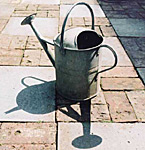 If you are using a two gallon watering can bear in mind that each plant may need a gallon of water. If you are using a two gallon watering can bear in mind that each plant may need a gallon of water.
When plants growing in pots of compost dry out they are difficult to water. It runs straight through where the compost has shrunk away from the side of the container. It will be necessary to plunge the pot into deep water until the bubbles stop appearing. Lift it out and allow it to drain. back to John's index page |