Fruit blossom is visible everywhere you look. In the garden and along the roadsides apple, cherry, plum and pear are in full bloom. Peach and necterine have finished flowering while the currants and strawberries will be in flower shortly.
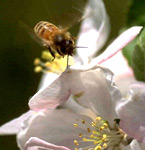
Plenty of blossom should result in a bumper crop of fruit but there may be problems. One of the biggest headaches for fruit growers is pollination. If the fruit trees flower early in the season, or if the weather is cold and wet, there are fewer insects about to transfer pollen from the male to the female part of the flower. No pollination -no fruit.
Early flowering varieties of plum and cherry are prone to frost damage which may wipe out the whole crop in one night. Never plant fruit trees in a hollow or low lying area. The cold air settles in the lowest area but a hedge is a sufficient barrier to prevent the flow moving further down the hill.
The next crucial period is as the small fruit are formed and start to swell. Dry ground conditions, or any other check to growth, may make the tree drop the tiny fruit.
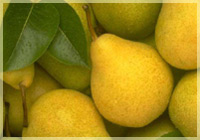
There is a problem referred to as 'June drop' although it usually occurs before that time. If the tree is under stress it will know it can’t carry a lot of fruit and will arrange for some of the young crop to abort and fall.
The young fruit is vulnerable to pests and diseases at this time. With peaches and nectrines grown outdoors it is necessary to grow them against a sunny, warm, south facing wall. They flower early and will need to be pollinated by hand. Use a rabbit’s tail or a cotton wool ball. Gently touch each open flower as this will move the pollen from one bloom to another.
Once the fruit sets never allow your plants to suffer from a lack of moisture. Water during dry periods and apply a high potash-low nitrogen liquid feed every 3-4 weeks.
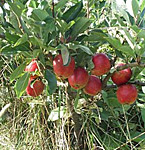
A heavy crop of plums or damsons will cause the brittle branches to break and prevention is better than cure and a timely prop in the form of a forked branch will support the laden branch.
The botrytis which destroys strawberry fruit forms behind the white petals during blossom time. Make sure there is good air movement around the flower trusses and raise them up on clean straw. Bait the area where the strawberries are growing to trap slugs and snails. A layer of grit around the plants may discourage them.
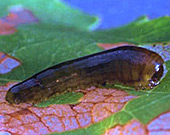
Regularly check the gooseberry bushes for sawfly. The caterpillars can defoliate a plant overnight and this will effect fruit yield. American gooseberry mildew disease marks the fruit. As gooseberry fruit start to swell water the ground well as this will help swell the fruit prior to harvest.








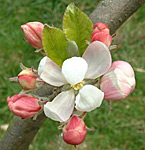 Fruit blossom is visible everywhere you look. In the garden and along the roadsides apple, cherry, plum and pear are in full bloom. Peach and necterine have finished flowering while the currants and strawberries will be in flower shortly.
 Early flowering varieties of plum and cherry are prone to frost damage which may wipe out the whole crop in one night. Never plant fruit trees in a hollow or low lying area. The cold air settles in the lowest area but a hedge is a sufficient barrier to prevent the flow moving further down the hill.
  There is a problem referred to as 'June drop' although it usually occurs before that time. If the tree is under stress it will know it can’t carry a lot of fruit and will arrange for some of the young crop to abort and fall.
 A heavy crop of plums or damsons will cause the brittle branches to break and prevention is better than cure and a timely prop in the form of a forked branch will support the laden branch.
  Regularly check the gooseberry bushes for sawfly. The caterpillars can defoliate a plant overnight and this will effect fruit yield. American gooseberry mildew disease marks the fruit. As gooseberry fruit start to swell water the ground well as this will help swell the fruit prior to harvest.