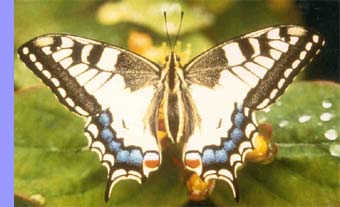
The large and distinctive swallowtail butterfly. |
The swallowtail is one of Britain’s finest butterflies. Its large and distinctive wing shape and beautiful markings make it eyecatching.
Swallowtails were once found in wetlands across the UK but their numbers declined sharply in the 1920s. Nowadays careful management of the habitats in which they thrive is enabling a slow reversal of their fortunes.
WHERE TO SEE SWALLOWTAILS |
Norfolk Wildlife Trust’s nature reserve at Hickling Broad is the UK’s foremost haven for swallowtails. Hickling is 4 miles south east of Stalham, off the A149 Norwich to Great Yarmouth road. Visitors can enjoy a boardwalk trail through reedbeds to open water. NWT Hickling Broad is open all year round. Entrance costs £2 for adults and is free for children. |
Swallowtails are currently found on the Norfolk Broads, at one privately-owned site in Suffolk and at Wicken Fen in Cambridgeshire.
Swallowtail distribution is wholly dictated by the availability of milk parsley, its caterpillar food source.
When the Norfolk Broads were actively managed by reedcutters who harvested both reed and sedge for thatching, areas were left clear enabling milk parsley, and consequently swallowtail butterflies, to flourish.
Around World War One demand for thatch declined sharply as other roofing materials became more popular. By the 1980s many of the Broadland reed and sedgebeds had become overgrown and neglected.
Milk parsley had been all but choked out, depriving swallowtail caterpillars of their lunch. Conservationists now recognise the necessity of regular reed and sedge cutting to nurture swallowtails and other Broadland wildlife.
At several places on the Norfolk Broads, principally Norfolk Wildlife Trust’s nature reserve at Hickling Broad, regular cutting is providing more open areas where swallowtails can flourish.
Swallowtail factfile >>







